Who Has the Keys to the Kaaba? The Story of the Bani Shaybah Family
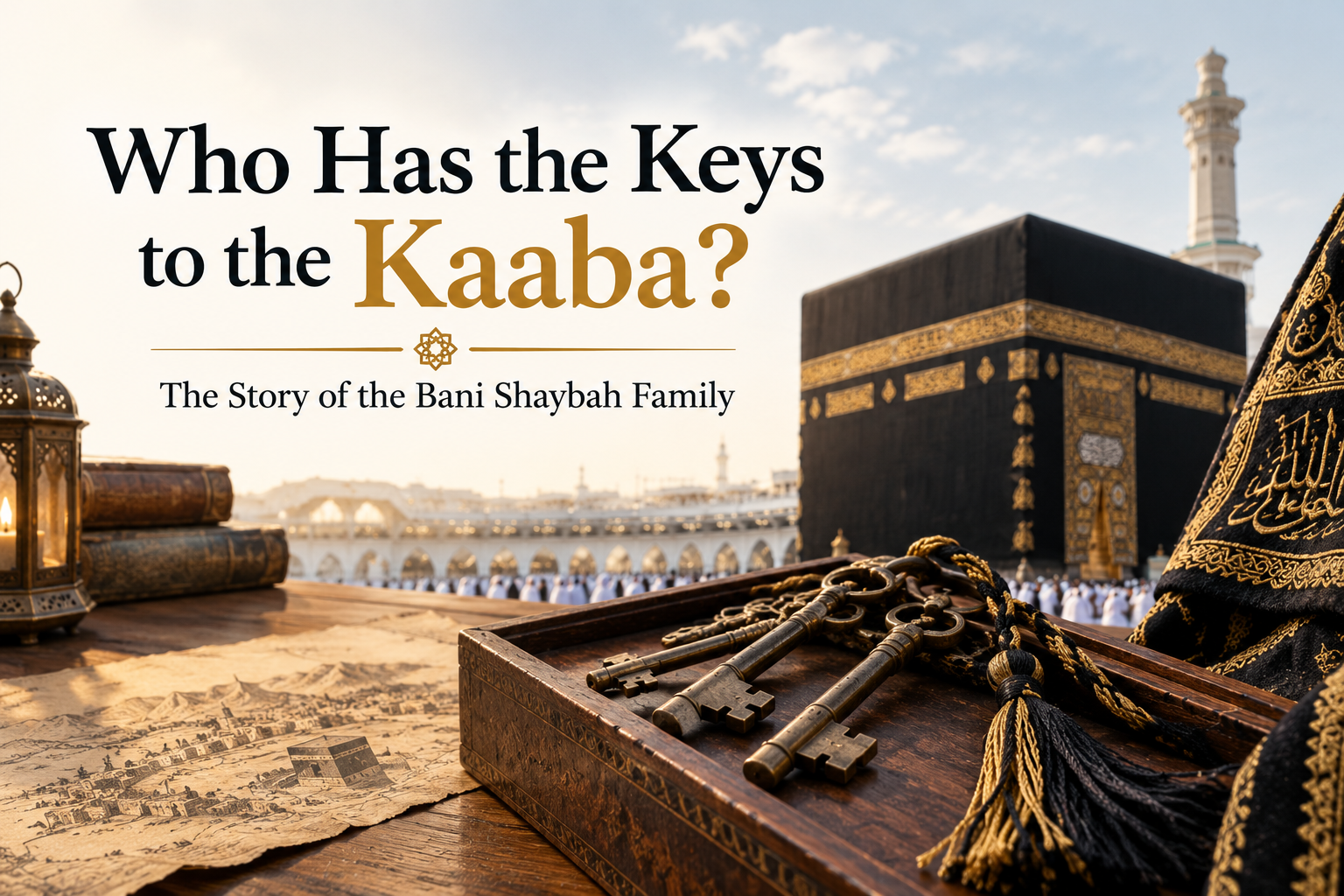
Every year, millions of pilgrims travel to Makkah to perform Hajj and Umrah, gazing in awe at the Holy Kaaba. Draped in its golden-embroidered black silk cloth—the Kiswa—the Kaaba stands as the spiritual center of Islam.
While world leaders, kings, and scholars visit Al-Masjid al-Haram, none of them hold the authority to open the golden door of the sanctuary.
This raises a fascinating question: Who has the keys to the Kaaba?
For over 1,400 years, the responsibility of keeping the key to the Kaaba (Sadanat al-Kaaba) has belonged exclusively to one noble lineage: the Bani Shaybah (Bani Shaiba) family.
Here is the historic story behind the keyholders of the Kaaba, the Quranic command that sealed their legacy, and how this tradition continues today.
The Historical Origins of the Keyholders
Before the advent of Islam, various tribes in Arabia managed the affairs of the Kaaba. Custody over the sanctuary was divided into honored roles, including providing water to pilgrims (Siqayah) and holding the key to the Kaaba (Sadanah or Hijabah).
The custodianship of the key was held by Uthman ibn Talha (RA), a member of the Banu Abd al-Dar clan. His family maintained the sacred duty of opening the sanctuary for tribal leaders and honored guests.
The Conquest of Makkah and the Divine Command
The year 630 CE (8 AH) marked a pivotal moment in Islamic history during the Conquest of Makkah (Fath Makkah).
When Prophet Muhammad (ﷺ) entered Makkah, he cleansed the Kaaba of idols. He asked Uthman ibn Talha for the key to open the sanctuary door. After praying inside the Kaaba, the Prophet (ﷺ) stepped outside holding the key.
Many prominent companions, including Ali ibn Abi Talib (RA), requested that the custodianship of the key be given to the Prophet’s immediate family. However, divine revelation intervened.
Allah (SWT) revealed a verse in Surah An-Nisa:
"Indeed, Allah commands you to render trusts to whom they belong and when you judge between people to judge with justice."
— Surah An-Nisa (4:58)
1.The Revelation of Surah An-Nisa:Prophet Muhammad (ﷺ) receives divine command.
Following the revelation, the Prophet (ﷺ) called Uthman ibn Talha forward to return the key to him.
2.The Prophetic Declaration:Establishing an eternal decree.
As he handed back the key, Prophet Muhammad (ﷺ) uttered words recorded for eternity: "Take it, O Children of Talha, eternally and permanently, and no one will take it from you except an aggressor."
3.Transfer to Shaybah ibn Uthman:Centuries of continuous custodianship.
Uthman ibn Talha later passed the key to his cousin, Shaybah ibn Uthman. From that moment, their descendants became known as the Bani Shaybah family.
The Role of the Senior Custodian (Sadil) Today
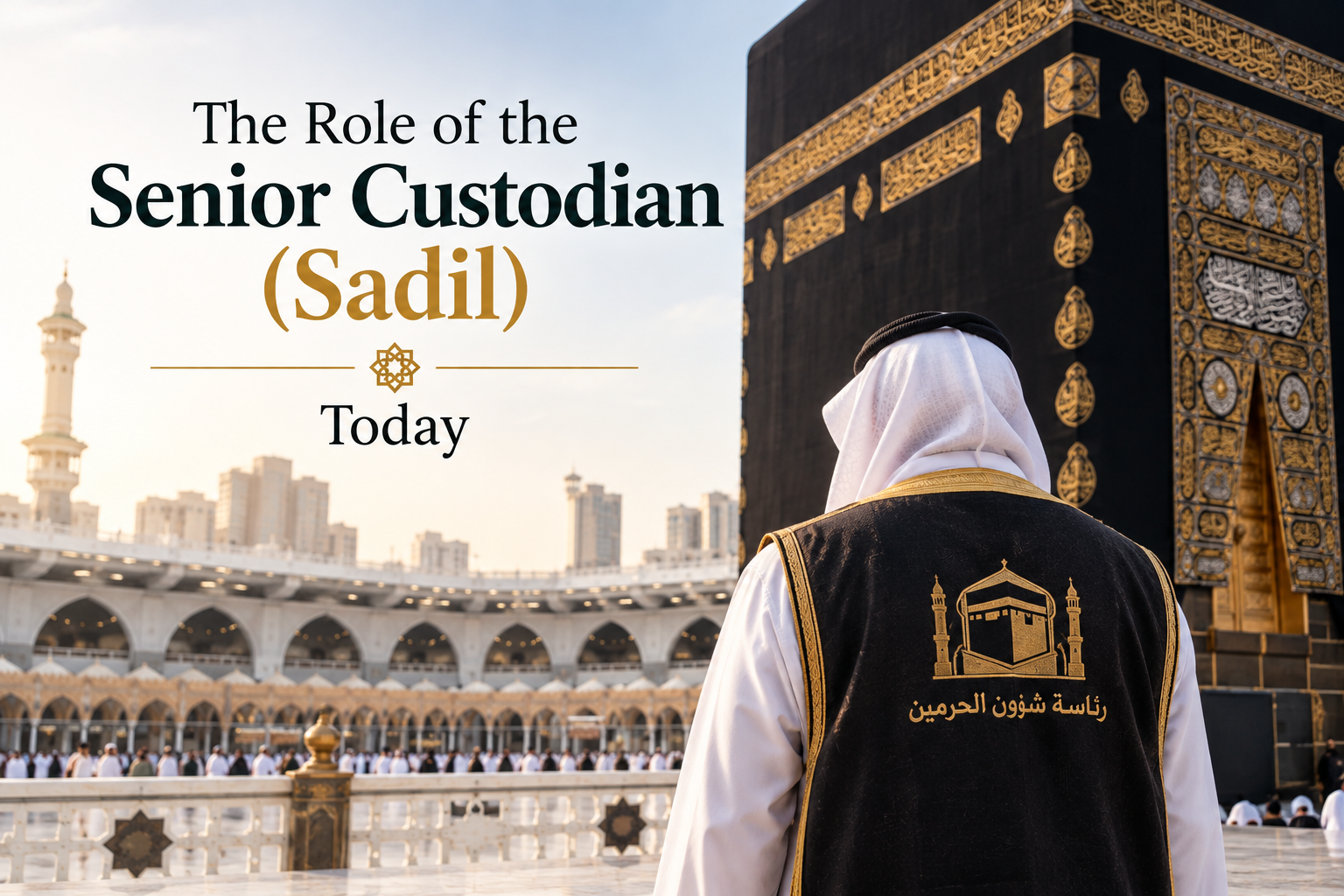
Today, the responsibility of holding the key rests with the senior member of the Bani Shaybah family, known as the Sadil of the Kaaba.
Responsibility | Description |
Safekeeping the Key | Storing the key to the Kaaba in a hand-stitched green silk bag adorned with gold and silver thread inside a secure location in Makkah. |
Washing the Kaaba | Opening the door for the annual cleaning ceremony of the interior using Zamzam water, rose water, and pure oud perfume. |
Changing the Kiswa | Assisting during the annual replacement of the Kaaba's black and gold silk cover. |
Royal Protocol | Opening the sanctuary door for visiting international heads of state under the direction of the Saudi Royal Court. |
What Does the Key to the Kaaba Look Like?
The key to the Kaaba is a unique artifact steeped in history. Over the centuries, rulers, Caliphs, and Sultans crafted decorative keys to honor the sanctuary.
Design & Material: Modern keys are approximately 35 centimeters long, crafted from nickel-plated copper and coated in 24-karat gold.
Inscriptions: The key features detailed Arabic calligraphy, including verses from the Quran, Bismillah, and the names of Saudi monarchs who commissioned the key's restoration.
Historical Artifacts: Over 50 historical keys to the Kaaba are preserved in museums across the world, including the Topkapi Palace Museum in Istanbul and museums in Saudi Arabia.
Honor the Sacred Traditions with Kiswa Al Kaaba
The story of the Bani Shaybah family reminds us of the sacred trust, history, and spiritual devotion surrounding the House of Allah.
At Kiswah Al Kaaba, we celebrate this heritage by crafting authentic Islamic art, luxury framed Kiswa fabric replicas, high-density prayer rugs, and spiritual keepsakes inspired by Makkah and Madinah.
Explore our collection today at Kiswah Al Kaaba to bring a piece of holy history into your home!