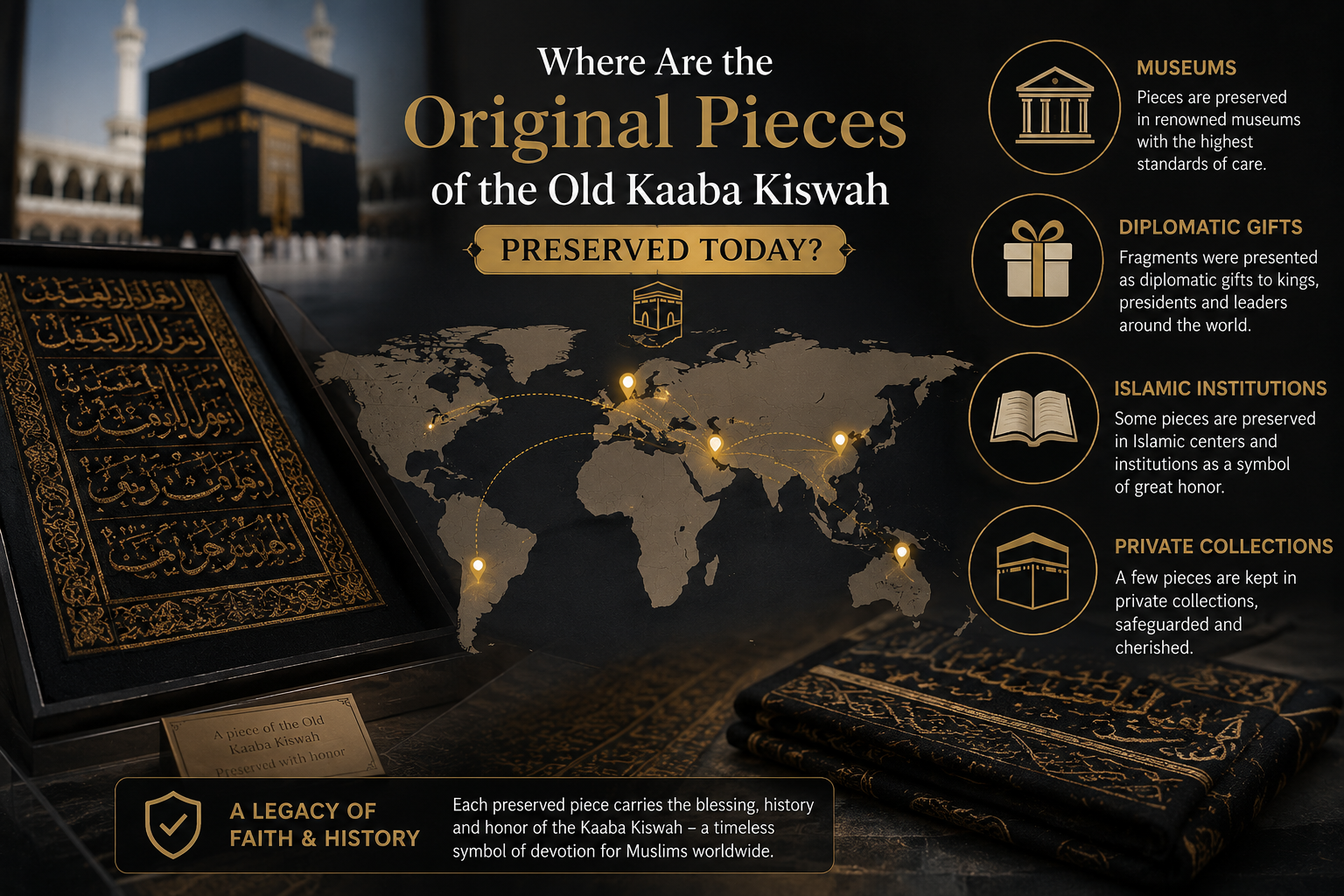
Where Are the Original Pieces of the Old Kaaba Kiswah Preserved Today?
A few hours after the annual Kiswah replacement ceremony concludes in Makkah, the attention of millions naturally shifts to the newly dressed Holy Kaaba. The fresh black silk covering, embroidered with elegant Quranic calligraphy, becomes the centre of countless photographs and broadcasts. Yet behind the scenes, another important process quietly begins—one that receives far less attention but carries immense historical value.
The Kiswah that has just been removed does not simply disappear. It begins a carefully managed journey of preservation. For historians, conservators, collectors, and Muslims interested in Islamic heritage, one question continues to arise: where is old Kaaba Kiswah kept?
The answer is more fascinating than many people expect because the life of the Kiswah continues long after it leaves the walls of the Holy Kaaba.
Every Kiswah Becomes Part of History
Unlike ordinary ceremonial textiles, the Kaaba Kiswah represents an entire year in the history of Islam's holiest sanctuary. During that period, millions of pilgrims performing Hajj and Umrah see the same embroidered cloth surrounding the Kaaba.
When the annual replacement takes place, the outgoing Kiswah immediately becomes a historical artifact. From that moment onward, its importance changes. It is no longer serving as the Kaaba's covering—it becomes a preserved witness to a specific period in the history of Masjid al-Haram.
This is one reason historical Kaaba cloth preservation receives such careful attention.
Preservation Begins the Moment the Kiswah Is Removed
Many imagine the old covering is folded and placed into storage. In reality, preservation starts much earlier.
As each section is removed, specialists focus on protecting the delicate silk and embroidered surfaces from unnecessary handling. The goal is not simply to store the textile but to ensure its long-term survival.
Every embroidered verse, woven border, and decorative element reflects months of skilled craftsmanship. Preserving these details allows future generations to study techniques that have been refined over centuries.
Instead of treating the cloth as a finished object, conservators treat it as an important historical document created with silk, thread, and artistry.
Where Is Old Kaaba Kiswah Kept?
The question of where the old Kaaba Kiswah is kept cannot be answered with the name of a single building because authenticated Kiswah fragments have followed different paths throughout history.
Some portions remain under official custodianship where they are carefully documented and preserved. Others have entered institutional collections dedicated to protecting Islamic heritage.
Over time, selected authenticated sections have also appeared in educational exhibitions that help visitors understand the remarkable craftsmanship behind the Kaaba's annual covering.
Rather than existing in one permanent location, preserved Kiswah fragments continue serving educational and historical purposes through carefully managed conservation.
Kaaba Kiswah in Museums Helps Tell a Larger Story
When visitors encounter Kaaba Kiswah in museums, they are seeing more than a beautifully embroidered textile.
Museum displays often place the Kiswah within the broader history of Islamic civilization. Alongside the fabric itself, visitors may learn about:
Traditional silk weaving methods.
The evolution of Arabic calligraphy.
Annual Kiswah production.
Textile conservation.
The significance of the Hizam and embroidered curtain.
These exhibitions transform individual fragments into educational resources that connect visitors with centuries of Islamic craftsmanship.
The objective is not merely to display an object but to preserve the knowledge surrounding it.
Historical Kaaba Cloth Preservation Is a Specialist Discipline
Silk naturally changes over time. Exposure to sunlight, humidity, dust, and temperature fluctuations can gradually weaken delicate fibres.
For this reason, historical Kaaba cloth preservation depends upon professional conservation techniques rather than ordinary storage.
Specialists carefully control environmental conditions while using archival materials that minimise stress on the textile.
In many cases, preservation focuses on preventing deterioration instead of restoring the cloth. This approach protects the authenticity of each fragment while maintaining its historical integrity.
Diplomatic Gifts of Kaaba Kiswah Reflect Cultural Respect
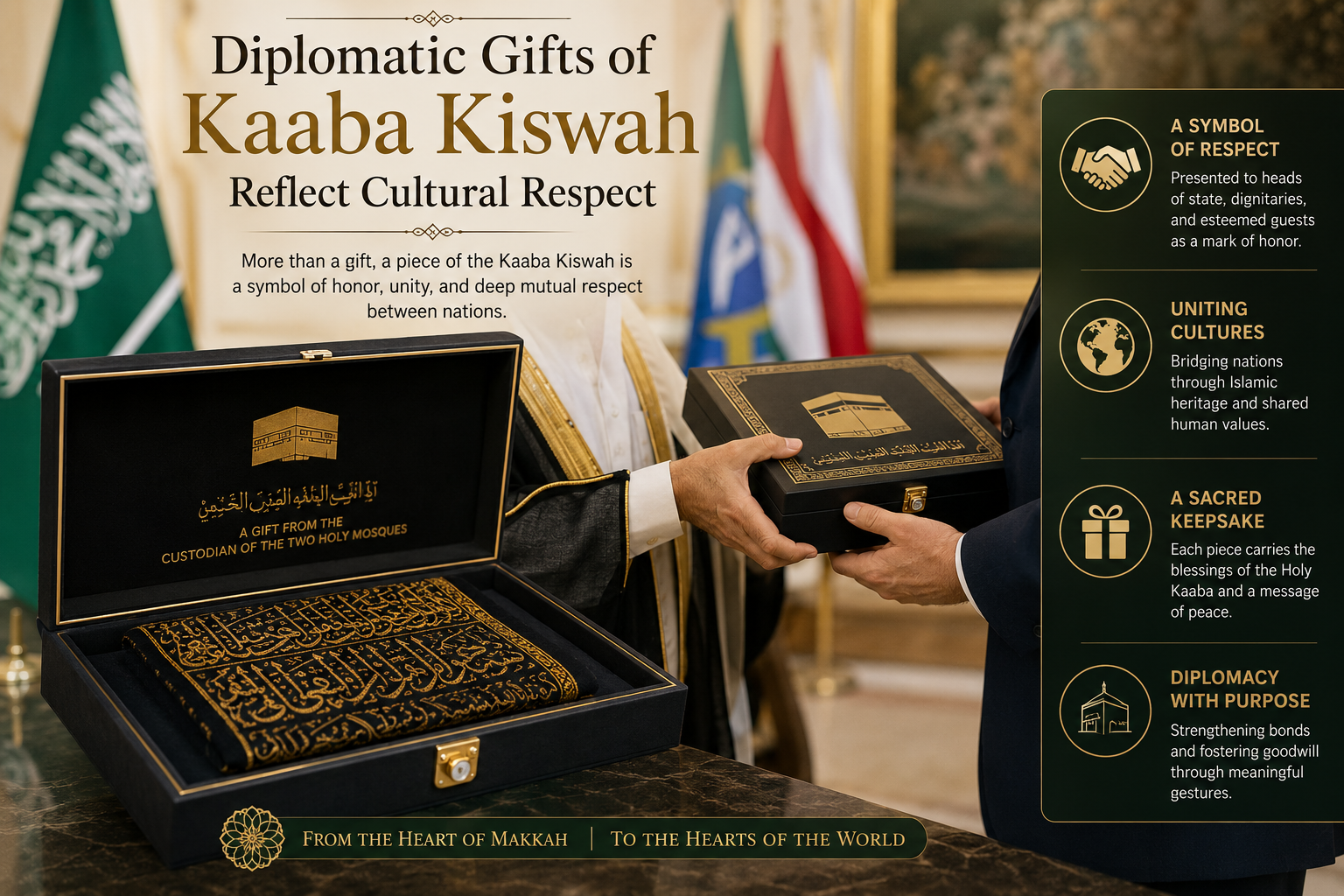
Another remarkable chapter in the Kiswah's journey involves the tradition of diplomatic gifts of Kaaba Kiswah.
Throughout different periods, authenticated sections have been presented through official channels to distinguished leaders, cultural organisations, and respected institutions.
These presentations serve not only as gifts but also as symbols of friendship and shared appreciation for Islamic heritage.
Today, many historically documented diplomatic presentations remain valuable because they preserve both the textile itself and the story surrounding its presentation.
From Preservation to Private Collections
Not every preserved Kiswah fragment remains behind museum glass. Over the years, a limited number of authenticated sections have entered carefully documented private collections. Their availability is extremely limited because only one Kiswah is replaced each year, and only selected portions are preserved for purposes beyond official custodianship.
This rarity explains why a genuine Kiswah Kaaba piece is regarded as an important part of Islamic heritage rather than simply a decorative object. Collectors often seek these pieces because they represent a tangible connection to a tradition that has continued for centuries.
Unlike newly manufactured replicas inspired by the Kaaba's covering, authenticated fragments carry historical significance that cannot be reproduced.
Why Documentation Is Essential
Because authentic Kiswah fragments are rare, documentation plays an important role in preserving trust and historical accuracy.
Responsible collectors usually look for:
Information about the fragment's provenance.
Details describing its preservation.
Professional framing that protects delicate silk.
Clear identification of the item as an authentic historical fragment rather than a modern reproduction.
Proper documentation not only supports authenticity but also helps preserve the story associated with each piece.
Buying an Authentic Kiswah in the UK
Interest continues to grow among Muslims who wish to buy authentic Kiswah in the UK, whether as a meaningful gift, a family heirloom, or a reminder of their connection to the Holy Kaaba.
Before making a purchase, it is worth considering several important points.
Understand What You Are Buying
Some products are decorative artworks inspired by the Kiswah, while others contain authenticated historical fragments. Knowing this distinction helps buyers make informed decisions.
Choose a Trusted Specialist
Businesses that specialise in authenticated Islamic heritage are more likely to provide transparent information about provenance and preservation.
Consider Long-Term Preservation
Silk is a delicate material. Professionally framed displays using conservation-grade materials help protect the textile from dust, moisture, and excessive light.
Value Heritage Over Rarity
Although rarity is one aspect of an authentic Kiswah Kaaba piece, its greatest importance lies in the history and craftsmanship it represents.
Why These Fragments Continue to Inspire
The value of an old Kiswah extends beyond its silk and embroidery. Every preserved section reflects countless hours of weaving, stitching, and artistic dedication.
For many people, viewing or owning an authenticated fragment creates a personal connection with a tradition witnessed by millions of pilgrims over generations.
This continuing appreciation demonstrates why historical Kaaba cloth preservation remains so important. Protecting the textile also protects the story behind it.
Preserving Heritage for Future Generations
Historical preservation is not only about safeguarding the past. It also creates opportunities for future generations to learn about Islamic craftsmanship, calligraphy, and textile conservation.
Whether displayed as Kaaba Kiswah in museums, maintained within recognised institutional collections, or carefully preserved by responsible collectors, every authenticated fragment contributes to the wider story of Islamic cultural heritage.
The annual replacement of the Kiswah therefore marks both an ending and a beginning—one covering starts its service on the Holy Kaaba while another begins its life as an important historical artefact.
Discover Authentic Kiswah Collections
At Kiswah Al Kabah, we are passionate about preserving the legacy of one of Islam's most significant symbols. Our carefully curated collection includes authenticated Kiswah Kaaba pieces presented with professional care and respect for their historical importance.
If you are looking to buy authentic Kiswah in the UK, our collection offers thoughtfully presented pieces for collectors, families, and anyone wishing to celebrate the remarkable heritage of the Holy Kaaba. Every display is selected with a focus on authenticity, preservation, and craftsmanship.
Visit Kiswahalkabah to explore our collection and learn more about preserving this extraordinary tradition.
Final Thoughts
Asking where is old Kaaba Kiswah kept opens the door to a story that extends far beyond the annual replacement ceremony. Rather than disappearing after its time on the Holy Kaaba, the previous covering enters a carefully managed process of conservation that protects both the textile and the history it represents.
Through historical Kaaba cloth preservation, authenticated fragments continue to educate visitors, support research, and celebrate centuries of Islamic artistry. Some examples of Kaaba Kiswah in museums help explain the evolution of this sacred tradition, while selected diplomatic gifts of Kaaba Kiswah have introduced its cultural significance to audiences around the world.
For collectors seeking an authentic Kiswah Kaaba piece or hoping to buy authentic Kiswah in the UK, choosing well-documented pieces from trusted specialists helps ensure this remarkable legacy is preserved with the respect it deserves.
Frequently Asked Questions
Where is the old Kaaba Kiswah kept?
After the annual replacement, the previous Kiswah is preserved under official custodianship. Authenticated sections may later become part of recognised collections, museum exhibitions, educational institutions, or documented private collections.
Can I see Kaaba Kiswah in museums?
Yes. Museums and cultural institutions have displayed authenticated Kiswah fragments to help visitors learn about Islamic history, textile craftsmanship, and the annual tradition of replacing the Kaaba's covering.
What are diplomatic gifts of Kaaba Kiswah?
At different times, authenticated Kiswah fragments have been presented through official channels to distinguished individuals and institutions as symbolic gifts reflecting Islamic heritage and cultural appreciation.
Can I buy an authentic Kiswah in the UK?
Yes. If you wish to buy authentic Kiswah in the UK, choose reputable specialists who provide provenance information and clearly distinguish authenticated historical fragments from decorative reproductions.