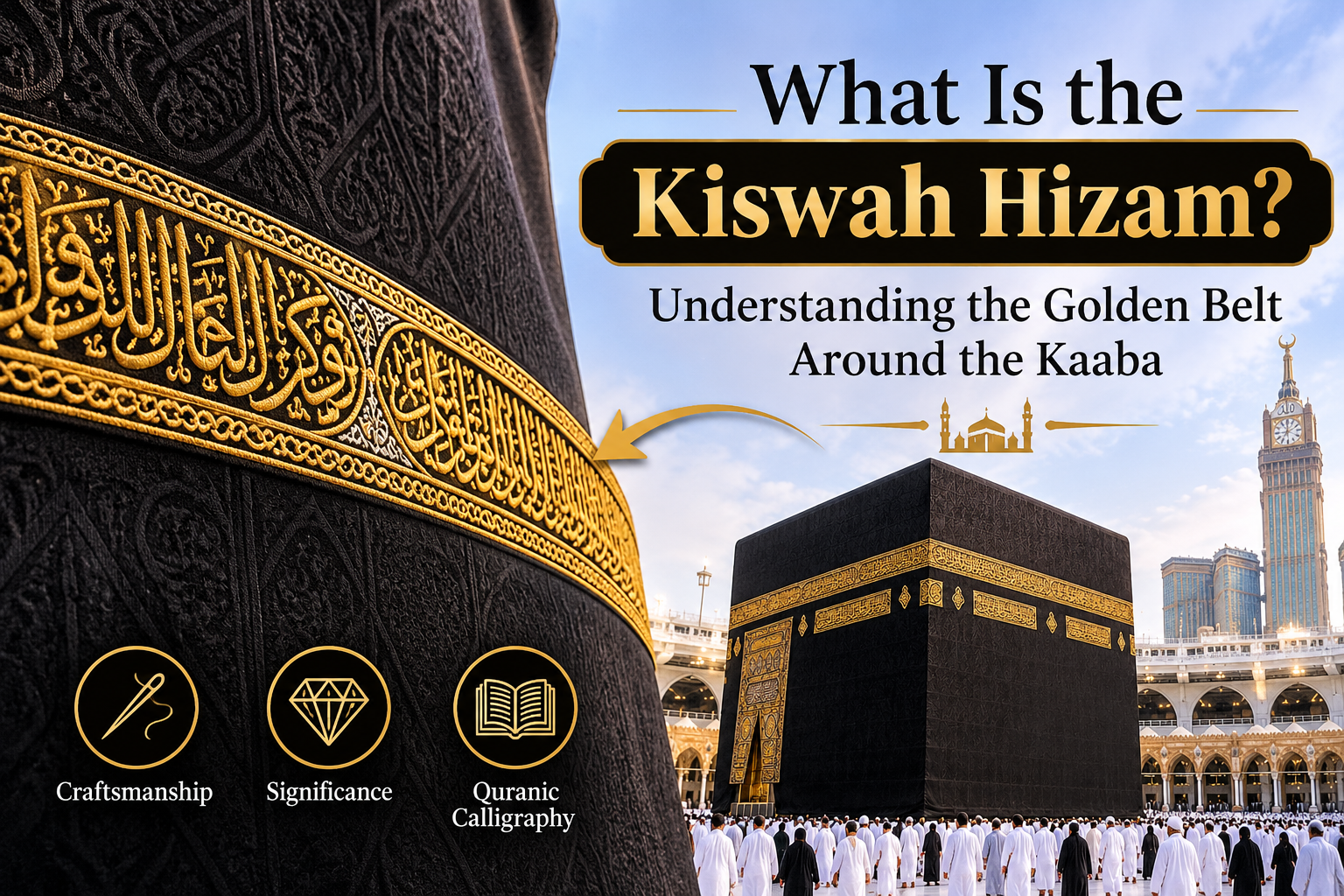
When people look at the Holy Kaaba, one of the first details they notice is the wide band of golden embroidery running across its black covering. This section is called the Hizam. Its Arabic inscriptions, carefully stitched patterns and prominent position make it a distinctive feature of the Kiswah.
The Hizam is not a separate decorative addition without purpose. It is an embroidered part of the Kaaba's covering, prepared through specialised techniques and fitted with great care. Its appearance reflects the detailed work carried out by craftspeople responsible for producing the Kiswah.
In this article, we explore what the Hizam is, where it is positioned, how its embroidery is produced and why people are interested in owning original Kiswah fabric.
Understanding the Golden Belt on the Holy Kaaba
The Hizam refers to the broad embroidered band positioned near the upper portion of the Kaaba's black covering. It extends around the structure, carrying Arabic inscriptions and ornamental designs across its sides.
The belt is made up of embroidered sections that are prepared separately and later fitted as part of the Kiswah. Its golden lettering contrasts with the dark silk underneath, making the inscriptions visible even from a distance.
Although visitors often refer to it as the golden belt, its appearance comes from carefully worked threads rather than a solid metal band. The material and stitching techniques used in its production are specifically chosen for the intricate designs it carries.
Why Does the Kaaba Have a Golden Embroidered Belt?
The Hizam displays Quranic text and Islamic inscriptions in beautifully arranged Arabic lettering. Its design brings together written religious content and detailed textile work.
The inscriptions are carefully selected and arranged according to the approved design. The lettering is surrounded by decorative elements that complement the text without taking away from its appearance.
For Muslims visiting Makkah or viewing the Kaaba from photographs, these embroidered inscriptions are a familiar sight. Their presence reflects the importance of Quranic words and the care given to the covering of the sacred structure.
The Hizam also makes the Kiswah visually distinctive. Without the embroidered band, the black fabric would have a very different appearance.
What Materials Give the Hizam Its Golden Appearance?
The golden embroidery is produced using silver threads plated with gold. These threads are used to create the Arabic lettering and decorative details across the embroidered sections.
The material must be suitable for detailed stitching, allowing the craftspeople to form letters, curves and patterns with precision.
The black silk fabric underneath provides the contrast needed to make the embroidery stand out. Together, the materials create the distinctive appearance associated with the Kiswah's upper embroidered band.
The use of these materials, along with the specialised production process, contributes to the overall manufacturing cost of the Kiswah.
How Is the Hizam Embroidery Produced?
Creating the embroidered belt involves more than stitching a pattern onto fabric. The process requires preparation, technical skill and careful handling at different stages.
Preparing the Arabic Inscriptions
The designs are prepared before embroidery begins. The Quranic text, decorative elements and spacing are arranged according to the specifications for the finished belt.
Working with Gold-Plated Threads
The embroidery materials are prepared for the stitching process. Craftspeople work with gold-plated silver threads to create the detailed lettering and ornamental designs.
Stitching the Design
The inscriptions are carefully embroidered onto the designated fabric sections. The work requires steady hands and experience, particularly where Arabic letters and decorative shapes contain intricate details.
Checking the Finished Embroidery
The completed sections undergo inspection to check the stitching, arrangement and overall finish. The pieces are then prepared for installation as part of the Kiswah.
Fitting the Belt Around the Kaaba
During the annual Kiswah replacement, the embroidered belt is fitted around the upper portion of the Kaaba. The sections are positioned and secured so that the design follows the structure's sides correctly.
Why Does the Original Kaaba Kiswah Have Such a High Value?
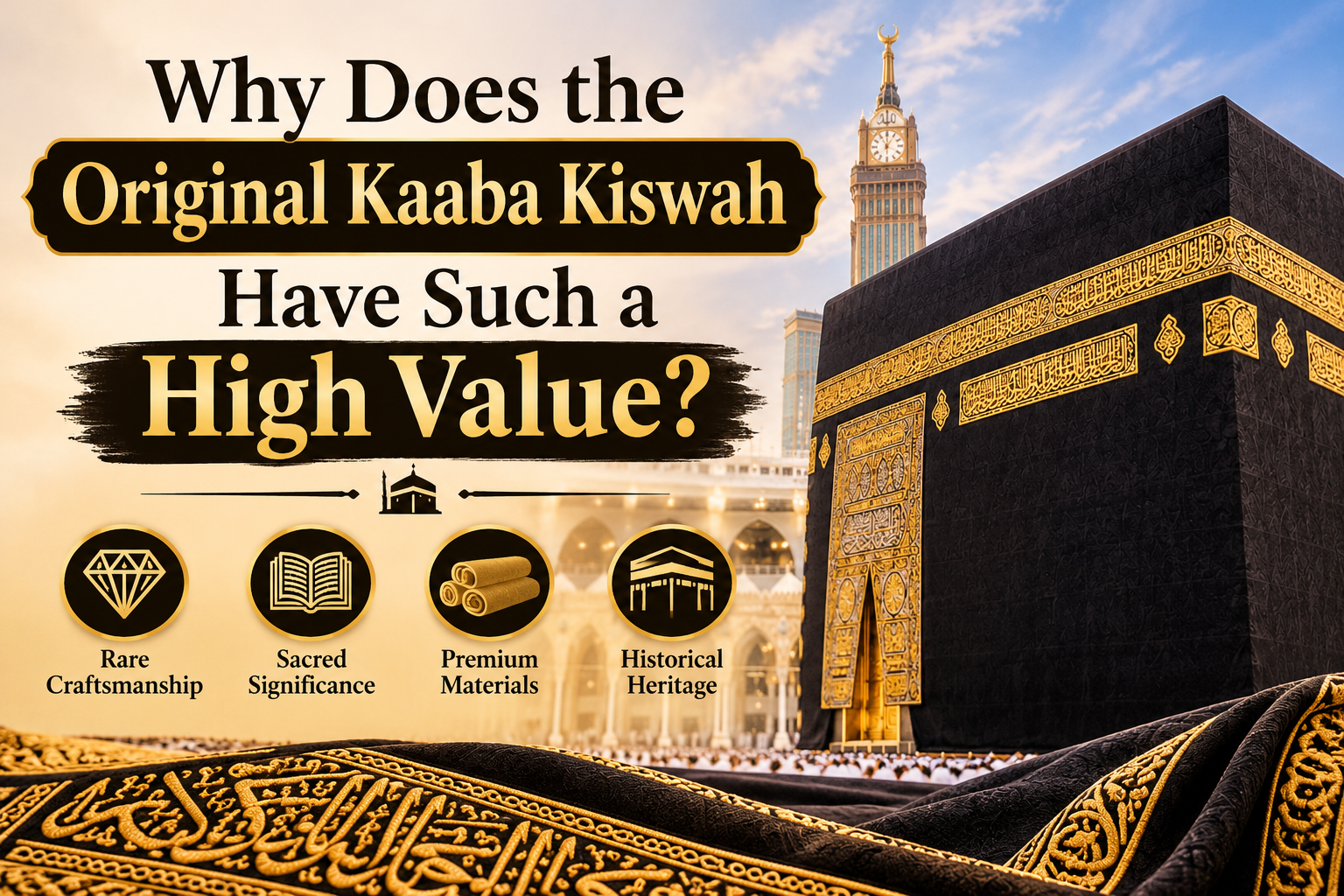
The cost of producing the Kiswah is connected to the materials, specialised manufacturing and considerable work involved in its preparation.
The covering uses silk fabric and detailed embroidery made with gold-plated silver threads. Producing the inscriptions requires trained craftspeople, and the different sections must be prepared, checked and assembled before the Kiswah is ready.
This is why people frequently search for why is the Kiswa Kaaba so expensive. The production involves far more than purchasing fabric or embroidery materials. It requires specialised facilities, technical knowledge and a carefully managed process.
Original Kiswah pieces also hold significance for people who appreciate Islamic history and the craftsmanship associated with the Holy Kaaba.
Can You Own an Original Kiswah Piece?
People interested in collecting Kiswah fabric often search for how do I buy authentic Kaaba Kiswah or where to buy Kaaba Kiswah. Genuine pieces may be available through specialist sellers, but buyers should carefully review the origin and documentation of the product.
An embroidered section, a piece of black fabric or another part of the Kiswah may differ in size, design and material. Therefore, it is important to understand what is included with a purchase rather than relying on a product photograph alone.
At Kiswah Al Kabah, you can explore original Kiswah products accompanied by authenticity documentation issued by the Kiswah Factory in Saudi Arabia.
If you are searching for a Gilafe Kaaba piece, review the product details, dimensions, photographs and certification information before choosing an item.
Explore the available collection at Kiswah Al Kabah and discover original Kiswah products with their authenticity details.
Frequently Asked Questions
What is the golden belt around the Kaaba called?
It is known as the Hizam, the embroidered band positioned around the upper part of the Kaaba's Kiswah.
What is used to embroider the Hizam?
The embroidery uses silver threads plated with gold to create the Arabic inscriptions and decorative patterns.
Does the Hizam cover the entire Kaaba?
The embroidered belt extends around the four sides of the Kaaba as part of its covering.
Is the Hizam replaced with the Kiswah?
The Hizam is a component of the Kiswah and is fitted as part of the covering during the annual replacement.
Final Thoughts
The Hizam gives the Kaaba's black covering a distinctive appearance through its embroidered Arabic text and detailed golden patterns. Its preparation involves specialised materials, carefully arranged inscriptions and experienced craftspeople who work on the fabric before it is installed.
Understanding how the belt is produced reveals the amount of attention involved in preparing the Kiswah. Its design, materials and workmanship make it an important feature of the covering of the Holy Kaaba.
To explore original Kiswah pieces and learn more about their details, visit Kiswah Al Kabah. Discover the collection and explore authentic Kiswah products associated with the Holy Kaaba.