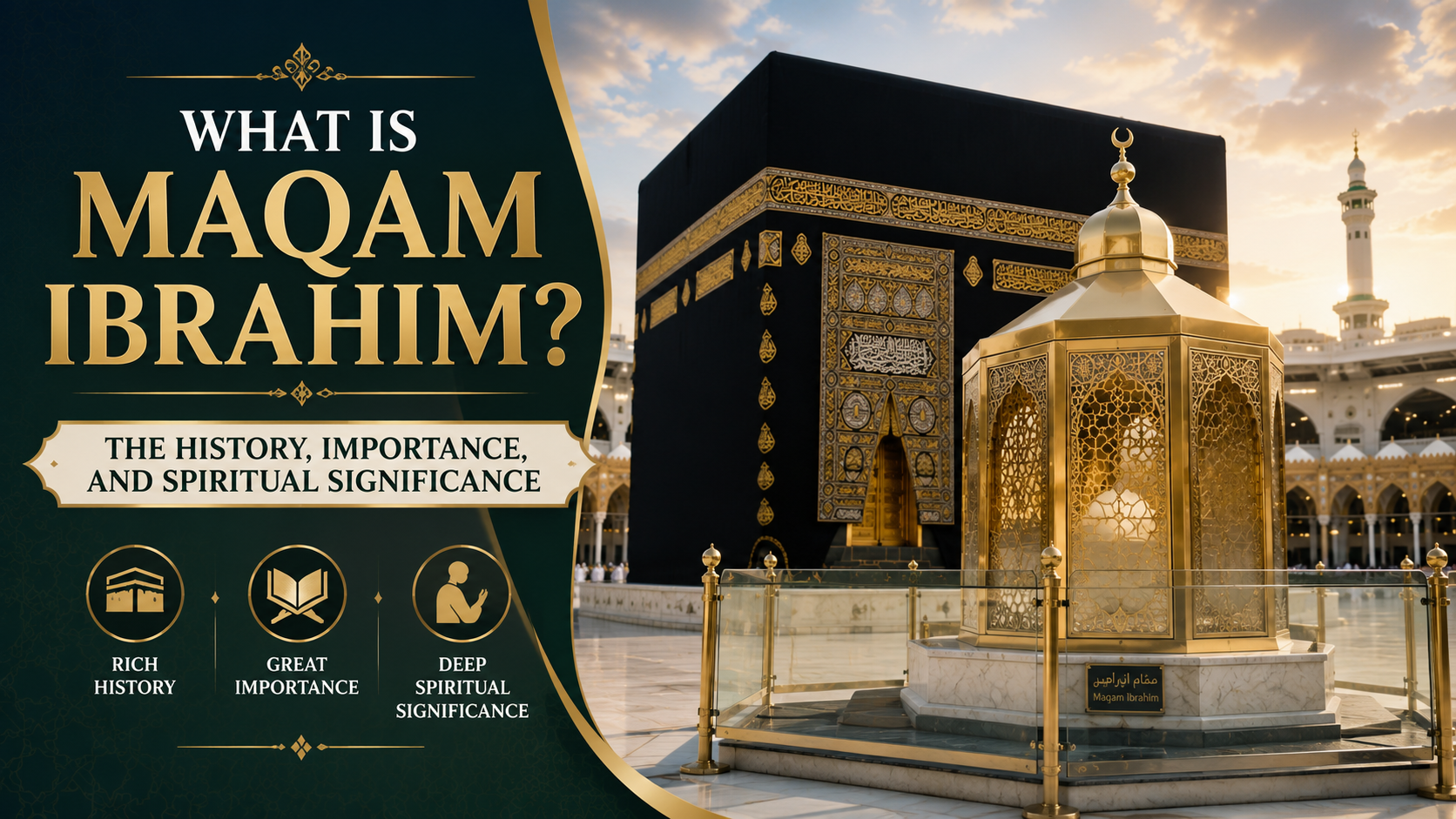
What Is Maqam Ibrahim? The History, Importance, and Spiritual Significance
For millions of Muslims who visit Makkah each year, every step around the Holy Kaaba is filled with meaning. While the Kaaba naturally draws the greatest attention, another sacred landmark nearby quietly reminds pilgrims of the devotion, sacrifice, and unwavering faith of Prophet Ibrahim (AS). This is Maqam Ibrahim, a place mentioned in the Qur'an and closely connected with the construction of the Kaaba.
Many Muslims know its name but wonder, what is Maqam Ibrahim and why is it so significant? Is it simply a historical monument, or does it hold a deeper spiritual message?
In this guide, we explore the history of Maqam Ibrahim, the story behind the footprints of Prophet Ibrahim in Kaaba, the purpose of the gold enclosure of Maqam Ibrahim, and the importance of praying behind Maqam Ibrahim during pilgrimage.
Understanding What Is Maqam Ibrahim
The Arabic word Maqam means "standing place" or "station." Maqam Ibrahim refers to the stone associated with Prophet Ibrahim (AS) during the construction of the Holy Kaaba.
According to Islamic tradition, as the walls of the Kaaba became higher, Prophet Ibrahim (AS) stood on this stone while his son, Prophet Ismail (AS), handed him building materials. By Allah's will, the stone rose as the construction progressed, allowing the work to continue more easily.
Today, this stone remains one of the most respected landmarks within Masjid al-Haram and reminds Muslims of the obedience and dedication shown by Prophet Ibrahim (AS).
The Story Behind the Footprints
One of the most remarkable aspects of Maqam Ibrahim is the visible impressions traditionally understood to be the footprints of Prophet Ibrahim in Kaaba.
Muslim scholars explain that these marks were left on the stone while Prophet Ibrahim (AS) stood upon it during the building of the Kaaba. For centuries, Muslims have viewed these impressions as an important reminder of one of Islam's greatest prophetic missions.
Rather than being admired merely as an ancient object, the stone represents perseverance, trust in Allah, and the completion of a task that continues to unite Muslims from every part of the world.
A Symbol of Faith and Dedication
The story of Maqam Ibrahim is not simply about construction. It is about complete submission to Allah's command.
Prophet Ibrahim (AS) accepted responsibilities that required patience, sacrifice, and unwavering belief. Together with Prophet Ismail (AS), he built the Kaaba as a place dedicated to the worship of Allah alone.
Every pilgrim who sees Maqam Ibrahim is reminded that great achievements often begin with sincere obedience rather than material strength.
This timeless lesson continues to inspire Muslims today.
The Gold Enclosure of Maqam Ibrahim
Visitors to Masjid al-Haram immediately notice the beautifully designed gold enclosure of Maqam Ibrahim protecting the sacred stone.
The enclosure serves several important purposes:
Protecting the historic stone from damage.
Allowing pilgrims to view it respectfully.
Preserving an important part of Islamic heritage.
Ensuring the stone remains secure while accessible to visitors.
Its elegant design complements the sacred surroundings without distracting from the spiritual significance of the Maqam itself.
The enclosure is therefore both protective and symbolic, reflecting the respect shown toward this historic landmark.
Mention in the Holy Qur'an
Maqam Ibrahim holds a unique place because it is directly mentioned in the Holy Qur'an. Allah instructs believers to take the Station of Ibrahim as a place of prayer, highlighting its importance within Islamic worship.
This Qur'anic reference makes Maqam Ibrahim not only a historical site but also an enduring symbol of devotion connected with the rites of Hajj and Umrah.
Why Pilgrims Visit Maqam Ibrahim
Every year, millions of Muslims performing Hajj and Umrah pause near Maqam Ibrahim after completing Tawaf around the Kaaba.
For many pilgrims, this moment creates a powerful connection between present-day worship and events that took place thousands of years ago.
Standing near the stone reminds believers that the Kaaba they circle today was built through faith, determination, and obedience to Allah.
The experience strengthens appreciation for the remarkable legacy of Prophet Ibrahim (AS) and Prophet Ismail (AS).
A Lasting Reminder of Islamic Heritage
Although the Kaaba remains the focal point of worship, Maqam Ibrahim quietly tells another part of the same story.
It reminds Muslims that every great act of worship begins with sincerity, sacrifice, and complete trust in Allah.
The preserved stone continues to inspire believers from every nation, language, and culture who visit Masjid al-Haram seeking spiritual closeness and reflection.
The Importance of Praying Behind Maqam Ibrahim
After completing Tawaf around the Holy Kaaba, Muslims are encouraged to perform two units of prayer in the area behind Maqam Ibrahim whenever it is possible and practical without causing difficulty for other pilgrims. This practice follows the Sunnah of the Prophet Muhammad ﷺ and commemorates the devotion of Prophet Ibrahim (AS).
For many pilgrims, praying behind Maqam Ibrahim is a deeply moving experience. It is a moment to reflect on the faith, patience, and obedience demonstrated by Prophet Ibrahim (AS) and Prophet Ismail (AS) while building the Kaaba.
Because Masjid al-Haram welcomes millions of worshippers, the area around Maqam Ibrahim can become crowded. If praying directly behind it is not possible, pilgrims may offer these two rak'ahs elsewhere within the mosque, following the guidance of scholars and the practical circumstances of the moment.
The Connection Between the Kaaba, the Kiswah, and Maqam Ibrahim
The Holy Kaaba, the Kiswah, and Maqam Ibrahim each tell a different part of the same story.
The Kaaba is the House of Allah and the direction of prayer for Muslims around the world. The Kiswah, the beautifully embroidered silk covering of the Kaaba, reflects centuries of Islamic craftsmanship and reverence. Maqam Ibrahim reminds believers of the effort and faith involved in constructing this sacred building.
Together, these three elements represent:
Faith in Allah.
Obedience to divine guidance.
Dedication to worship.
Preservation of Islamic heritage.
Unity among Muslims worldwide.
Every Hajj and Umrah season renews appreciation for this remarkable connection between history and worship.
Why the Footprints Continue to Inspire Muslims
The footprints of Prophet Ibrahim in Kaaba are not admired merely because of their age. Their significance lies in what they represent.
They remind Muslims that great achievements are built through sincerity, perseverance, and trust in Allah. Prophet Ibrahim (AS) accepted difficult responsibilities without hesitation, and his legacy continues to inspire believers thousands of years later.
For pilgrims, seeing Maqam Ibrahim often transforms stories learned in childhood into a tangible connection with Islamic history.
Preserving Islamic Heritage Through Authentic Kiswah Pieces
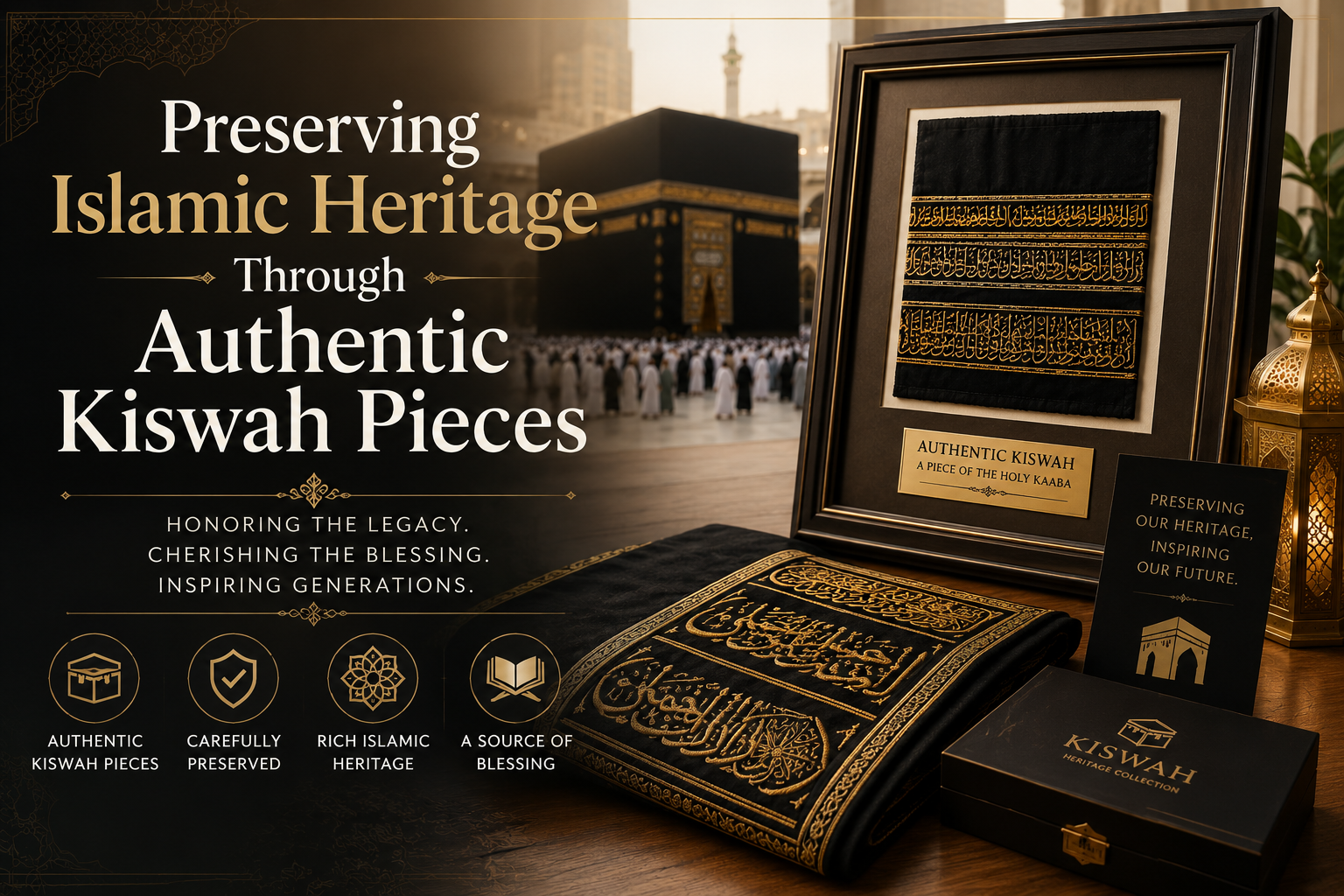
The annual replacement of the Kaaba's Kiswah ensures that another important chapter of Islamic heritage continues each year. After the Kiswah is replaced, authenticated sections are carefully preserved because of their historical and artistic value.
An authentic Kiswah Kaaba piece allows families and collectors to preserve a meaningful connection with this tradition. Professionally presented fragments celebrate not only the beauty of the Kiswah but also the enduring story of the Holy Kaaba and landmarks such as Maqam Ibrahim.
For many people, these preserved pieces serve as reminders of Hajj, Umrah, and the timeless legacy of Prophet Ibrahim (AS).
A Lesson That Extends Beyond Hajj
Maqam Ibrahim teaches lessons that remain relevant throughout life.
It reminds Muslims that sincere effort, patience, and reliance upon Allah can leave a lasting legacy. Prophet Ibrahim (AS) did not build the Kaaba for recognition or worldly success. His work was an act of complete obedience.
Every believer can draw inspiration from this example by striving for sincerity in worship, honesty in daily life, and perseverance during challenges.
The physical stone may remain in Makkah, but the values it represents travel home with every pilgrim.
Discover Authentic Kiswah Collections
At Kiswah Al Kabah, we are committed to preserving the beauty and history of Islam's most treasured landmarks through carefully curated collections inspired by the Holy Kaaba.
Whether you are interested in an authentic Kiswah Kaaba piece or wish to learn more about the remarkable craftsmanship behind the Kaaba's sacred covering, our collection reflects a deep respect for Islamic heritage and traditional artistry.
Visit Kiswahalkabah to explore authentic Kiswah displays that celebrate the enduring legacy of the Holy Kaaba.
Final Thoughts
Understanding what Maqam Ibrahim is offers more than historical knowledge. It provides a deeper appreciation for the faith, sacrifice, and unwavering trust in Allah demonstrated by Prophet Ibrahim (AS).
From the preserved footprints of Prophet Ibrahim in Kaaba to the elegant gold enclosure of Maqam Ibrahim, every detail reminds Muslims of a remarkable chapter in Islamic history. The practice of praying behind Maqam Ibrahim further strengthens this connection, allowing pilgrims to reflect on the legacy of the Prophet who helped build the House of Allah.
Together with the Holy Kaaba and its magnificent Kiswah, Maqam Ibrahim continues to inspire millions of believers, linking today's worshippers with a tradition that has endured for generations.
Frequently Asked Questions
What is Maqam Ibrahim?
Maqam Ibrahim is the stone associated with Prophet Ibrahim (AS) during the construction of the Holy Kaaba. According to Islamic tradition, he stood on it while building the Kaaba with Prophet Ismail (AS).
Why is Maqam Ibrahim protected by a gold enclosure?
The gold enclosure of Maqam Ibrahim helps protect the historic stone while allowing pilgrims to view it respectfully within Masjid al-Haram.
Can Muslims pray behind Maqam Ibrahim?
Yes. After completing Tawaf, Muslims are encouraged to perform two rak'ahs behind Maqam Ibrahim if space and circumstances allow. If the area is crowded, they may pray elsewhere in Masjid al-Haram.
Are the footprints visible today?
The impressions traditionally understood to be the footprints of Prophet Ibrahim in Kaaba remain preserved within Maqam Ibrahim and continue to be viewed by pilgrims from around the world.