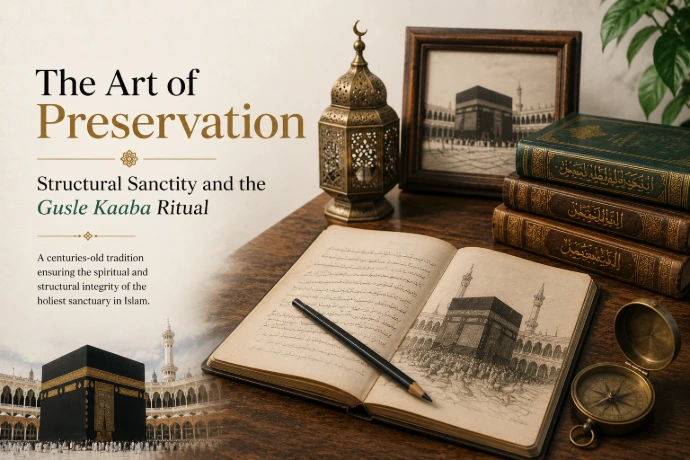
The Art of Preservation: Structural Sanctity and the Gusle Kaaba Ritual
The Kaaba stands as a magnificent cube of dark stone, wrapped in a heavy black silk shroud embroidered with gold thread. But while millions track the annual replacement of the outer drape, a equally significant architectural and textile ritual happens internally: the Gusle Kaaba (the cleaning of the inner sanctuary).
This annual event is a masterpiece of logistics, heritage, and preservation. For generations, the custodians of the Grand Mosque have maintained strict protocols to protect both the ancient masonry inside the structure and the textiles that dress it.
Protecting the Kiswa During the Interior Wash
Before a single drop of Zamzam water touches the interior floor, technical and engineering teams must coordinate to protect the external coverings. The lower sections of the outer silk drape and the massive embroidered curtain covering the Kaaba's door are carefully raised and secured.
This prevents any of the liquids, oils, or heavy moisture from splashing onto the external gold-and-silver calligraphic embroideries, demonstrating the extreme level of detail that goes into maintaining the site's structural integrity.
[Kiswa Preparation] ──> [Golden Doors Opened] ──> [Interior Wash with Rosewater] ──> [Bakhoor Scenting]
The Interior Anatomy: What Lies Behind the Golden Door?
To understand the scope of the washing ceremony, one must visualize the interior layout. The inside of the Kaaba features:
Three Wooden Pillars: Crafted from durable aged wood, these pillars stand sequentially down the center to reinforce the ceiling. They are thoroughly wiped down during the process with premium oud mixtures.
Marble Paneling: The lower interior walls and floors are paved with premium marble slabs, which absorb the fragrance of the Taif rosewater and attar over decades of repeated washings.
The Interior Green Hangings: The upper walls and ceiling are lined with a rich green Islamic fabric, providing a historic aesthetic contrast to the dark exterior.
During the ritual, officials work in organized groups. Using specialized brass and silver vessels, they pour the rosewater-and-Zamzam mixture directly onto the stone. The surfaces are scrubbed completely by hand using soft palm cloths, avoiding harsh chemical interactions that could degrade the ancient stone over centuries.
A Tradition of Global Unity
The washing of the Kaaba is not merely a localized event. Dignitaries and ambassadors from across the Islamic world are invited to pick up a cloth and participate in the wiping of the walls. This inclusion serves as a profound symbol of unity. No matter if a believer hails from New York, London, or Riyadh, their representation inside the house of worship underscores the equality of all people under the banner of faith.
The preservation of these physical spaces reminds us of the delicate balance between structural artistry and religious duty, keeping a millennium-old heritage seamlessly alive in the modern era.