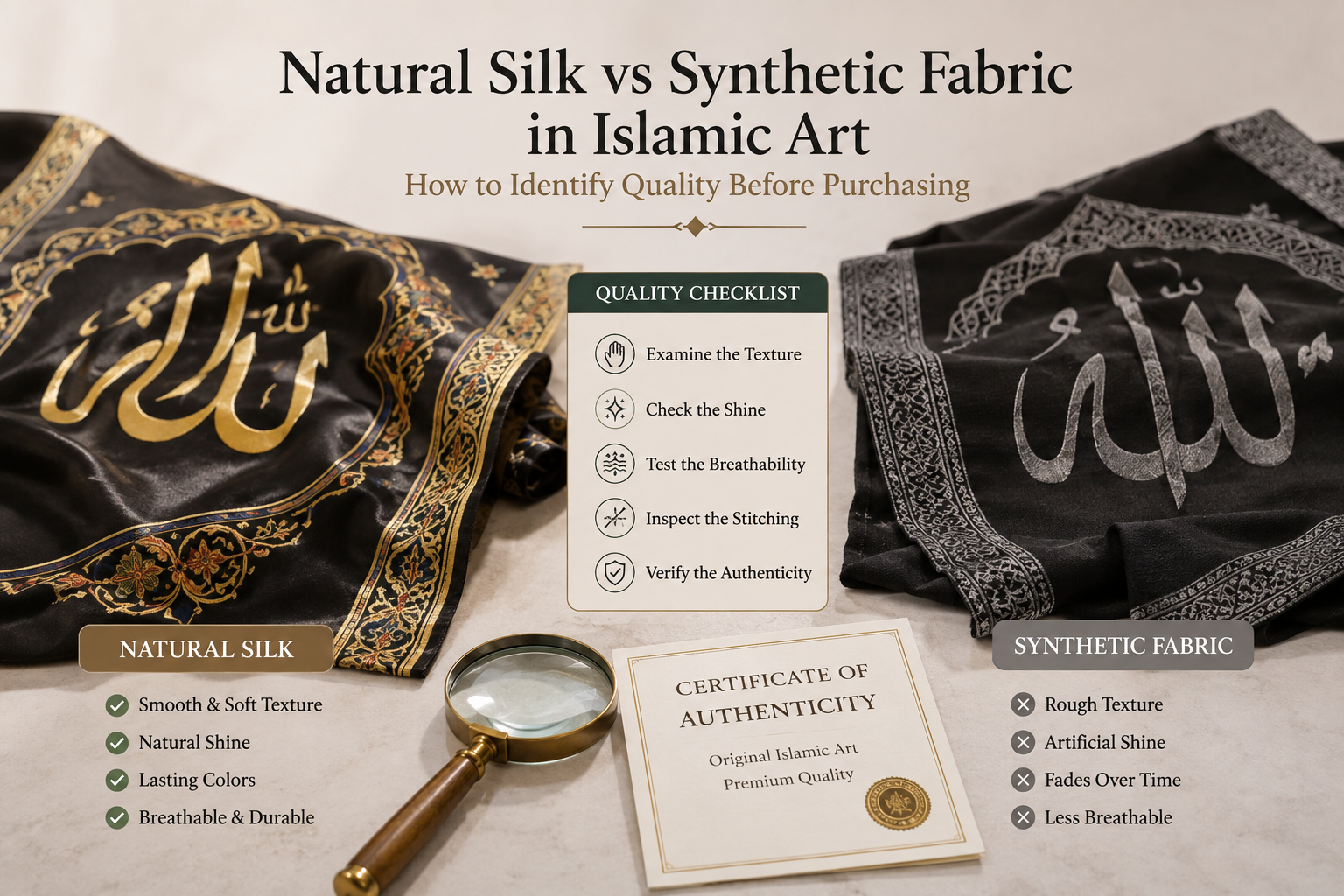
Islamic textile art combines beauty, craftsmanship, history, and spiritual meaning. When buying a decorated textile, however, appearance alone cannot tell you whether the fabric is genuinely valuable. Silk can be imitated by synthetic fibres such as polyester, nylon, or viscose blends, making careful inspection important for collectors and buyers. Understanding fibre type, weave, embroidery, documentation, and seller transparency can help you buy more confidently.
Why Does Fabric Matter in Islamic Art?
Natural silk has distinctive physical characteristics that influence its drape, softness, lustre, strength, and ageing. In historic or luxury Islamic textiles, these qualities can contribute significantly to the character and desirability of a piece.
Synthetic fabrics can also look attractive, especially when professionally manufactured. They may look attractive, but their feel, movement, and lustre can differ from natural silk. Assess several characteristics instead of relying on one visual clue.
How to Identify Genuine Silk UK
If you are researching how to identify genuine silk UK, begin with the fabric itself. Genuine silk generally feels smooth and soft. When moved, it tends to create a fluid drape rather than a stiff fall.
Natural silk can display a changing lustre, appearing brighter from one angle and softer from another. Synthetic fabric may produce a more consistent shine.
Texture is useful, but it is not conclusive. Modern synthetic materials can be engineered to imitate silk surprisingly well. For valuable Islamic art, professional fibre testing and reliable provenance are stronger evidence than home experiments.
Difference Between Mulberry Silk and Synthetic Silk
The difference between Mulberry silk and synthetic silk begins with their origin. Mulberry silk is a natural animal fibre produced by silkworms, traditionally associated with silkworms fed primarily on mulberry leaves. Synthetic silk-like materials are manufactured from chemical polymers.
Mulberry silk normally has a soft feel, natural lustre, good drape, and breathable character. Synthetic alternatives can be durable and affordable, but often feel different.
It is important to remember that “silk-like” does not mean “silk.” A seller describing a textile as silk-style, satin, or silk-effect may not be claiming that it contains natural silk. Always check the material description, product documentation, and, where appropriate, independent testing.
How to Check Quality of Silk Fabric Before Buying
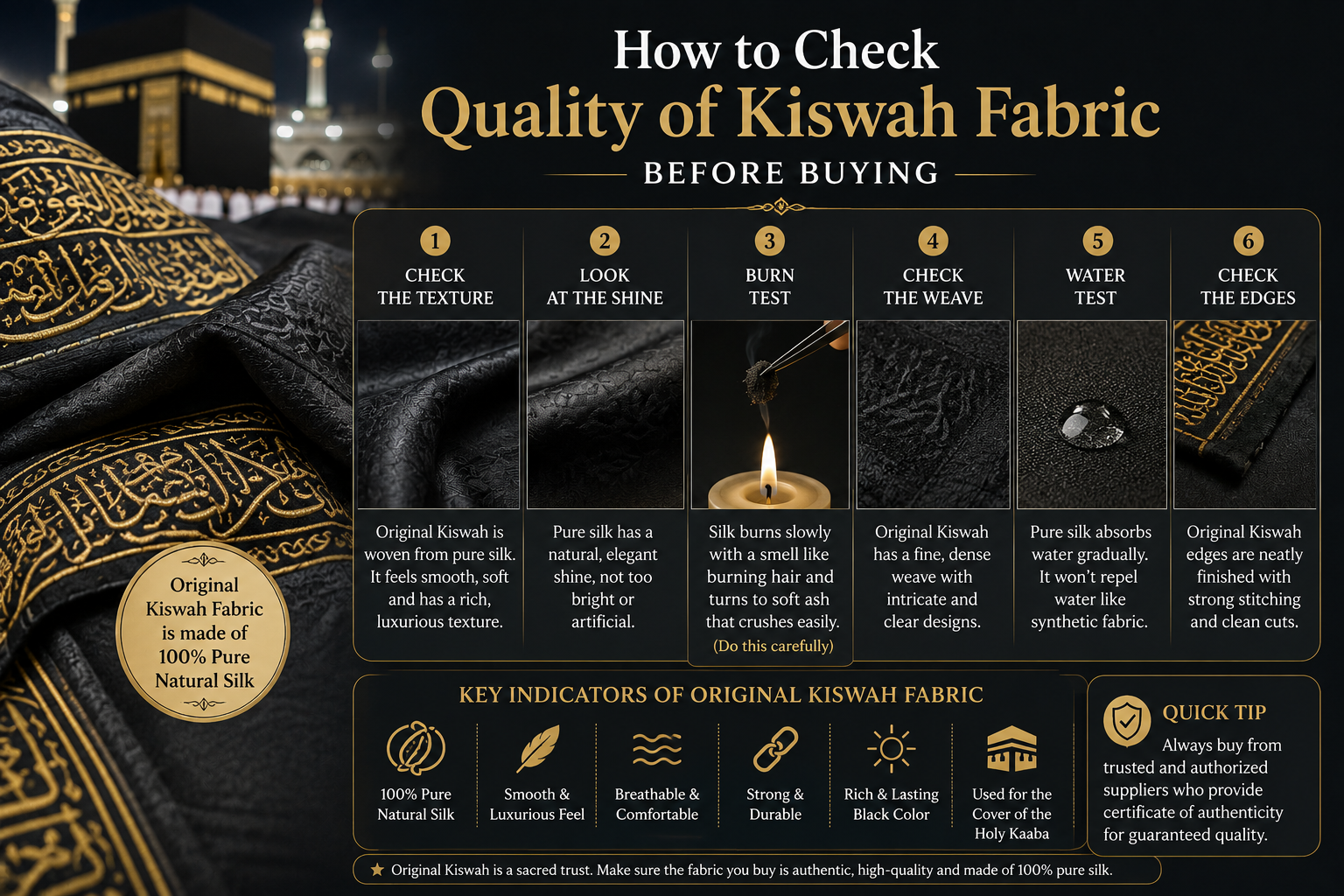
Knowing how to check quality of silk fabric before buying requires looking beyond the word “silk” in a listing. First, inspect the weave. Quality fabric should have a coherent, consistent structure appropriate to its construction. Loose threads, unexplained gaps, severe pulls, or irregular damage may indicate poor handling or deterioration.
Next, examine the surface under good lighting. Look for stains, fading, abrasion, broken fibres, and previous repairs. Age-related marks do not automatically reduce importance, but they should be disclosed.
Check the reverse side too. The back can reveal how embroidery was constructed, whether the lining is original, and whether alterations have been made. For hand-embroidered Islamic textiles, small variations may actually reflect craftsmanship rather than manufacturing defects.
Pure Silk vs Viscose Identification
Pure silk vs viscose identification can be difficult without laboratory analysis. Viscose is a regenerated cellulose fibre, not a synthetic polymer in the narrowest technical sense, but it is commonly sold as an alternative to natural silk because it can imitate silk’s softness and shine.
Both materials can feel smooth, so touching alone is unreliable. Viscose may have a different drape, surface appearance, and response to moisture, while silk has distinctive protein-fibre characteristics. Age, finishing, blends, and construction can complicate identification.
Avoid destructive burn tests on valuable Islamic textiles. If authenticity materially affects the purchase price, ask an experienced textile conservator or qualified testing laboratory for a non-destructive or minimally invasive assessment.
Look Beyond the Fabric
Consider the calligraphy, embroidery technique, stitching density, design accuracy, condition, age, dimensions, and history of ownership.
For pieces connected to significant Islamic sites or traditions, provenance is especially important. Ask where it originated, when it was produced, how it entered the market, and whether supporting documentation exists. Certificates, invoices, photographs, institutional records, or previous ownership information can strengthen a provenance trail, although no single document should automatically be treated as conclusive proof.
Be Careful With Marketing Claims
Terms such as “luxury silk,” “Makkah textile,” “museum quality,” or “rare Islamic fabric” can sound impressive, but marketing language is not evidence of authenticity. A responsible seller should provide material information, clear photographs, measurements, condition details, and provenance.
If a seller refuses reasonable questions or provides inconsistent information, consider that a warning sign. You should have enough information to understand exactly what you are purchasing.
Where to Buy Authentic Islamic Textile Art UK
To buy authentic Islamic textile art UK, choose a transparent seller rather than relying on attractive photography. Look for detailed product descriptions, clear material information, provenance where available, secure purchasing processes, and responsive customer support.
At Kiswah Al Kabah, we value the craftsmanship and story behind Islamic textile art. Explore our collection, review the available product details, and contact our team if you need clarification before making a purchase.
Ready to choose a meaningful Islamic textile for your collection or home? Visit Kiswah Al Kabah today to explore our curated Islamic textile art collection. For questions about material, craftsmanship, provenance, or authenticity, contact us before purchasing.
A closer inspection can also reveal whether the textile has been altered. Compare the stated dimensions with photographs, inspect edges and seams, and ask whether the piece has been mounted, backed, repaired, or reframed. These details matter because presentation can hide damage or changes. For collectors, an accurate description of every alteration makes comparison between pieces easier.
Final Thoughts
Natural silk can bring exceptional character to Islamic textile art, but identifying it requires more than judging shine or softness. Compare fibre information, weave, condition, embroidery, provenance, and seller transparency. For historically or spiritually significant pieces, careful verification is especially important.
Whether you are an experienced collector or purchasing your first textile, take your time, ask questions, and avoid decisions based only on appearance. A well-documented textile offers greater confidence in your collection.