How Often Is the Kaaba Washed? Complete Guide to the Kaaba Washing Ceremony
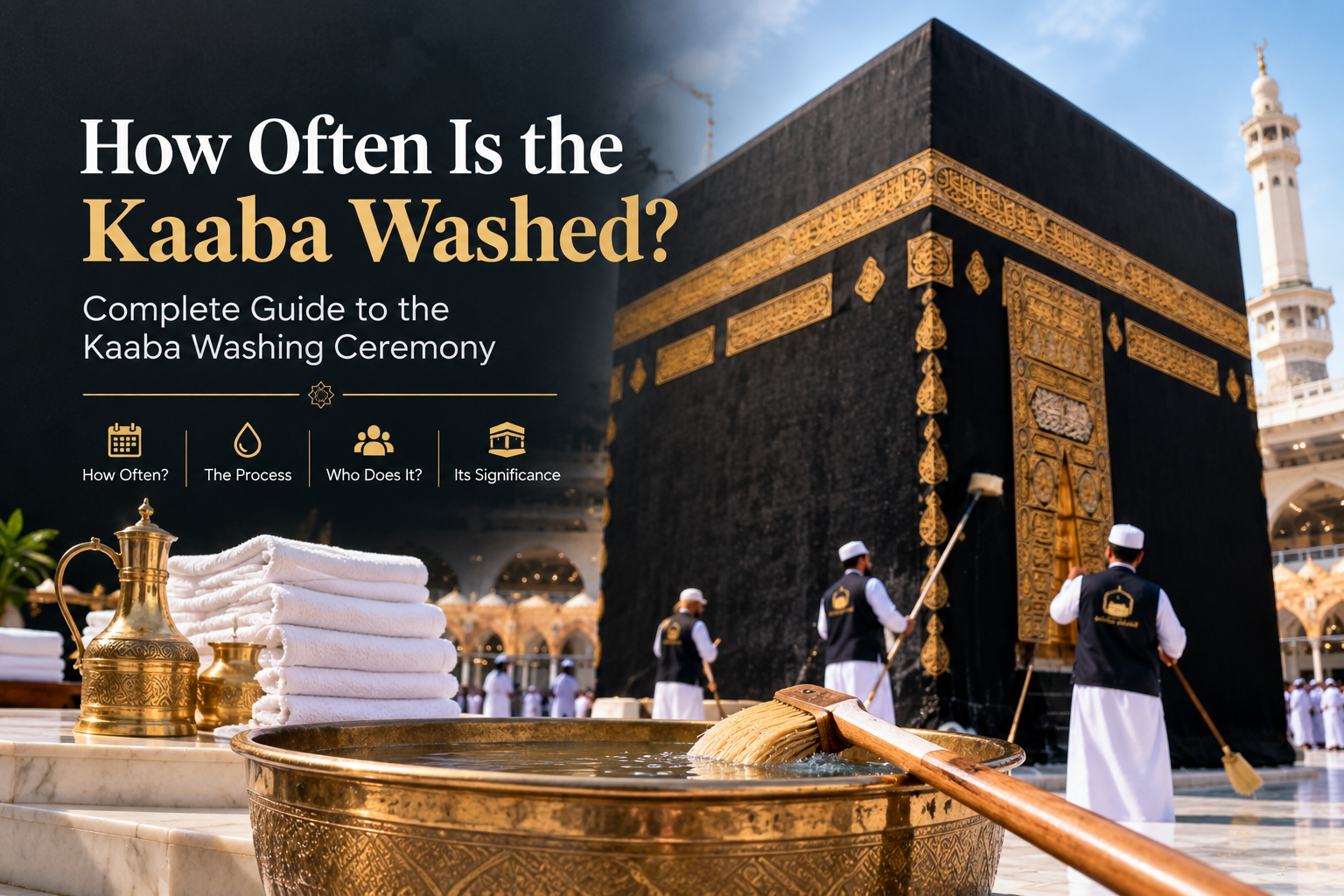
The Holy Kaaba in Makkah stands as the spiritual center of Islam, serving as the direction toward which millions of Muslims turn daily during prayer. Beyond its role as the Qibla, the sanctuary holds immense historical and religious importance. Among the most sacred traditions maintained at Masjid al-Haram is the ceremonial cleaning of the Holy Kaaba—known as Ghusl al-Kaaba.
If you have ever wondered how often the Kaaba is washed, who performs the ritual, and what sacred ingredients are used, this guide breaks down everything you need to know about this centuries-old tradition.
How Often Is the Kaaba Washed?
Historically, the Holy Kaaba was washed twice every year—first in the month of Muharram (the first month of the Islamic Hijri calendar) and again in Sha’ban (shortly before Ramadan).
In recent years, Saudi authorities standardized the schedule: the Kaaba is now washed once a year, typically on the 15th of Muharram.
Key Fact | Detail |
Frequency | Once a year (Annual Ritual) |
Hijri Date | 15th of Muharram |
Primary Ingredients | Holy Zamzam water, Taif rosewater, pure oud oil, and natural musk |
Prophetic Origin | Sunnah of Prophet Muhammad (PBUH) following the Conquest of Makkah |
While the inner cleansing happens annually, routine maintenance, surface dusting, and the changing of the Kiswah (the black silk cloth adorned with golden Qur'anic calligraphy) follow dedicated schedules maintained by Saudi authorities.
The Historical Origin of Ghusl al-Kaaba
The practice of washing the interior of the Kaaba dates directly back to the time of Prophet Muhammad (PBUH).
Following the Conquest of Makkah (Fath Makkah) in 8 AH (630 CE), the Prophet (PBUH) entered the Kaaba alongside his companions, including Usama bin Zaid and Uthman bin Talha (RA). The idols were cleared, and the interior walls were cleansed using water from the Well of Zamzam. The Prophet (PBUH) offered prayers inside, establishing a lasting tradition of honoring and purifying the House of Allah.
Since that event, Caliphs, Islamic leaders, and modern caretakers have upheld this ritual to preserve the sanctuary's dignity.
Step-by-Step: Inside the Kaaba Washing Ceremony
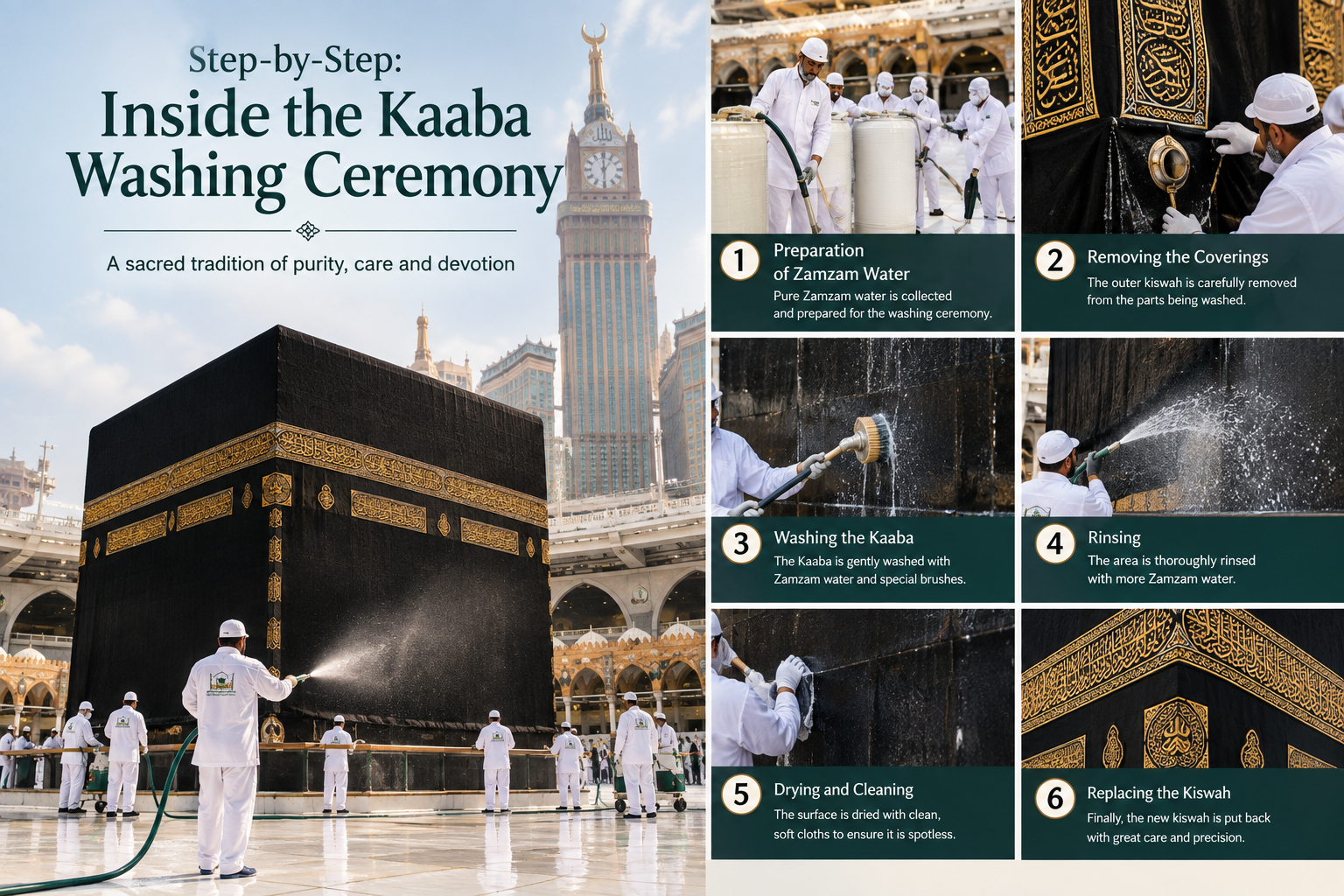
The annual washing ceremony is executed with meticulous organization, traditional precision, and high spiritual reverence.
Step 1: Raising the Kiswah
Days prior to the ceremony, officials from the General Authority for the Care of the Affairs of the Two Holy Mosques raise the lower section of the Kiswah by approximately three meters to protect the fabric during preparation.
Step 2: Opening the Golden Door
Following the Fajr prayer on the morning of the ceremony, royal governors and designated caretakers arrive at Masjid al-Haram. A moveable wooden staircase is positioned at the entrance, and keyholders from the Bani Shaiba family open the golden door of the Kaaba.
Step 3: Preparing the Fragrant Solution
Ceremonial vessels are prepared using a specific blend of natural and sacred ingredients:
Pure Zamzam Water: Used as the primary liquid base for purification.
Taif Rosewater: Sourced from the renowned rose fields of Taif, Saudi Arabia.
Oud Oil & Musk: Concentrated aromatic oils added to impart a lasting fragrance.
Step 4: Cleansing the Marble Interior
Dignitaries enter the interior carrying white palm-leaf cloths saturated with the Zamzam and rosewater blend. They wipe down the marble floors, the three central wooden pillars, and the walls inscribed with historical plaques.
Step 5: Perfuming and Incense
Once wiped dry, the interior is scented with fine attar and premium bakhoor (oud incense). The fragrance remains sealed inside the structure long after the ceremony concludes.
Significance of the Washing Ceremony
For Muslims around the world, learning about or observing the Ghusl al-Kaaba ceremony reinforces a deep connection to Islamic heritage.
Upholding the Sunnah: It directly honors the historical action of Prophet Muhammad (PBUH).
Sanctity of the Qibla: It reflects ongoing care for the focal point of Islamic worship.
Symbolic Unity: The ritual connects believers across generations through reverence for the sanctuary.
Frequently Asked Questions
Can regular pilgrims enter the Kaaba during the ceremony?
No. Entrance to the interior of the Kaaba during the washing ritual is strictly limited to appointed state officials, scholars, and invited dignitaries. Pilgrims in the Mataf courtyard can observe the entrance from outside.
How often is the Kiswah changed?
While the interior washing takes place once a year on Muharram 15, the Kiswah cloth itself is changed annually at the start of the Islamic New Year (1st of Muharram).
What liquids are used to clean the Kaaba?
The ritual uses Zamzam water mixed with natural Taif rosewater, oud oil, and musk. Standard commercial chemical cleansers are not used.
Bring the Sacred Atmosphere into Your Home
While visiting Makkah for Umrah or Hajj is a cherished aspiration for every believer, maintaining a vibrant Islamic environment at home keeps spiritual connection alive. At Kiswah Al Kaaba, we offer a curated range of high-quality Islamic lifestyle products, including luxury prayer mats, Islamic decor, and authentic Arabic fragrances. Visit our collection today to enhance your home worship space.