Historic Photos of the Kaaba: A Visual Journey Through Time
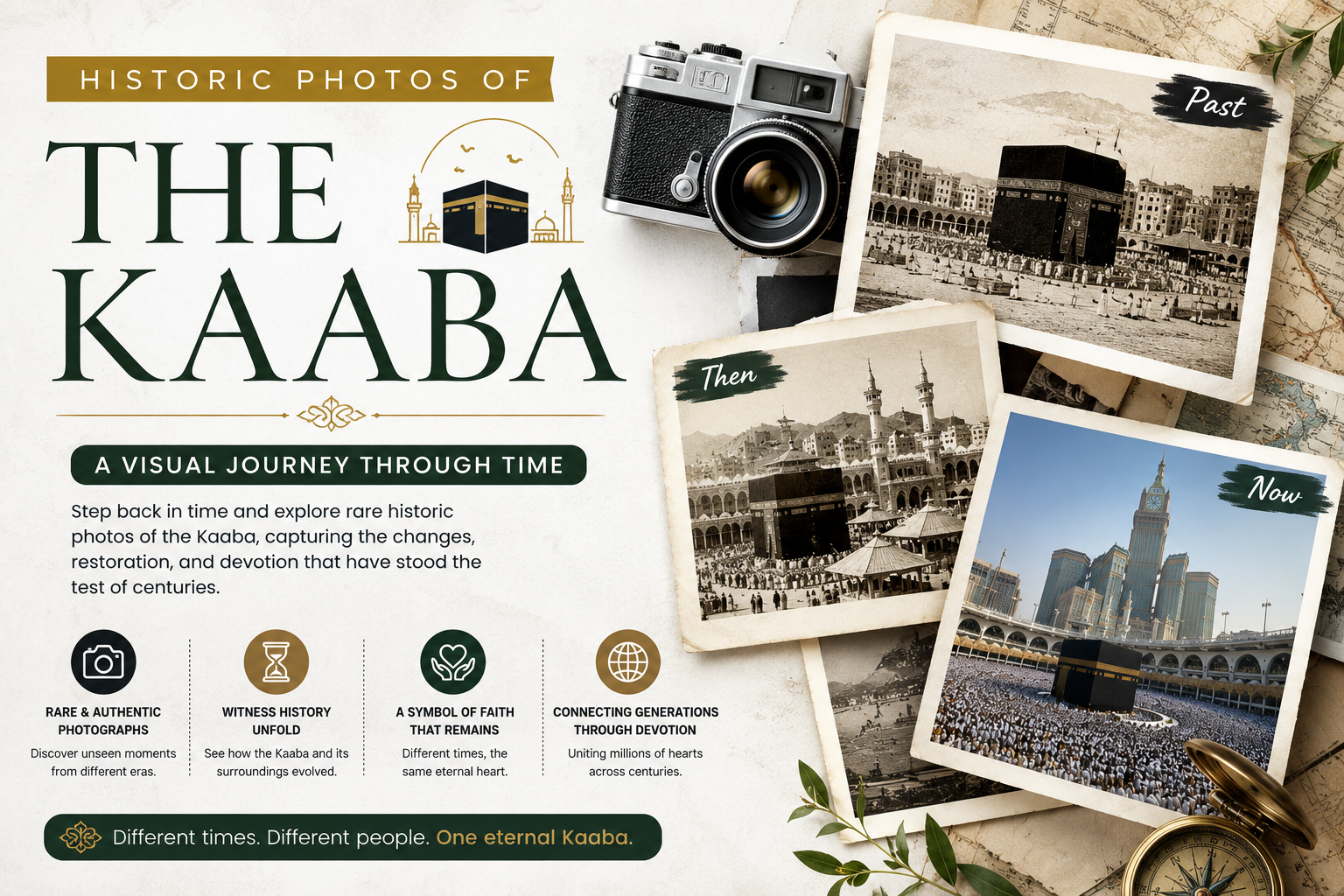
The Holy Kaaba has stood at the centre of Islamic worship for centuries, welcoming millions of pilgrims from every corner of the world. While its spiritual significance has remained unchanged, the surroundings of the Kaaba have transformed dramatically over time. From a modest open courtyard surrounded by traditional buildings to today's vast Masjid al-Haram, the journey of Makkah can be traced through historic photographs that preserve moments from different eras.
For Muslims and history enthusiasts alike, viewing historic photos of Mecca offers a unique opportunity to witness how one of the world's most sacred places has evolved. These photographs capture not only architectural changes but also the growth of the Muslim community, the development of pilgrimage infrastructure, and the enduring reverence shown towards the Holy Kaaba.
In this guide, we explore the oldest photo of Kaaba, examine rare images of the Holy Kaaba, look back at old Makkah photos, and discover how the history of Kaaba Kiswa can be understood through these remarkable visual records.
The Importance of Historic Photographs
Before the invention of photography, knowledge about Makkah was preserved through written accounts, maps, paintings, and travellers' descriptions. Although these records remain valuable, photographs introduced a new level of historical accuracy by capturing the Kaaba and its surroundings exactly as they appeared during different periods.
Historic photographs allow us to compare the appearance of Masjid al-Haram across generations. They reveal changing architectural styles, expanding prayer areas, and improvements made to accommodate the increasing number of pilgrims performing Hajj and Umrah.
Each image represents more than a moment in time. It tells a story about Islamic heritage, preservation, and the continuous care given to one of the world's most sacred places.
The Oldest Photo of the Kaaba
Among the most treasured historical records is the oldest photo of Kaaba, believed to date back to the nineteenth century when photography first reached the Arabian Peninsula. These early black-and-white photographs provide a rare glimpse into Makkah long before modern expansion projects transformed the city.
Unlike the brightly illuminated Grand Mosque seen today, these early photographs show a far simpler environment. The Kaaba stood within a smaller open courtyard, surrounded by traditional buildings, narrow pathways, and modest structures that reflected the architectural style of the period.
Although the quality of these photographs is limited by the technology of their time, they remain invaluable historical documents. They allow modern generations to appreciate the remarkable journey of Makkah while recognising that the Kaaba itself has remained the spiritual centre throughout every era.
Rare Images of the Holy Kaaba
Some of the most fascinating visual records are the rare images of the Holy Kaaba taken during important historical moments. These photographs capture scenes that many people have never witnessed, including earlier designs of the surrounding mosque, traditional methods of caring for the Kiswah, and periods before the extensive redevelopment of Masjid al-Haram.
Rare photographs also reveal details that are often overlooked, such as the smaller number of worshippers present during earlier centuries, the original stone paving surrounding the Kaaba, and the architectural features that have since been replaced by modern construction.
For historians, these images provide valuable evidence of how Islamic architecture has evolved while preserving the sanctity of the Holy Kaaba.
Old Makkah Photos: A Window into the Past
Viewing old Makkah photos offers a deeper understanding of how the city has developed over time. Early images show a landscape surrounded by mountains, with limited buildings beyond the Sacred Mosque. Streets were narrower, accommodation was modest, and pilgrims often travelled long distances under challenging conditions to reach the Holy Kaaba.
As decades passed, photographs began documenting major improvements to roads, transport, public facilities, and the mosque itself. These visual records illustrate how Makkah gradually transformed into a modern city capable of welcoming millions of visitors every year while preserving its religious importance.
Despite these changes, one feature remains constant throughout every photograph—the Holy Kaaba continues to stand at the heart of Islamic worship.
Historic Photos of Mecca Reflect Continuous Growth
Examining historic photos of Mecca demonstrates that the city's development has always focused on serving pilgrims. Expansion projects have enlarged prayer areas, improved accessibility, enhanced safety, and created better facilities for worshippers from around the world.
Photographs from different decades show the gradual addition of new courtyards, minarets, walkways, and surrounding infrastructure. These improvements reflect both technological progress and the growing number of Muslims undertaking Hajj and Umrah each year.
The visual contrast between early photographs and contemporary aerial images highlights one of the most remarkable transformations of any religious site while maintaining the Kaaba as its unchanging spiritual centre.
The History of Kaaba Kiswa Through Photography
Historic photographs also help preserve the history of Kaaba Kiswa. Although the Kaaba has always been covered with a Kiswah, photographs from different periods reveal subtle changes in embroidery styles, calligraphic designs, and the methods used to produce and install the sacred covering.
These images document the exceptional craftsmanship involved in weaving black silk, embroidering Qur'anic verses with gold and silver-plated thread, and carefully fitting the Kiswah over the Kaaba. They also provide valuable insight into how this respected tradition has been maintained across generations.
For collectors and admirers of Islamic heritage, these photographs deepen appreciation for the artistry and dedication behind one of the world's most celebrated religious textiles.
Preserving Islamic Heritage Through Historic Photographs
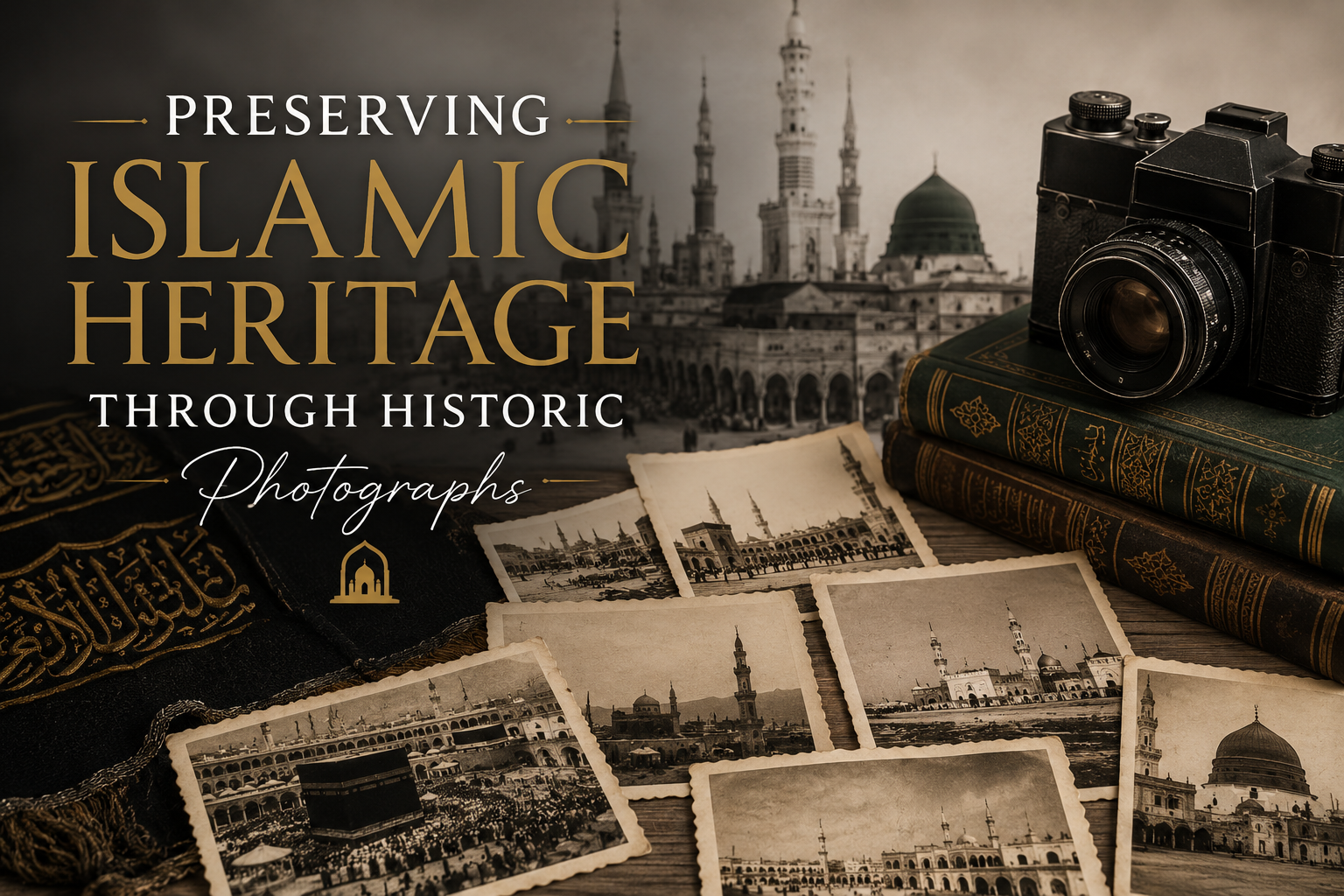
Historic photographs do far more than record architecture—they preserve the living history of one of Islam's holiest places. Every image captures a moment that can never be recreated, allowing future generations to understand how Makkah has changed while the spiritual significance of the Kaaba has remained constant.
Researchers, historians, and museums carefully preserve these photographs because they document important stages in the development of Masjid al-Haram. They show the expansion of prayer areas, the construction of new entrances and minarets, improvements to pilgrim facilities, and the careful balance between protecting sacred traditions and meeting the needs of millions of visitors.
For Muslims, these photographs strengthen the connection between faith and history by providing a visual record of places that hold immense religious importance.
How Makkah Has Changed Over the Decades
Comparing old Makkah photos with modern images reveals one of the most remarkable urban transformations in the world. Early photographs show a relatively quiet city surrounded by rocky mountains, with simple buildings close to the Sacred Mosque. Pilgrims often travelled for weeks or months before reaching Makkah, and the city's infrastructure reflected the needs of a much smaller population.
Today, Makkah has become a modern destination capable of welcoming millions of worshippers every year. Wide roads, advanced transportation systems, expanded courtyards, and carefully planned facilities have transformed the experience of Hajj and Umrah while ensuring that the Holy Kaaba remains the focal point of every visitor's journey.
Although the city has grown dramatically, historic photographs remind us that its spiritual identity has never changed.
The History of Kaaba Kiswa Continues Today
The history of Kaaba Kiswa is closely connected with the visual history of the Holy Kaaba itself. Early photographs show previous designs of the Kiswah, revealing differences in decorative details, embroidered calligraphy, and the appearance of the famous Hizam, the embroidered belt that surrounds the upper portion of the covering.
Despite these artistic developments, the purpose of the Kiswah has remained unchanged. It continues to symbolise honour, devotion, and respect for the House of Allah. Each year, skilled craftsmen produce a new Kiswah using premium black silk and intricate embroidery created with gold and silver-plated thread. The previous Kiswah is then carefully preserved, with selected sections presented as official gifts or retained for historical conservation.
Historic photographs documenting these traditions allow future generations to appreciate both the craftsmanship and the continuity of this remarkable Islamic heritage.
Why Authentic Kiswah Pieces Hold Historical Value
Photographs provide an important visual record of the Kaaba, but authentic Kiswah pieces offer a tangible connection to that history. A genuine Kiswah Kaaba piece represents more than a beautifully woven textile; it reflects centuries of craftsmanship, religious tradition, and cultural heritage.
Collectors, museums, and Islamic institutions value authenticated Kiswah fragments because they preserve part of a tradition that has been maintained for generations. Displayed with proper certification and documentation, these pieces serve as meaningful reminders of the Holy Kaaba and the remarkable artistry behind its annual covering.
At Kiswah Al Kabah, we are committed to preserving this heritage by offering carefully authenticated Kiswah pieces that celebrate the enduring legacy of the Sacred Kaaba. Every piece represents a connection with one of the most respected traditions in the Islamic world.
Why Historic Images Continue to Inspire
The enduring appeal of rare images of the Holy Kaaba, the oldest photo of Kaaba, and other historic photos of Mecca lies in their ability to connect people across generations. These photographs allow viewers to witness the remarkable journey of Makkah while appreciating how the Kaaba has remained the spiritual centre of Islam despite centuries of architectural change.
Whether viewed in books, museums, archives, or educational collections, these images encourage a deeper understanding of Islamic history and the continuous efforts made to preserve one of the world's most sacred places.
Conclusion
The visual history of Makkah tells a remarkable story of preservation, faith, and progress. From the oldest photo of Kaaba to modern aerial photographs, every image reflects the enduring importance of the Holy Kaaba and the continuous development of Masjid al-Haram.
Exploring historic photos of Mecca, studying old Makkah photos, and understanding the history of Kaaba Kiswa allow us to appreciate both the physical transformation of the city and the unchanging spiritual significance of its sacred centre. These historic records ensure that future generations can continue to learn from the past while honouring the traditions that have defined Islamic heritage for centuries.
Frequently Asked Questions
What is the oldest photo of the Kaaba?
The earliest known photographs of the Kaaba date to the nineteenth century, offering a rare glimpse of Makkah before the major expansion projects of the modern era.
Why are historic photos of Mecca important?
They document the architectural development of Masjid al-Haram, preserve Islamic history, and provide valuable insight into how pilgrimage and the Sacred Mosque have evolved over time.
What do rare images of the Holy Kaaba show?
Many rare photographs reveal earlier appearances of the Kaaba, previous Kiswah designs, traditional pilgrimage scenes, and the original layout of Masjid al-Haram before modern expansion.
How does photography help preserve the history of Kaaba Kiswa?
Historic photographs record changes in the Kiswah's design, embroidery, and installation, preserving visual evidence of one of Islam's most respected artistic traditions.