Framed Kaaba Kiswah: Complete Guide to Buying, Authenticity, Size, Price and History
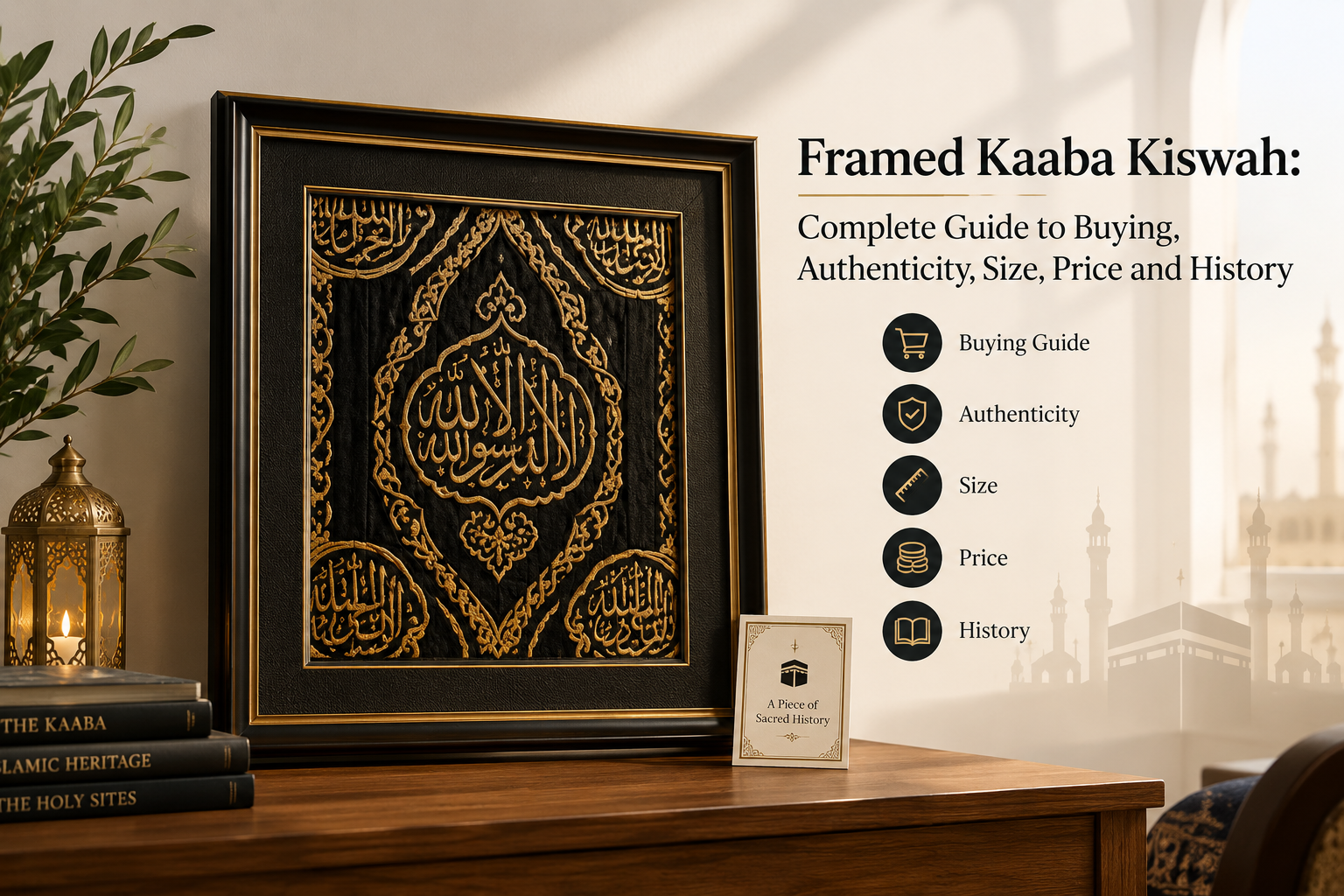
A framed Kaaba Kiswah is more than an attractive piece of Islamic wall decor. Genuine Kiswah is connected with the Holy Kaaba in Makkah and carries historical, religious and artistic significance. Before purchasing, buyers should understand what Kiswah is, where genuine pieces may be obtained, how purchasing and delivery work, and what documentation can help establish authenticity.
About the Kaaba Kiswah
Kiswah, also written Kiswa, is the covering placed over the Holy Kaaba in Makkah. The exterior is traditionally made from specially prepared black silk and decorated with Quranic inscriptions and Islamic calligraphy using gold- and silver-coloured embroidery. One of its most recognisable features is the Hizam, the broad embroidered belt running around the upper portion of the Kaaba. The door is covered by a richly decorated curtain commonly known as the Sitaarah or Burqa.
The Kiswah is produced at the King Abdul Aziz Complex for Holy Kaaba Kiswah in Makkah. Its manufacture involves specialised Cloth work, embroidery, design and assembly. The covering is replaced according to the established Saudi tradition. Pieces from previous Kiswah may subsequently become part of institutional, museum, diplomatic or private collections through different lawful channels.
Where to Buy a Framed Kaaba Kiswah
People looking for genuine Kiswah pieces can encounter several types of sellers, so checking the seller, provenance and documentation is important. Buyers interested in available Kiswah products can explore the collections at Kiswah Islamic Store and Kiswah Al Kabah. These online stores provide a convenient way to view available pieces, sizes and product information before making a purchase.
Buyers may also encounter Kiswah pieces connected with museums, collectors, institutions and secondary markets in Saudi Arabia and elsewhere. Genuine old Kiswah is not an ordinary mass-produced product, so a particular design, inscription, size or historical piece may be available only for a limited period.
How to Buy a Kaaba Kiswah
The buying process depends on where the piece is being purchased. In Saudi Arabia, some buyers may encounter Kiswah-related pieces through museums, authorised institutions, exhibitions, collectors or other established channels. If buying directly from a museum or institutional seller, the buyer should ask about the item's origin, documentation and whether the piece is officially identified as genuine Kiswah.
Online purchasing is another option. Specialist stores such as Kiswah Islamic Store and Kiswah Al Kabah offer Kiswah products online and also can be purchased from trusted E-Commerce Platform like Etsy. Before placing an order, check the product description carefully, including the material, dimensions, embroidery, certificate information and seller details. For an expensive collectible, it is sensible to ask questions about provenance before payment rather than after the order has been shipped.
How to Pay for Kiswah
Payment options depend on the seller and the location of purchase. If purchasing in Saudi Arabia, the accepted payment method and currency can vary according to the museum, institution or seller.
For online purchases, stores may offer international payment methods such as PayPal, credit cards, debit cards or online banking, depending on the seller and payment provider. Always check the checkout page or confirm directly with the store because payment methods can change.
Kiswah Delivery and International Shipping
Delivery time depends on the seller, shipping provider, destination country, customs procedures and the type of item ordered. International orders may commonly take approximately 5 to 15 days in suitable circumstances, but this is only an estimated range and can vary. Custom-made framing, insurance, customs clearance and remote destinations may add additional time.
For a valuable Kiswah piece, buyers should ask whether the shipment is tracked and how the item is packaged. A framed piece requires protective packaging because glass, frame corners and delicate cloth sections can be damaged during transportation.
How to Verify the Authenticity of Kiswah
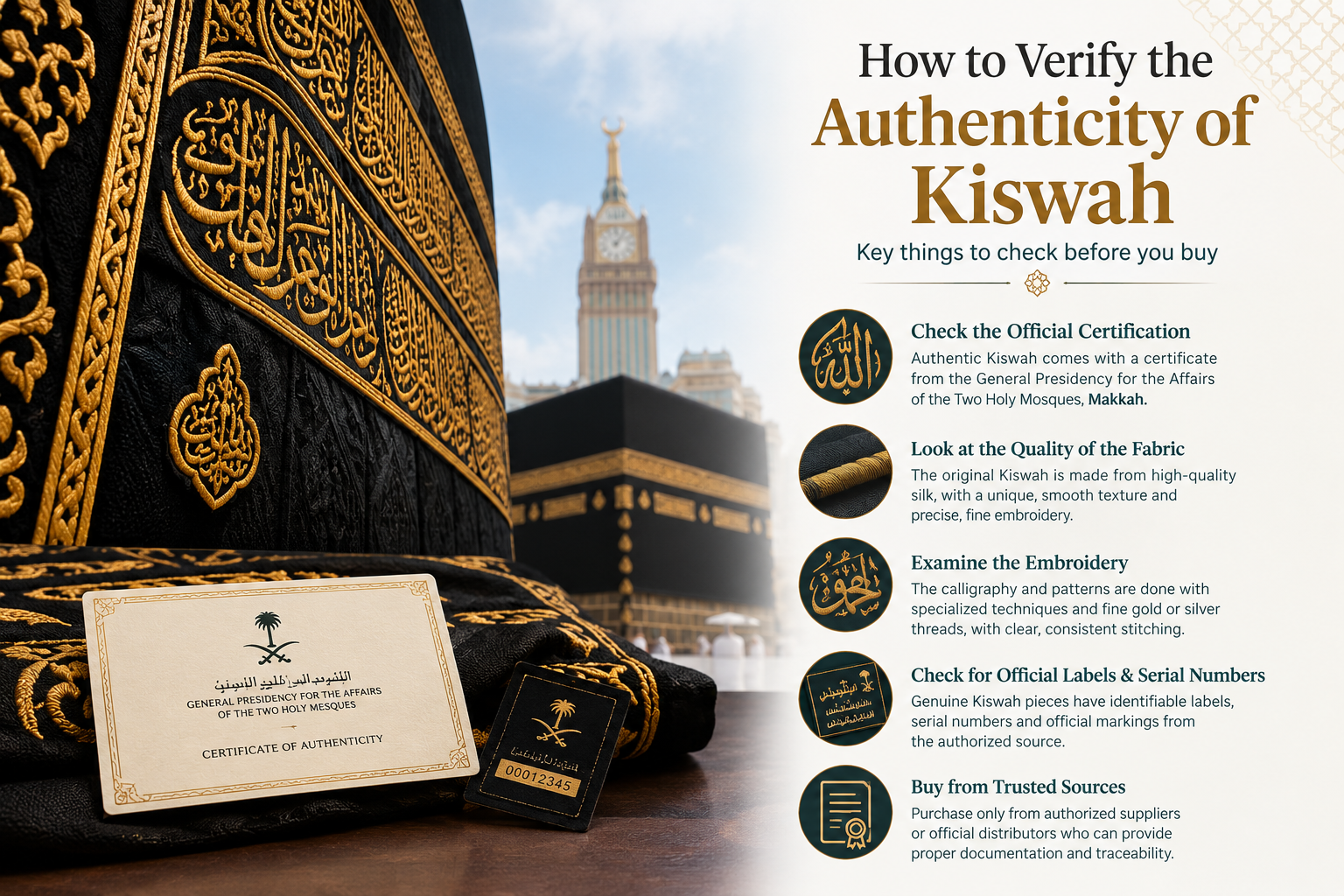
Authenticity is one of the most important considerations when buying an original Kiswah. A genuine piece should ideally have documentation that establishes its history and origin. Sellers may provide a certificate of authenticity or other supporting documentation associated with the piece. Buyers should examine what the certificate actually states and who issued it rather than relying only on a photograph or a seller's description.
Before purchasing, buyers can also use Kiswah Verification to check available verification information about a Kiswah piece. This provides an additional step for buyers who want to verify the piece and review relevant details before completing their purchase.
The certificates provided with our Kiswah pieces are issued by the Kiswah Factory in Saudi Arabia, providing supporting documentation regarding the authenticity and origin of the piece.
Material and craftsmanship can provide useful clues, but appearance alone should not be treated as conclusive proof. Genuine Kiswah uses specialized silk and intricate embroidery. Provenance is therefore particularly important for valuable pieces.
Kiswah Islamic Store and Kiswah Al Kabah provide information and authentication-related resources on its website, allowing interested buyers to learn more before purchasing. For high-value pieces, buyers should request clear photographs, dimensions, documentation and provenance information and retain invoices and certificates after purchase.
Kiswah Size and Price Range
Kiswah pieces are available in different sizes, and price varies significantly according to dimensions, calligraphy, historical significance, condition, embroidery, provenance, framing and rarity. Smaller pieces, including examples around 10 × 10 cm, may start at a few hundred US dollars depending on authenticity and documentation.
Larger calligraphic pieces around 90 × 90 cm can begin at approximately several hundred dollars, with some examples starting around $800 according to the seller and product. However, buyers should not treat these figures as a universal market price. A rare, documented or highly decorative piece can cost substantially more.
What Is Written on the Kiswah?
The Kiswah contains Quranic verses, Islamic phrases and decorative calligraphy. The exact arrangement can vary according to the design and production period. Official descriptions of the current Kiswah identify numerous Quranic inscriptions, with the outer covering incorporating 68 Quranic verses in the current design.
The Hizam is the prominent embroidered Quranic belt around the upper part of the Kaaba. Other decorated pieces appear below it. Among the Quranic passages associated with Kiswah inscriptions are verses from Surah Al-Baqarah, including 2:125, 2:126, 2:127, 2:186 and Ayat al-Kursi, 2:255. Other inscriptions include material from Surah Al-Fath 48:27, Surah Al-Ikhlas 112:1–4 and Surah An-Nur 24:35.
The Kiswah also contains Islamic phrases such as Ya Hayyu Ya Qayyum, Ya Rahman Ya Rahim and Alhamdulillahi Rabbil-'Alamin.
The Sitaarah, or Kaaba door curtain, is another highly decorated part of the Kiswah. It contains Quranic inscriptions and ornamental embroidery using gold- and silver-coloured threads.
Inside the Kaaba, the covering differs from the exterior. Green silk is used for the inner covering. One documented Quranic inscription is Surah Aal-Imran 3:96, which refers to the first House established for mankind at Bakkah. Other phrases on the inner covering include La ilaha illallah Muhammadur Rasulullah and Ya Hannan Ya Mannan Ya Dhal-Jalali wal-Ikram. These expressions are not Quranic verses.
It is also important to distinguish the green inner Kiswah from historical inscriptions found on marble elements inside the Kaaba. Not every inscription inside the building is part of the cloth covering.
Origin and History of the Kiswah
The tradition of covering the Kaaba is very old and predates Islam. Historical accounts contain different reports about the earliest person associated with covering the Kaaba. Tubba al-Himyari, a king of Yemen, is commonly mentioned in historical traditions, while other accounts refer to earlier figures.
During the Quraysh period, responsibility for the Kaaba became organised within the tribe. The covering tradition continued after the beginning of Islam, and historical periods used different colours and materials. During the Abbasid period, the production and decoration of the Kiswah developed further, with Egypt becoming an important centre of production.
In the modern period, production became established in Makkah. The dedicated Saudi Kiswah complex developed the specialized manufacturing process used for the Kaaba covering today.
How Kiswah Is Distributed
When the Kiswah is replaced, the old covering is carefully removed under the responsibility of the authorities overseeing the affairs of the Two Holy Mosques. It is not normally treated as ordinary waste. Depending on the applicable arrangements, portions may be preserved, transferred to institutions, presented to government bodies, museums, Islamic organisations, dignitaries or other authorised recipients.
Some pieces may later enter private collections through legitimate transfers, gifts, inheritances, auctions or other documented secondary-market transactions. This is one way genuine old Kiswah can eventually appear outside Saudi institutional collections. However, there is no general rule that every removed Kiswah automatically becomes available for commercial sale.
For buyers, provenance is therefore essential. A seller should be able to explain how the particular piece came into their possession and provide supporting documentation where available. The fact that an item looks like Kiswah is not by itself evidence of authenticity.
Spiritual Value of Kiswah
The spiritual significance of Kiswah comes from its association with the Holy Kaaba, the central sanctuary toward which Muslims face during prayer. Muslims also encounter the Kaaba during Hajj and Umrah, making the Kiswah a powerful reminder of worship, devotion and the history of Islamic pilgrimage.
Its carefully produced calligraphy and connection with the Kaaba give genuine Kiswah pieces substantial historical and sentimental importance.
At the same time, Kiswah itself is not an object of worship. Islamic devotion is directed to Allah alone, and a piece of cloth should not be treated as possessing independent magical or supernatural powers. Its value lies in its association, history, craftsmanship and meaning.
Why Frame a Kaaba Kiswah?
Framing can turn a Kiswah Cloth into a carefully preserved display piece while protecting it from unnecessary handling, dust and environmental exposure. Archival mounting and suitable glazing can be considered for valuable pieces, particularly when the Cloth includes delicate embroidery.
A framed piece can be displayed in a home, office, mosque, Islamic centre, museum-style collection or other appropriate setting.
A careful buyer should compare provenance, documentation, condition, framing, shipping, and seller policies.
Final Thoughts
A framed Kaaba Kiswah combines Islamic heritage, craftsmanship, calligraphy and historical significance. Whether you are searching for a small cloth fragment or a large embroidered piece, the most important purchasing considerations are authenticity, provenance, documentation, condition, size, price and safe delivery.
For buyers researching available pieces, Kiswah Islamic Store and Kiswah Al Kabah are online sources where Kiswah products can be explored. For broader information about Kiswah history, inscriptions, materials and authenticity, visit Kiswah Islamic Store. Taking time to verify the origin and documentation of a piece can help buyers understand exactly what they are purchasing and preserve an important part of Kaaba-related heritage for years to come.