Eid Milad un Nabi 2026: History, Significance and How Muslims Celebrate
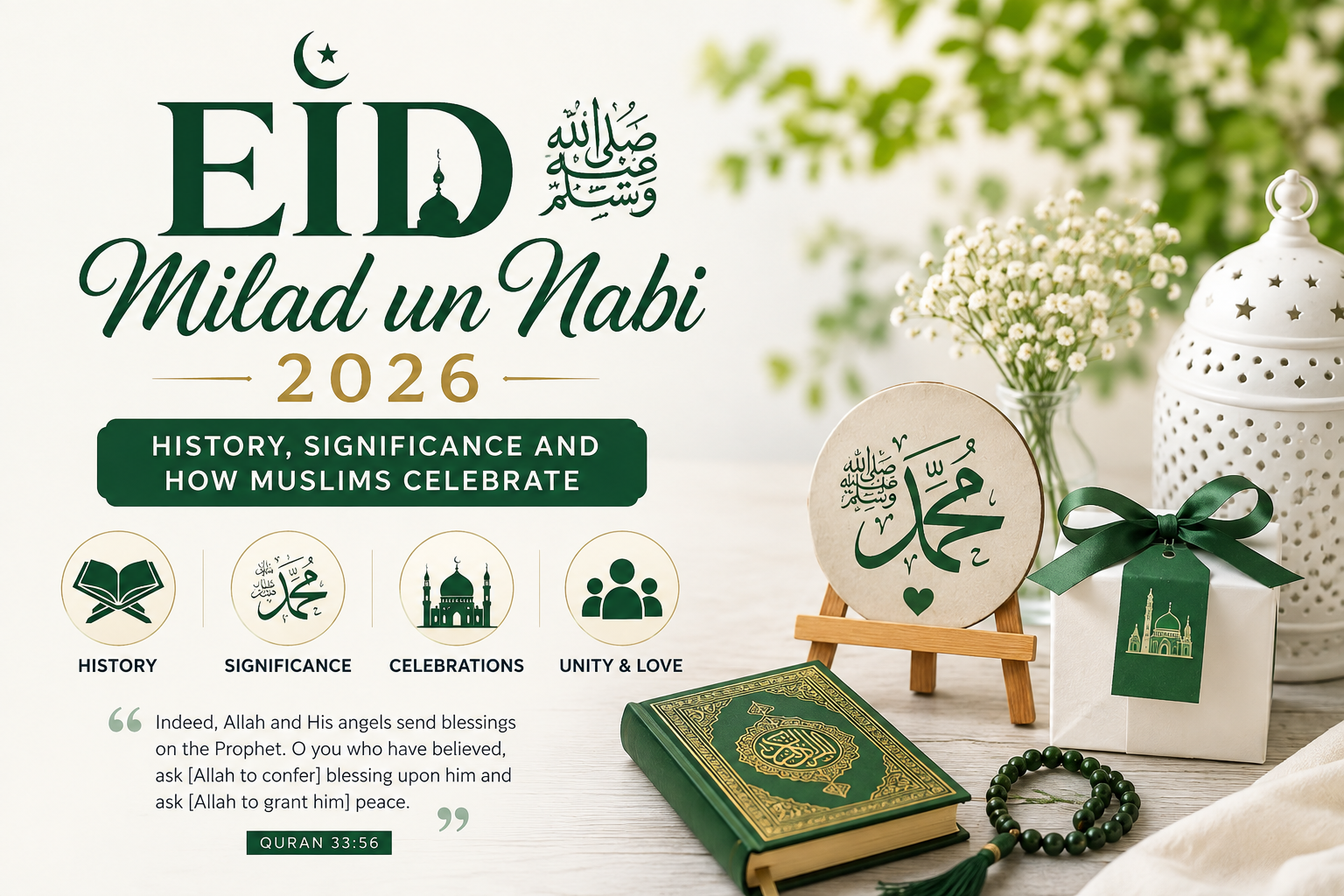
Eid Milad un Nabi, commonly called Mawlid, is an observance through which many Muslims remember the birth and life of Prophet Muhammad ﷺ. Muslim communities understand and observe Milad differently, while some do not observe it as an annual religious occasion. This diversity is important when discussing its history.
Eid Milad un Nabi 2026 UK Date
For readers searching for the Eid Milad un Nabi 2026 UK date, 12 Rabi al Awwal 1448 is expected to fall on Tuesday, 25 August 2026, according to Islamic Relief UK's calendar. The date begins from the previous evening in the Islamic calendar, and the final date can depend on local moon sighting practices. Some Muslim communities follow different dates because historical reports about the Prophet's exact birth date differ.
History of Eid Milad un Nabi in Islam
The History of Eid Milad un Nabi in Islam is not limited to the Prophet's lifetime. Muslims have always remembered his life, character, teachings, and mission, but organised public Mawlid gatherings developed later in Islamic history.
Historical accounts describe formal Mawlid observances emerging centuries after the Prophet Muhammad ﷺ. Over time, the practice spread into different regions and developed distinctive cultural forms. Religious scholars have not reached universal agreement about the annual celebration. Some regard gatherings that include permissible acts such as Seerah lessons, charity, remembrance, and praise of the Prophet as acceptable. Others consider an annual Mawlid celebration an innovation and therefore do not participate.
Who Started Eid Milad un Nabi History?
The question Who started Eid Milad un Nabi history has no single simple answer. There was no annual birthday festival established by Prophet Muhammad ﷺ himself or by the earliest Muslim community in the form commonly seen today.
Historical sources indicate that organised Mawlid ceremonies appeared in later Muslim societies. The Fatimid period is frequently mentioned in discussions about early organised Mawlid observances, while later Sunni rulers and communities developed their own forms of commemoration. One well-known historical figure associated with a major public Mawlid celebration is Muzaffar al-Din Gökböri, ruler of Irbil in the early thirteenth century.
Why Is Rabi al Awwal Important?
Rabi al Awwal has a special place in Islamic history because it is associated with major events in the life of Prophet Muhammad ﷺ. The Prophet's birth is traditionally remembered during this month, although reports differ about the precise day.
His migration to Madinah also took place during Rabi al Awwal according to traditional historical accounts. The month therefore provides an opportunity to study the Seerah and reflect on the Prophet's mission.
For Muslims who observe Milad, remembering these events can encourage gratitude, learning, charity, and renewed attention to the Prophet's character.
Miracles on the Birth of Prophet Muhammad
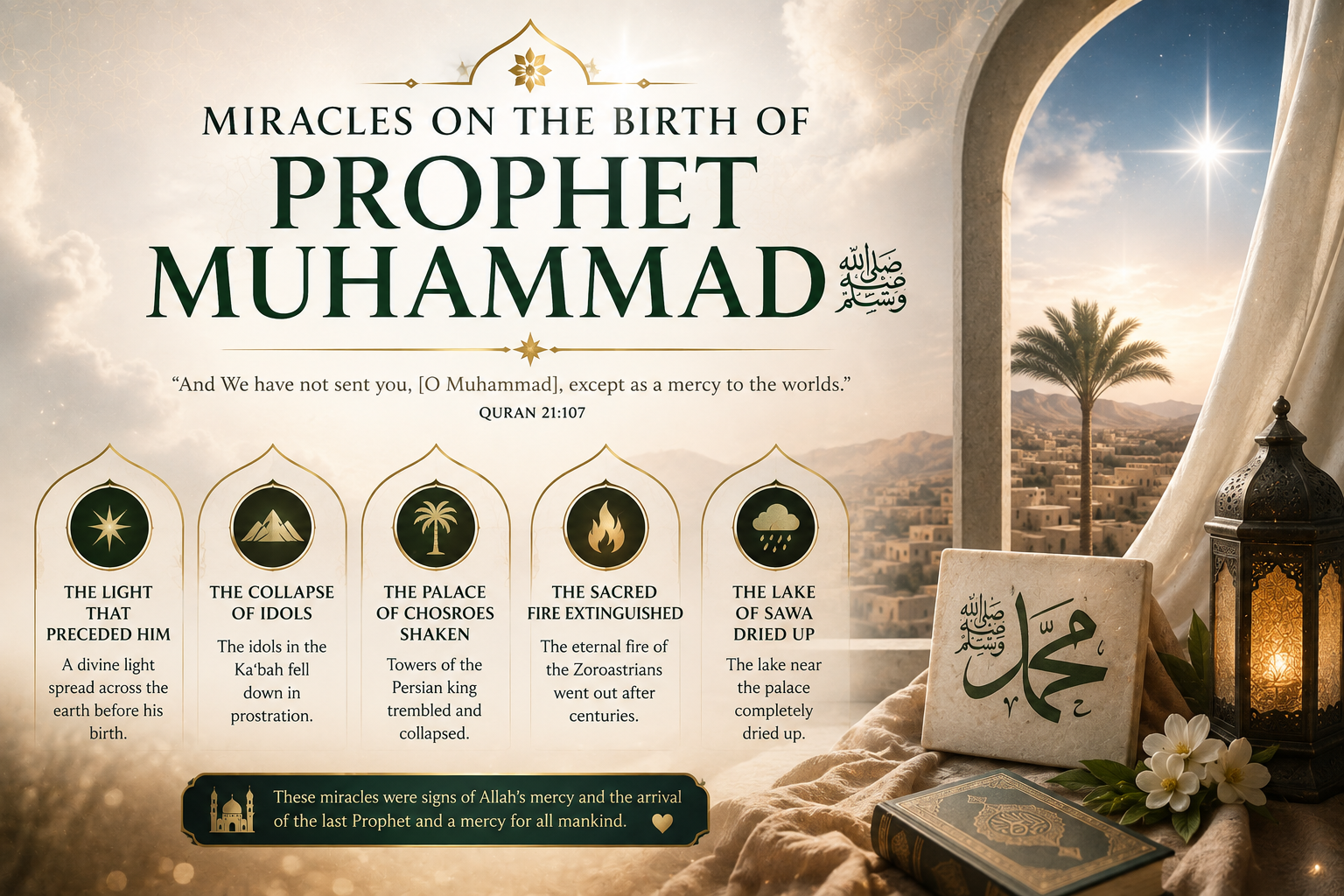
Stories about Miracles on the birth of Prophet Muhammad are found in later Islamic literature and popular devotional traditions. Some accounts describe extraordinary events surrounding his birth, including reports about changes involving the palace of the Persian ruler, the extinguishing of a long-burning fire, or unusual celestial signs.
However, these stories are not all equally established through strong early sources. Readers should distinguish between well-attested Islamic teachings and later narratives that became popular in devotional literature.
The central significance of the Prophet's birth does not depend on dramatic legends. His life, revelation, character, and message explain why his birth is remembered.
How Muslims Observe Milad
There is no single method of celebrating Milad. Practices vary according to country, school of thought, family tradition, and local culture.
Where the occasion is observed, communities may arrange Seerah lectures, Quran recitation, Nasheeds, poetry, Dhikr, gatherings, meals, and charitable activities. Some families decorate their homes or prepare food for relatives and neighbours. Others may spend the occasion quietly reading about the Prophet's life and sending blessings upon him.
In the UK, local mosques and Islamic organisations may organise programmes suited to their communities. Some gatherings are large public events, while others are private or educational.
Is Milad un Nabi a Bank Holiday in the UK?
People often ask, Is Milad un Nabi a bank holiday in the UK? The answer is no. Eid Milad un Nabi is not a UK-wide bank holiday.
The official UK government bank holiday lists for 2026 include holidays such as Good Friday, Easter Monday, the early and spring bank holidays, the summer bank holiday, Christmas Day, and Boxing Day, but they do not list Milad un Nabi. Therefore, schools, employers, and businesses generally operate according to their normal schedules unless they make separate arrangements.
Muslims who wish to attend Milad events may need to use annual leave or arrange their schedules with employers.
Respecting Different Muslim Views
Milad is a subject on which Muslims hold different scholarly and community opinions. Some regard it as a valuable opportunity to remember the Prophet and encourage good deeds. Others believe that an annual celebration was not practised by the earliest generations and therefore should not be treated as a religious observance.
Both the historical development of the practice and these differing opinions should be acknowledged when discussing the subject.
Final Thoughts
Eid Milad un Nabi 2026 will be remembered by many Muslim communities during Rabi al Awwal, with 12 Rabi al Awwal currently corresponding to 25 August 2026 in the UK according to Islamic Relief UK's calendar. The exact local observance can vary with moon sighting and community practice.
Understanding the History of Eid Milad un Nabi in Islam, asking Who started Eid Milad un Nabi history, examining reports about Miracles on the birth of Prophet Muhammad, and knowing whether Milad is a UK bank holiday helps readers approach the subject with greater historical awareness.
For those who observe it, Milad can be an opportunity to study the Seerah, remember the Prophet's character, increase charity, and strengthen community relationships. For those who do not observe it, the Prophet's example remains central throughout the year.