12 Rabi ul Awwal: What Happened on the Birth of Prophet Muhammad ﷺ?
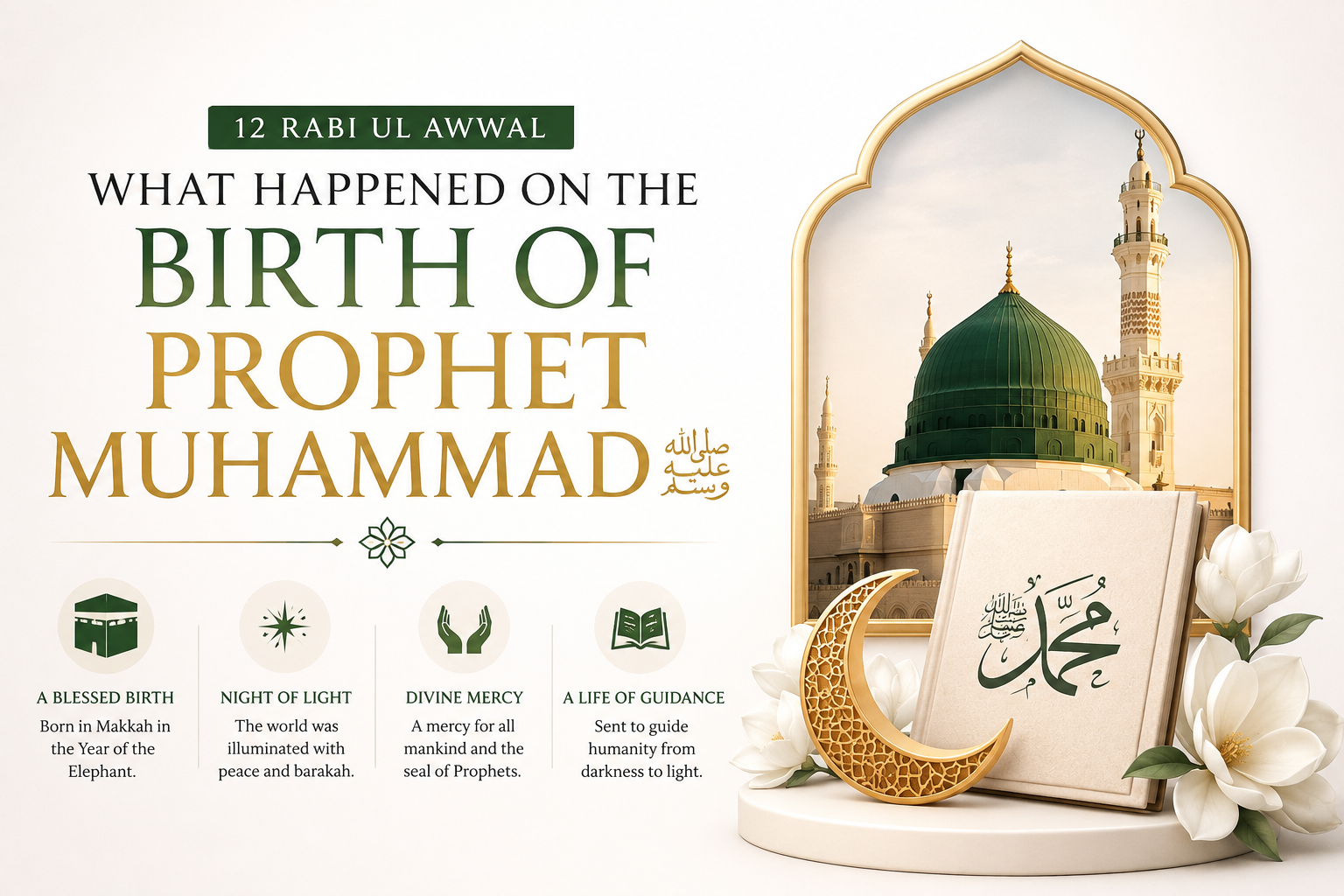
The birth of Prophet Muhammad ﷺ is one of the most important events in Islamic history. Muslims around the world study his life, character, teachings, and mission to understand the message of Islam and the example he provided to humanity.
The date of his birth is commonly associated with 12 Rabi ul Awwal, although scholars and historical sources differ regarding the precise date. This distinction is important when discussing the subject because many popular accounts present 12 Rabi ul Awwal as certain, while Islamic historical literature contains differing reports.
This guide explores the 12 rabi ul awwal birth of prophet muhammad, traditional reports about his birth, commonly mentioned miracles, and why the date holds significance for many Muslims.
The Birth of Prophet Muhammad ﷺ
Prophet Muhammad ﷺ was born in Makkah, in the Arabian Peninsula, into the respected Quraysh tribe. His father, Abdullah ibn Abd al-Muttalib, died before his birth, while his mother was Aminah bint Wahb.
His birth took place approximately in the sixth century CE, during the period traditionally known as the Year of the Elephant.
The Year of the Elephant is associated with the attempted attack on the Kaaba by Abraha, the ruler of Yemen. According to Islamic tradition, Abraha's army came with elephants intending to destroy the Sacred House, but Allah protected the Kaaba.
The Quran refers to this event in Surah Al-Fil, although it does not explicitly identify the Prophet's birth date.
Was Prophet Muhammad ﷺ Born on 12 Rabi ul Awwal?
12 Rabi ul Awwal is the date most commonly associated with the Prophet's ﷺ birth in many Muslim communities.
However, historical scholars have recorded different dates within Rabi ul Awwal. Some sources mention dates other than the twelfth, while modern researchers have also examined astronomical and historical evidence concerning the lunar calendar of that period.
Therefore, saying that the Prophet ﷺ was born on 12 Rabi ul Awwal reflects a widely followed traditional view, rather than a date about which all historical sources are unanimous.
This is particularly relevant when discussing events that happened on 12 rabi ul awwal, because the historical record does not establish every popular account with the same level of certainty.
What Day of the Week Was Prophet Muhammad Born?
The question What day of the week was Prophet Muhammad born? has a clearer answer than the question of the exact lunar date.
According to an authentic hadith recorded in Sahih Muslim, the Prophet ﷺ identified Monday as the day on which he was born.
He was asked about fasting on Monday and explained that it was the day of his birth and the day on which revelation came to him.
Therefore, Monday is firmly associated with his birth through an authentic hadith, while the exact date of the month remains a subject of historical discussion.
What Was Happening in Makkah at the Time?
Makkah was an important religious and commercial centre in Arabia. The Kaaba was already a major sanctuary, and tribes travelled to the city for pilgrimage and trade.
Society included established tribal structures, commercial networks, religious traditions, and significant social inequalities.
Into this environment, Muhammad ﷺ was born. He would later receive revelation and call people toward the worship of one God, justice, accountability, compassion, and moral responsibility.
His early life was marked by significant personal challenges. His father died before his birth, and his mother passed away when he was still a child. He was subsequently cared for by his grandfather and then his uncle Abu Talib.
Miracles on the Birth of Prophet Muhammad
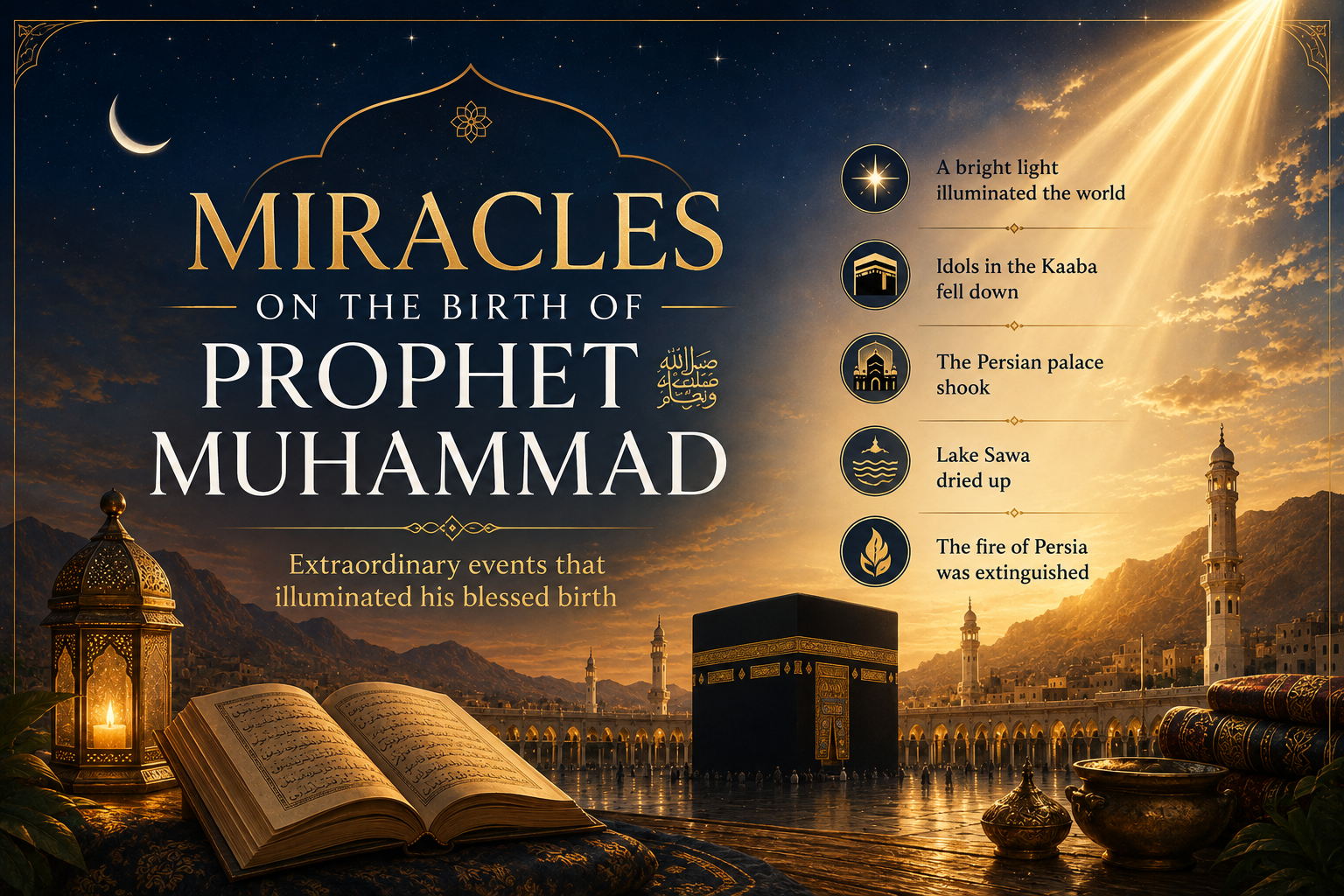
Stories about miracles on the birth of prophet muhammad appear in some later Islamic historical and devotional writings.
Among commonly circulated accounts are stories about unusual events surrounding the night of his birth, including reports concerning the palace of the Persian ruler and the extinguishing of a fire associated with Persian religious tradition.
However, not every narration connected with these stories has the same level of authenticity.
For this reason, readers should distinguish between well-established information from reliable sources and later reports that may have weak or disputed chains of transmission.
The most important miracle associated with Prophet Muhammad ﷺ is not dependent on stories surrounding his birth. Muslims believe that the Quran itself is his greatest lasting miracle and the central revelation through which his message was delivered.
The Year of the Elephant
The birth of Prophet Muhammad ﷺ is traditionally placed in the Year of the Elephant.
This name comes from the army of Abraha, which reportedly travelled toward Makkah with elephants. Its intention was connected with attacking the Kaaba.
The event is referenced in Surah Al-Fil, which describes how Allah dealt with the army.
Because the Prophet ﷺ was born around this period, early Muslims used the Year of the Elephant as an important chronological reference.
This historical association helps place his birth within the broader context of Arabian history.
Why Is 12 Rabi ul Awwal Important in Islam?
The question Why is 12 Rabi ul Awwal important in Islam? has different answers depending on the Muslim tradition being discussed.
For many Muslims, the date is meaningful because it is traditionally connected with the birth of Prophet Muhammad ﷺ. It can become an opportunity to study his Seerah, remember his character, send blessings upon him, and teach children about his life.
Some communities hold Mawlid gatherings during Rabi ul Awwal. These may include lectures, Seerah discussions, devotional poetry, Nasheeds, charity, and community meals.
Other Muslims do not observe 12 Rabi ul Awwal as an annual religious celebration. They may still love and honour the Prophet ﷺ while believing that establishing a specific yearly celebration was not part of the practice of the earliest Muslim generations.
Both perspectives exist within the wider Muslim community.
Did Special Events Happen on 12 Rabi ul Awwal?
Popular literature sometimes lists numerous extraordinary events that happened on 12 rabi ul awwal.
Some accounts mention unusual occurrences in distant kingdoms, changes involving religious symbols, or other remarkable signs.
While such stories are widely repeated in sermons and cultural traditions, their historical reliability varies.
Readers should therefore avoid treating every popular narrative as established fact. Reliable Islamic scholarship distinguishes between authentic hadith, historical reports, later devotional traditions, and stories whose chains are uncertain.
This approach allows Muslims to appreciate the Prophet's ﷺ life without attributing unsupported claims to Islamic history.
Remembering the Prophet's ﷺ Character
The most meaningful way to approach the Prophet's ﷺ birth is to study the life that followed it.
Muhammad ﷺ became known for honesty and trustworthiness even before receiving revelation. His treatment of family members, neighbours, companions, the poor, and vulnerable people provides important lessons about Islamic character.
His patience during persecution, forgiveness toward opponents, commitment to justice, and concern for his community remain central themes in the Seerah.
Remembering his birth can therefore lead naturally toward learning about his complete mission.
Final Thoughts
The 12 rabi ul awwal birth of prophet muhammad is a subject of deep importance to many Muslims. The Prophet ﷺ was born in Makkah during the period traditionally known as the Year of the Elephant, and Monday is established through authentic hadith as the day of his birth.
Although 12 Rabi ul Awwal is widely associated with his birth, the exact lunar date remains historically debated. Similarly, accounts describing miracles on the birth of prophet muhammad should be evaluated according to the strength of their sources.
For those asking Why is 12 Rabi ul Awwal important in Islam?, its significance for many Muslims comes from its traditional connection with the Prophet ﷺ and the opportunity it provides to study his Seerah.
Rather than focusing only on the date, Muslims can use the occasion to learn about his mercy, honesty, patience, worship, leadership, and compassion. His life remains an enduring example, and understanding it can help connect historical remembrance with meaningful practice in everyday life.