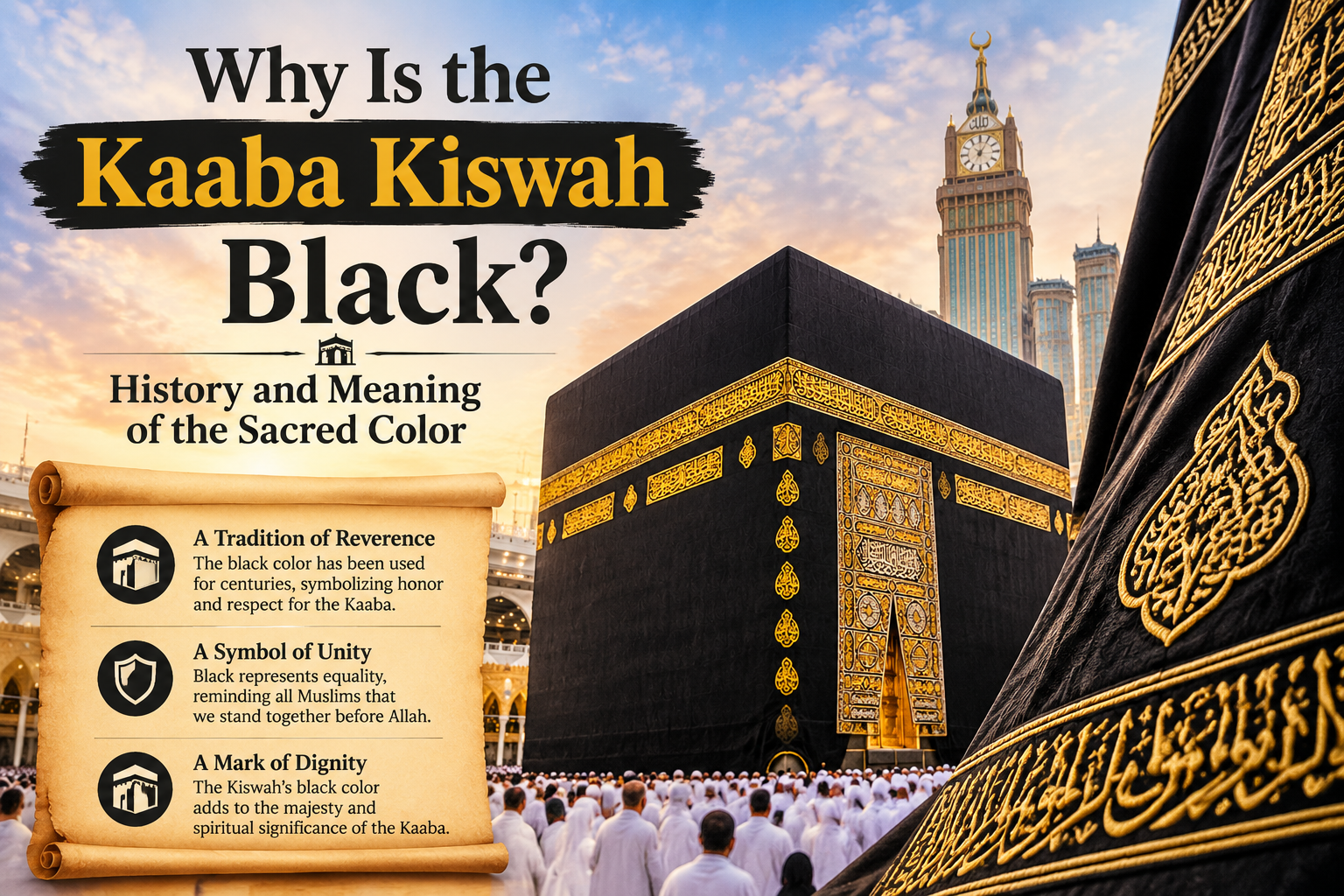
The Kaaba in Makkah is one of the most sacred places in Islam, and millions of Muslims around the world recognise it by its beautiful black covering, known as the Kaaba Kiswah. Every year, pilgrims visiting Masjid al-Haram see the magnificent black cloth decorated with golden Arabic calligraphy. But have you ever wondered why the Kaaba Kiswah is black? Was it always this colour, and what is the history behind this important Islamic tradition?
The black colour of the Kiswah has a fascinating history connected to Islamic rulers, religious traditions and the development of the cloth used to cover the Holy Kaaba. Understanding its background helps Muslims appreciate the craftsmanship and cultural importance of this sacred covering.
What Is the Kaaba Kiswah?
The Kaaba Kiswah is the special cloth that covers the Holy Kaaba in Makkah, Saudi Arabia. It is traditionally made from high-quality black silk and decorated with Quranic verses and Islamic calligraphy embroidered using gold and silver-plated threads.
The Kiswah is carefully produced by skilled craftspeople who work on its weaving, embroidery and finishing. Its detailed designs make it one of the most recognisable examples of Islamic craftsmanship.
The Kiswah Kaaba is more than a beautiful covering. It represents centuries of Islamic history, devotion and artistic heritage.
Why Is the Kaaba Kiswah Black?
The Kaaba was not always covered in black fabric. Historical accounts describe different colours used for its coverings, including white, red and patterned fabrics.
The black Kiswah became firmly established during the Abbasid period. Historical traditions commonly associate the adoption of black fabric with the Abbasid Caliphate, which used black as its distinctive colour.
Over time, black became the traditional colour of the Kaaba's covering. Its continued use helped establish the appearance that Muslims recognise today.
However, it is important to understand that Islam does not prescribe black as a religious requirement for the Kiswah. The colour is a historical tradition rather than a specific Quranic command.
History of the Kaaba's Black Covering
The tradition of covering the Kaaba existed before Islam. Historical accounts describe how the Kaaba received coverings during different periods.
After the arrival of Islam, the practice continued and developed over generations. Different rulers contributed to maintaining and replacing the covering.
During the Abbasid era, black fabric became increasingly associated with the Kaaba. Later Islamic rulers continued this tradition, investing in the quality of the material and the craftsmanship.
Today, the Kiswah is produced in Saudi Arabia under official supervision, preserving traditional techniques while using modern production methods.
What Makes the Black Kiswah Special?
The beauty of the black Kiswah comes from its material, embroidery and detailed craftsmanship.
Here are some important features:
Black silk fabric: The outer covering is traditionally made from black silk.
Gold embroidery: Quranic inscriptions and decorative patterns are embroidered with gold-plated threads.
Arabic calligraphy: Beautiful Quranic verses and Islamic inscriptions decorate the covering.
Skilled craftsmanship: Experienced artisans carefully create and assemble the different sections.
Traditional design: Its appearance reflects centuries of Islamic artistic heritage.
The contrast between black silk and golden embroidery gives the Kaaba its distinctive appearance.
What Is Written on the Black Kaaba Kiswah?
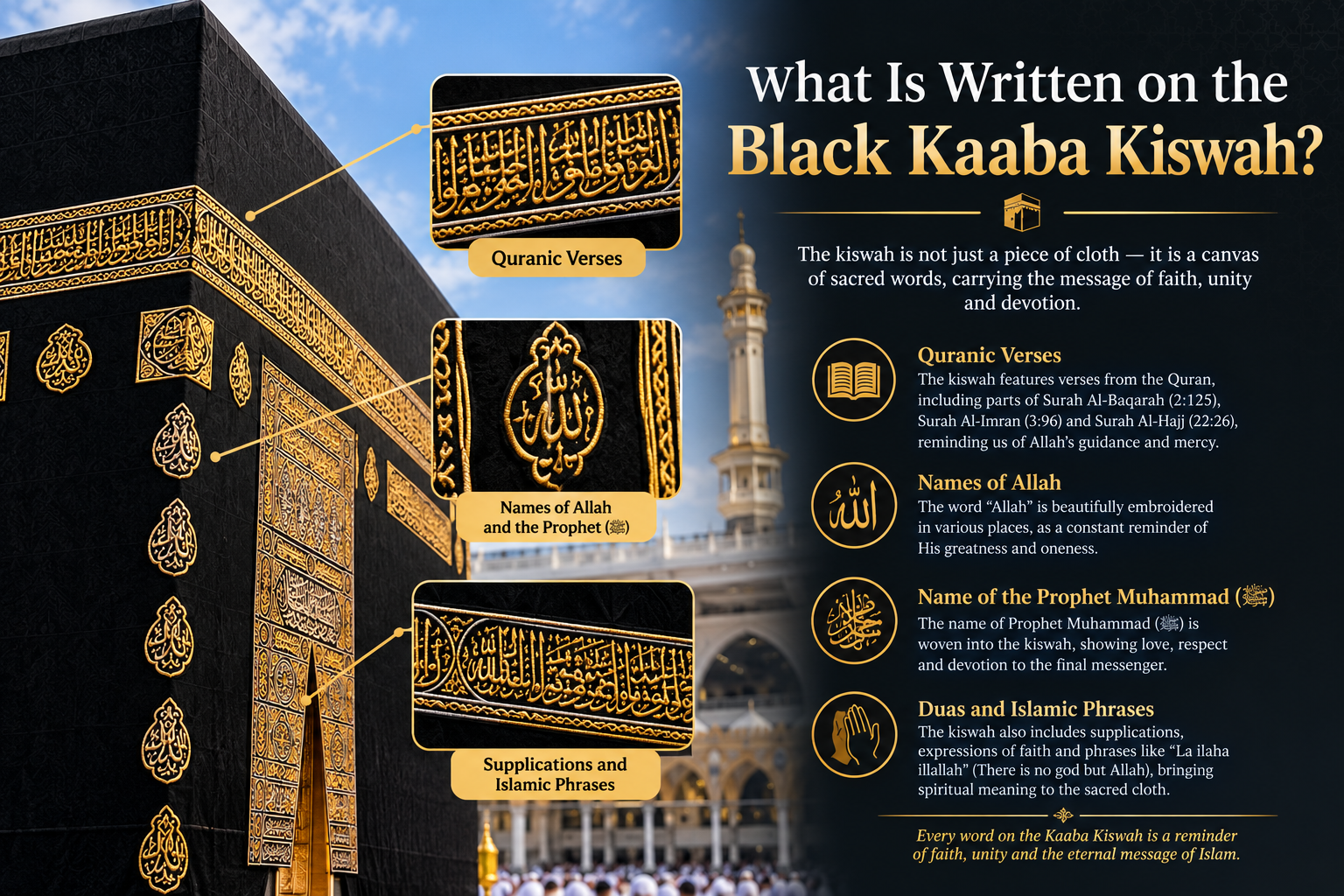
One of the most fascinating features of the Kiswah is its Arabic calligraphy. Quranic verses, Islamic inscriptions and traditional religious phrases are embroidered across different sections.
The embroidered belt, known as the Hizam, runs around the upper portion of the Kaaba. It contains beautifully designed inscriptions created using intricate embroidery techniques.
The Kiswah Kaaba calligraphy is admired for its precision, artistic detail and connection to Islamic heritage.
Every section is carefully prepared to maintain the quality and appearance of the covering.
Can You Buy an Authentic Kaaba Kiswah Piece?
Many Muslims and Islamic art collectors want to own a piece connected to the Holy Kaaba. This creates common questions such as: Is it possible to buy Kaaba Kiswah? Where to buy Kaaba Kiswah? And how do I buy authentic Kaaba Kiswah?
Yes, genuine Kiswah fragments can be available through specialised sellers and Islamic heritage collections. However, buyers should carefully check the item's origin, authenticity and supporting documentation.
If you are searching for a Kaaba Kiswah for sale, consider these points:
Check whether the seller provides authenticity documentation.
Ask about the fragment's origin and history.
Review available photographs and product details.
Understand the seller's return and authenticity policies.
Compare the quality and certification before purchasing.
People searching for Buy Kiswah Kaaba online or Gilafe Kaaba buy online should avoid purchasing from sellers who cannot explain the item's authenticity.
Why Is the Kiswah Kaaba So Expensive?
The price of an authentic Kiswah fragment depends on several factors, including its origin, material, embroidery, size and documentation.
The original covering involves expensive materials and highly specialised craftsmanship. Gold-plated embroidery, quality silk and detailed manual work contribute to its production cost.
This is why searches for Original Kaaba Kiswah price and Gilafe Kaaba piece price in Saudi Arabia are common among collectors.
If you are considering purchasing a Gilafe Kaaba piece, remember that prices can vary significantly. Always verify authenticity rather than choosing an item based only on its appearance or price.
Where Can You Buy a Kaaba Kiswah Piece Online?
If you are wondering, "How do I buy Kaaba Kiswa?" or "Can you buy Kaaba Kiswah online?", start by researching specialised Islamic stores that provide clear product information.
At Kiswah Al Kabah, we value the history, craftsmanship and spiritual significance associated with the Kaaba Kiswah. Our collection is intended for people who appreciate Islamic heritage and meaningful religious keepsakes.
Explore our website to discover available Kiswah-related products and learn more about their details.
Visit Kiswah al kabah today to explore our collection and find a meaningful piece of Islamic heritage.
Conclusion
The black colour of the Kaaba Kiswah reflects a long historical tradition that developed through different Islamic periods. Although the Kaaba was covered with different colours in earlier times, black eventually became its recognised appearance.
From its beautiful golden embroidery to its detailed Arabic calligraphy, the Kiswah represents remarkable craftsmanship and Islamic heritage. Learning about its history helps us understand why this sacred covering holds such a special place in the hearts of Muslims worldwide.