Why Do Muslims Walk Seven Times Around the Kaaba? Meaning of 7 Rounds of Tawaf
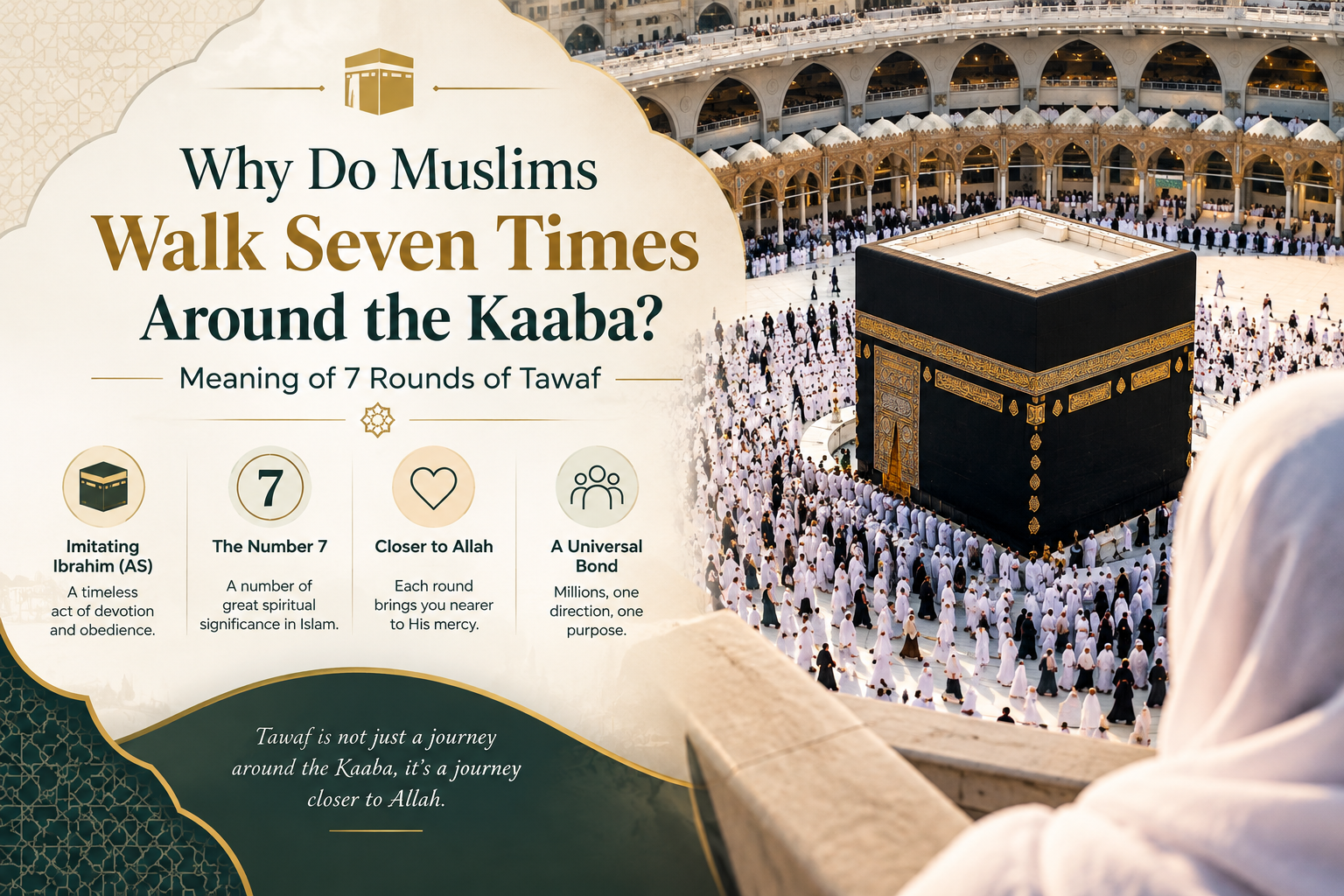
Every year, millions of Muslims gather in Makkah to perform Pilgrimage (Hajj or Umrah), moving in unison around the sacred cubical structure known as the Holy Kaaba. This act of circumambulation, known as Tawaf, involves walking counter-clockwise in seven precise rounds around the house of Allah (Bayt Allah).
For believers and observers alike, a foundational question often arises: Why do Muslims walk seven times around the Kaaba, and what is the spiritual meaning behind these 7 rounds of Tawaf?
1. Complete Submission and Obeying the Divine Command
At its core, performing seven rounds of Tawaf is a direct act of devotion and submission (Ibadah) to Allah. In Islamic theology, worship combines both understanding and humble compliance.
Muslims perform Tawaf seven times because it follows the established sunnah (tradition) of the Prophet Muhammad (PBUH), who walked around the Kaaba seven times during his pilgrimage. By completing these exact circuits, believers demonstrate unity in worship, submitting their personal will to the divine order set forth by Allah.
"And circumambulate the Ancient House." — Surah Al-Hajj (22:29)
2. The Significance of the Number Seven in Islam
In Islamic tradition and classical Arabic culture, the number seven holds profound spiritual and physical weight. It is not merely a numerical count, but a symbol of perfection, completion, and infinity.
Cosmological Order: The Qur'an frequently references seven heavens (Sab'a Samawat) and seven earths created in harmony.
Acts of Worship: The number seven appears repeatedly across core rituals—such as running seven times between Safa and Marwah (Sa'i) and casting seven pebbles at the Jamarat.
Spiritual Perfection: The seven circuits reflect a journey through different stages of spiritual elevation, cleansing the human soul completely from worldly distractions as each circuit is completed.
3. The Symbolism of the Universe Centered Around God
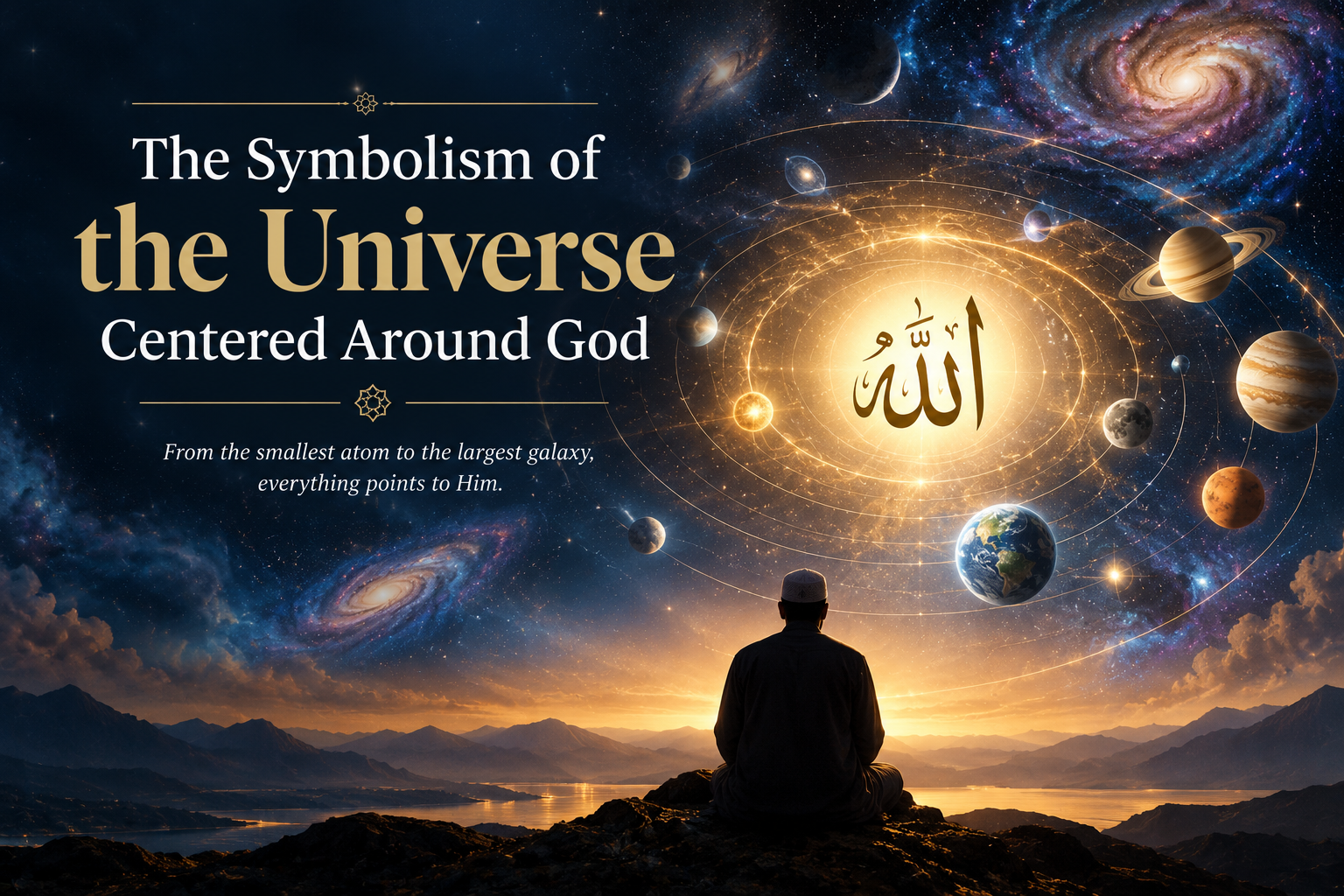
When pilgrims walk around the Kaaba, they join a natural order that reflects the universe itself. From subatomic particles revolving around a nucleus to planets orbiting stars, the entire universe operates in a continuous circular motion.
By circumambulating the Holy Kaaba—the earthly direction (Qibla) toward which all Muslims pray—believers align their physical body and spiritual heart with the cosmic worship of Allah. The Kaaba serves as the focal point of the spiritual universe, reminding humanity that God must remain at the center of every thought, action, and aspiration.
4. The 7 Rounds of Tawaf: A Journey of Renewal
Each round of Tawaf carries a deeper reflection for the pilgrim as they move counter-clockwise—a direction where the physical heart aligns closer to the Kaaba:
First Circuit: Seeking forgiveness for past sins and detachment from material desires.
- Second Circuit: Affirming faith in the oneness of Allah (Tawhid).
Third Circuit: Purifying the mind and heart from pride and worldly ego.
Fourth Circuit: Expressing gratitude for the endless blessings of life and faith.
- Fifth Circuit: Praying for guidance, righteousness, and steadfastness.
Sixth Circuit: Seeking mercy, peace, and protection for oneself and the global Ummah.
- Seventh Circuit: Reaching spiritual completion, ultimate submission, and renewal of the soul.
5. Connection to the Prophet Ibrahim (AS) and Islamic History
The origin of Tawaf links directly to the Patriarch of Monotheism, Prophet Ibrahim (Abraham), and his son Prophet Isma'il (Ishmael). After rebuilding the Kaaba under divine command, Prophet Ibrahim was instructed to call humanity to pilgrimage and circumambulate the holy sanctuary.
Walking around the Kaaba seven times honors this timeless legacy, connecting modern pilgrims across generations directly to the footsteps of the prophets.
Bring the Blessing of the Holy Kaaba into Your Home
The experience of looking upon the Kaaba draped in its magnificent black silk cover (Kiswa) leaves an indelible mark on every heart. The embroidered gold and silver calligraphic verses that adorn the Kiswa reflect centuries of devotion and sacred craftsmanship.
If you wish to preserve this sacred connection in your daily life, Kiswah Al Kaaba offers certified, authentic pieces of the historic Kaaba Kiswa cloth. Each archival-framed piece comes with verified provenance and authentication, allowing you to anchor your home or office with a genuine piece of Islamic heritage.
Explore Our Collection: Browse certified original Kiswa panels and calligraphy at Kiswah Al Kaaba today.