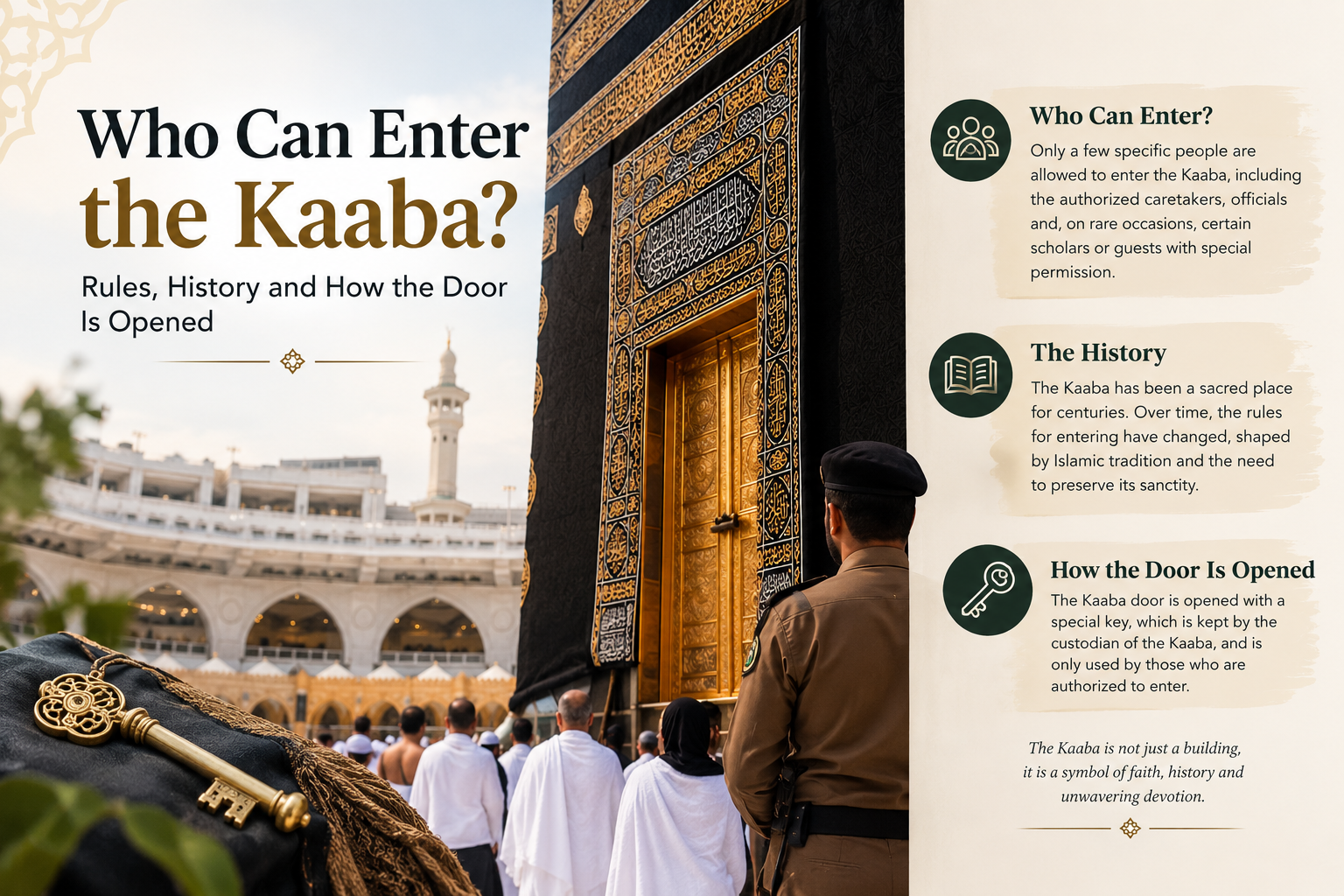
The Holy Kaaba in Makkah is the most sacred structure in Islam and the direction towards which Muslims pray. Millions of pilgrims visit Masjid al-Haram every year, but one question continues to attract curiosity: Who can enter the Kaaba, and what happens when its famous door opens?
Access to the interior is restricted and granted only to selected individuals for specific occasions. Understanding the rules, the people responsible for the key, and the history of the Kaaba's door offers a closer look at the traditions surrounding this remarkable Islamic landmark.
Who Is Allowed to Enter the Kaaba?
Entering the Kaaba is not an opportunity available to every visitor or pilgrim. According to Saudipedia, access is limited to specific individuals under particular conditions rather than being open to the general public. Senior custodians, authorised personnel involved in cleaning, and selected official guests may enter when the Kaaba is opened for designated occasions.
In earlier centuries, the Kaaba was opened to visitors on particular days. However, public entry was discontinued to help manage the large number of people performing Hajj and Umrah and to maintain safety around the sacred structure.
Therefore, purchasing a Hajj or Umrah package does not automatically provide permission to enter the Kaaba. Pilgrims can still worship, perform Tawaf, and make dua around the structure without going inside.
Why Is Entry to the Kaaba Restricted?
The restriction is primarily connected with safety, crowd management, preservation, and the responsibilities involved in maintaining the sacred structure.
The Mataf area surrounding the Kaaba can accommodate large numbers of worshippers, particularly during Hajj, Ramadan, and busy Umrah periods. Allowing unrestricted access to the interior would make it difficult to organise entry and exit safely.
The interior also requires careful maintenance. Restricting access allows authorised custodians and designated teams to perform their duties in a controlled environment.
Visitors should remember that entering the Kaaba is not a requirement for completing Hajj or Umrah. Muslims can fulfil their pilgrimage rites without entering the building.
Who Holds the Key to the Kaaba?
One of the most fascinating parts of the Kaaba's history is its traditional custodianship, known as Sadanah or Hijabah. The responsibility includes safeguarding the key, opening and closing the door on designated occasions, and participating in the care of the sacred structure.
According to the official website of the General Authority for the Care of the Affairs of the Grand Mosque and the Prophet's Mosque, this responsibility has remained with the descendants of the Bani Shaybah family, also known as the Al-Shaibi family. The key is entrusted to the senior custodian.
This tradition is connected with an important event from the time of Prophet Muhammad (peace and blessings be upon him). Following the conquest of Makkah, the Prophet returned the key to Uthman ibn Talha and affirmed the continuation of the custodianship.
The role represents a longstanding responsibility to protect and serve the House of Allah.
How Is the Kaaba Door Opened?
The Kaaba's door is opened under the supervision of its authorised custodians. It is not open for ordinary visitors to enter whenever they wish.
The process involves the designated keyholders and the officials responsible for the particular occasion. When an interior cleaning is scheduled, the necessary preparations are arranged before the ceremony begins.
During such occasions, authorised personnel enter to clean and maintain the interior. Selected dignitaries and invited guests may also be permitted to enter, depending on the event and the arrangements in place.
The opening of the door is therefore a controlled ceremony, not a public admission process.
What Happens Inside the Kaaba?
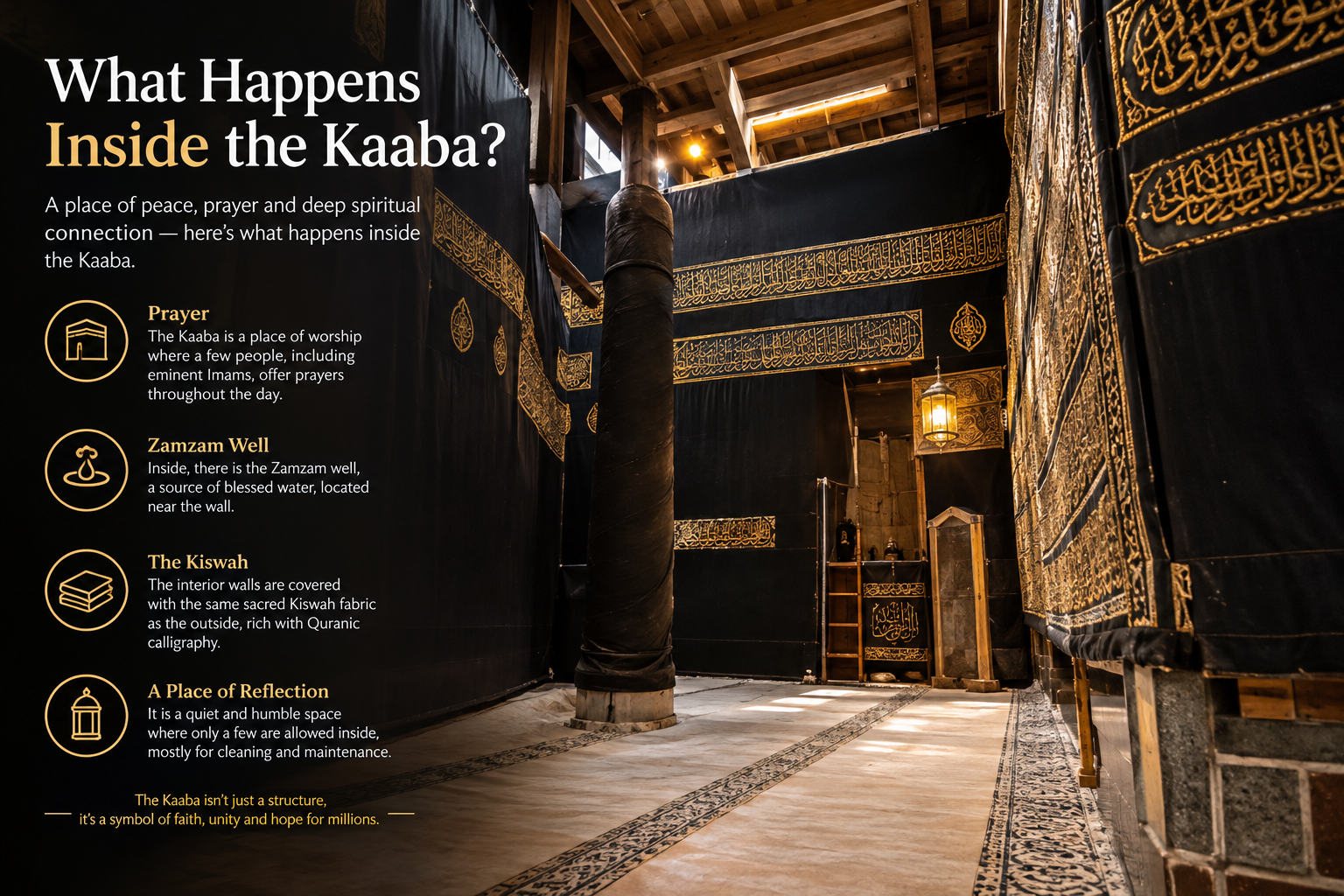
The interior of the Kaaba differs from the exterior that pilgrims see during Tawaf. It contains structural columns supporting the roof, interior wall surfaces, lamps, and inscriptions associated with its history.
During an authorised washing ceremony, the interior floor is cleared and the walls and other surfaces are carefully cleaned. Saudi Press Agency reporting describes the use of Zamzam water mixed with rose perfume and oud during the washing process. The interior is then dried, and the walls are perfumed.
These ceremonies reflect the continuing care given to the Kaaba. The work is conducted by designated teams rather than being treated as an opportunity for general visitors to explore the interior.
What Is the History of the Kaaba Door?
The Kaaba's door has a long history of replacement, restoration, and craftsmanship. Its design has changed across different periods as rulers and caretakers undertook work to preserve the structure.
The door is positioned on the eastern side of the Kaaba. Its decorative details and carefully crafted surface make it one of the most recognisable features of the building.
The door is also visually connected with the black textile covering the Kaaba, known as the Kiswah. Together, the door and the surrounding fabric form part of the structure's distinctive appearance.
How Is the Kaaba Door Connected to the Kiswah?
The door and the Kiswah are separate elements with different functions. The door provides controlled access to the interior, while the Kiswah covers the exterior walls.
The Kiswah is known for its detailed Arabic embroidery, Quranic inscriptions, and specialist textile craftsmanship. People interested in Kiswah kaaba calligraphy often want to understand how the textile is created and why its designs hold such historical interest.
The connection between the door and the Kiswah helps explain why the Kaaba's architecture and textile heritage are often explored together.
Can You Buy an Authentic Kaaba Kiswah Piece?
Learning about the Kaaba's door may also lead to questions about owning a piece of its textile covering. People often search for How do I buy authentic kaaba kiswah or Where to buy kaaba kiswah when exploring genuine Kiswah material.
If you are considering a purchase, review the item's stated origin, available documentation, dimensions, and condition. A seller's description alone should not be treated as conclusive proof of authenticity.
You can explore the available collection at Kiswah Al Kabah and review individual product details before making a decision.
Discover the Heritage of the Kaaba with Kiswah Al Kabah
The question of who can enter the Kaaba reveals an important part of its history: access is carefully controlled, and its custodianship is a longstanding responsibility. From the family entrusted with the key to the ceremonies that maintain the interior, each practice contributes to preserving the sacred structure.
For readers interested in the textile heritage surrounding the Kaaba, Kiswah Al Kabah offers an opportunity to explore available Kiswah pieces and learn more about their craftsmanship.
Visit Kiswah Al Kabah to browse the collection and review product information. Discover the history behind the Kaaba's remarkable textile tradition and make informed choices by prioritising clear documentation, accurate descriptions, and authenticity.