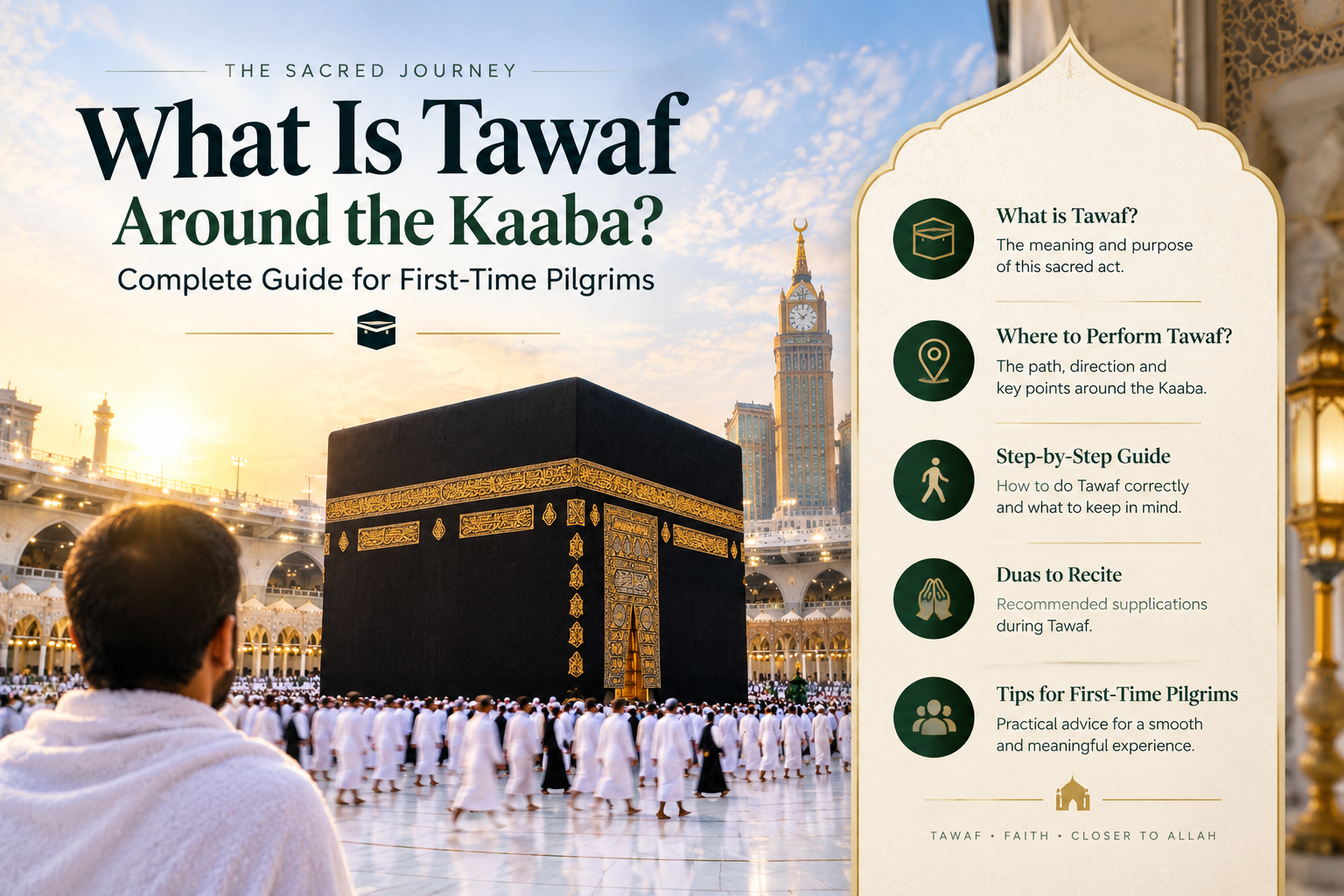
Tawaf around the Kaaba is one of the most important acts of worship performed during Hajj and Umrah. It involves walking around the Holy Kaaba seven times in an anticlockwise direction while remembering Allah and making sincere supplications. For first-time pilgrims, understanding the meaning, steps, and etiquette of Tawaf can make this spiritual experience more peaceful and meaningful.
What Is Tawaf Around the Kaaba?
Tawaf is the Islamic ritual of circumambulating the Kaaba, which stands at the centre of Masjid al-Haram in Makkah, Saudi Arabia. Muslims across the world face the Kaaba during their daily prayers, making it a central symbol of unity in Islamic worship.
During Tawaf, pilgrims walk around the Kaaba seven complete circuits. Each circuit begins and ends at the Black Stone, known in Arabic as Hajar al-Aswad. Throughout the ritual, Muslims remember Allah, seek forgiveness, and offer prayers for themselves, their families, and the wider Muslim community.
Tawaf is more than a physical activity. It represents devotion, humility, obedience, and a sincere commitment to worshipping Allah alone.
Why Is Tawaf Important in Islam?
Tawaf holds a special place in the pilgrimage traditions of Islam. It is an essential part of Umrah, while different forms of Tawaf are performed during Hajj according to the pilgrimage's requirements.
The ritual brings Muslims from different countries, cultures, and backgrounds together in one sacred place. Everyone participates in worship regardless of wealth, nationality, language, or social position. This unity reflects the shared faith of the Muslim community.
Tawaf also gives pilgrims an opportunity to reflect on their lives, ask Allah for guidance, and renew their spiritual intentions. Many people find the experience emotionally powerful because it allows them to focus on worship away from their ordinary responsibilities.
How to Perform Tawaf Around the Kaaba
1. Prepare for Tawaf
Before beginning Tawaf, learn the requirements relevant to your pilgrimage. Pilgrims performing Umrah should complete the prescribed preparation and ensure they meet the applicable conditions of ritual purity. If you are uncertain about a religious requirement, consult a qualified Islamic scholar or your authorised pilgrimage guide.
Wear suitable clothing, keep your belongings secure, and prepare for crowds. Comfortable footwear may be useful outside the ritual area, although footwear arrangements must follow mosque rules and the requirements of your particular circumstances.
2. Begin at the Black Stone
Tawaf starts at the level of Hajar al-Aswad, the Black Stone located in one corner of the Kaaba. Pilgrims move anticlockwise, keeping the Kaaba on their left.
If the area is accessible without causing harm or obstructing others, pilgrims may touch or kiss the Black Stone according to established Islamic practice. When crowds make this difficult, pointing towards it and saying “Allahu Akbar” is an accepted alternative.
Never push other pilgrims or risk injury to reach the Black Stone. Respect for other worshippers is an important part of maintaining a safe and peaceful environment.
3. Complete Seven Circuits
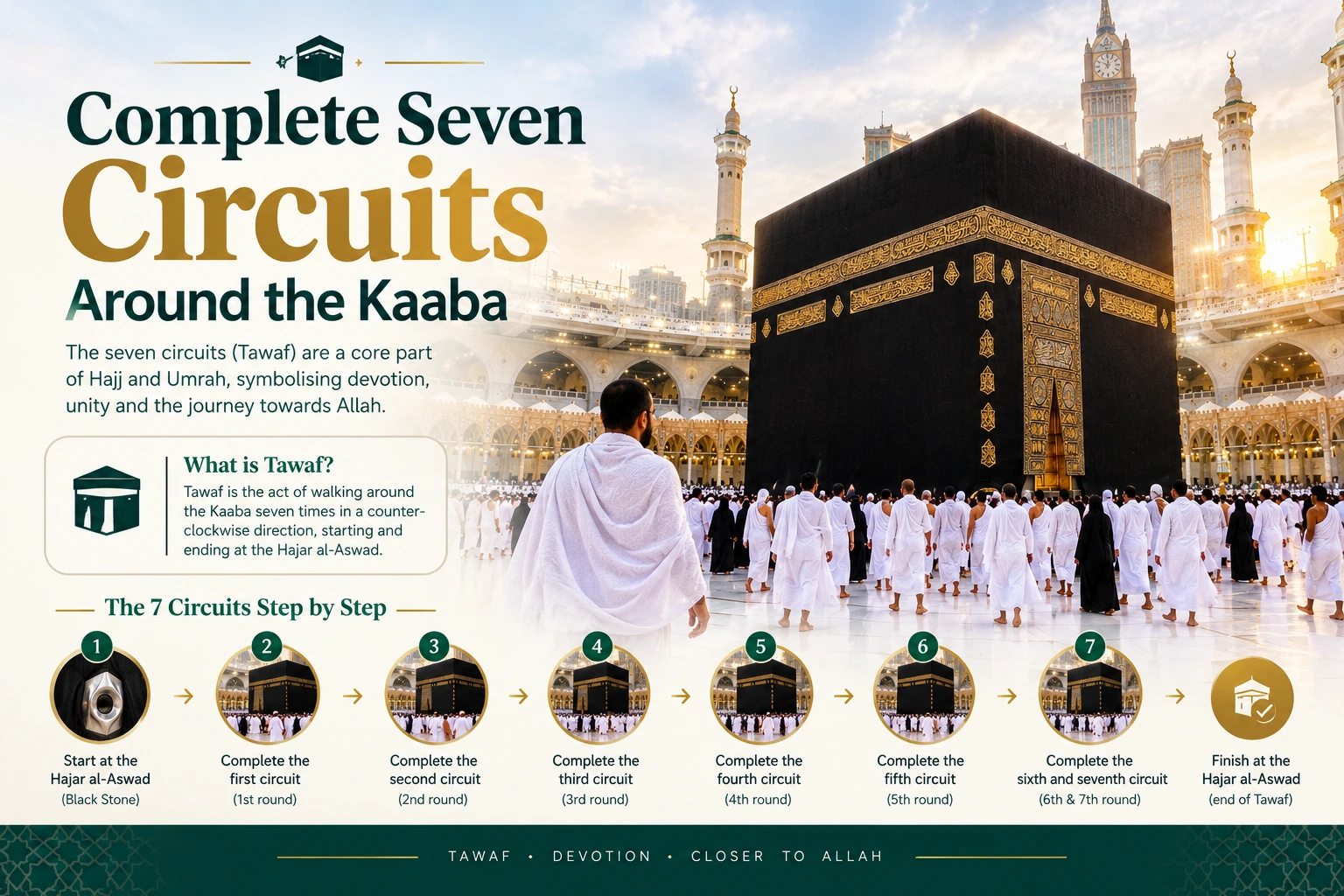
Walk around the Kaaba seven times, keeping it on your left throughout the ritual. One complete circuit ends when you return to the starting line near the Black Stone.
Follow the movement of the crowd and avoid sudden stops. The mosque can become particularly busy during Ramadan, Hajj, weekends, and peak Umrah seasons. Staying patient and moving carefully helps protect you and those around you.
If you lose count of your circuits, seek guidance from a knowledgeable group leader or scholar. Avoid guessing when you are uncertain about completing the required number.
4. Make Supplications During Tawaf
During Tawaf, pilgrims can recite Quranic verses, remember Allah, and make personal duas. There is no requirement to memorise a different lengthy supplication for every circuit.
You may ask Allah for forgiveness, guidance, patience, family wellbeing, and blessings in this life and the Hereafter. Supplications can be made in your own language, allowing you to express your needs sincerely.
Between the Yemeni Corner and the Black Stone, many pilgrims recite a supplication asking Allah for goodness in this world and the Hereafter and protection from the punishment of the Fire.
Keep your voice considerate and avoid disturbing people praying nearby. Concentrate on worship while remaining aware of your surroundings.
5. Complete the Remaining Rituals
After completing seven circuits, follow the prescribed steps for your particular pilgrimage. During Umrah, pilgrims generally perform two units of prayer after Tawaf when possible, then proceed to the remaining rites of Umrah.
Crowds may affect where and when you can pray, so follow official instructions and your guide's advice. Do not block walkways or gathering points while deciding what to do next.
Understanding the Kaaba and Its Kiswah
The Kaaba is covered with a special black cloth known as the Kiswah. This covering features beautiful Arabic calligraphy and embroidered Quranic inscriptions. Its creation requires skilled craftsmanship, careful preparation, and attention to detail.
The Kiswah holds historical and cultural significance for many Muslims. Learning about its materials, embroidery, and traditions can help visitors appreciate the artistic heritage associated with the Holy Kaaba.
However, touching the Kiswah is not a requirement of Tawaf. Pilgrims should avoid pulling, damaging, or crowding around the covering. The purpose of Tawaf is worship and remembrance of Allah, not contact with the Kaaba's cloth or structure.
People interested in Islamic heritage can explore educational resources about the Kiswah, its craftsmanship, and its significance through reputable sources.
Essential Etiquette for First-Time Pilgrims
Following good etiquette can make Tawaf safer and more comfortable for everyone.
Follow official directions and the movement of the crowd.
Avoid pushing, shouting, or rushing towards the Black Stone.
Keep your phone secure and do not stop suddenly for photographs.
Be patient with elderly pilgrims, children, and people needing assistance.
Stay with your group if you require help navigating the mosque.
Keep the area clear for other worshippers.
Ask a qualified scholar about religious questions you cannot confidently answer.
Remember that kindness, patience, and consideration for others are essential qualities during pilgrimage.
Frequently Asked Questions
How many circuits are required for Tawaf?
Tawaf consists of seven complete circuits around the Kaaba, beginning and ending at the level of the Black Stone.
Can I make dua in English?
Yes. You can make personal supplications in English or another language you understand. Focus on sincerity and remembering Allah.
Is touching the Black Stone compulsory?
No. Touching or kissing the Black Stone is not compulsory for completing Tawaf. Pointing towards it is an accepted alternative when approaching it is difficult.
Can first-time pilgrims perform Tawaf without a guide?
Many pilgrims can follow the basic steps independently after learning the requirements. However, a knowledgeable guide can be helpful if you have questions about your pilgrimage or individual circumstances.
Conclusion
Tawaf around the Kaaba is a meaningful act of worship that brings Muslims together in devotion to Allah. Understanding its seven circuits, preparing properly, making sincere supplications, and respecting fellow pilgrims can help first-time visitors approach the ritual with confidence. Learning about the Kaaba and its Kiswah also offers valuable insight into Islamic history and craftsmanship.
Discover more about the traditions and heritage of the Holy Kaaba by visiting Kiswahalkabah and exploring educational resources about the Kiswah and its significance.