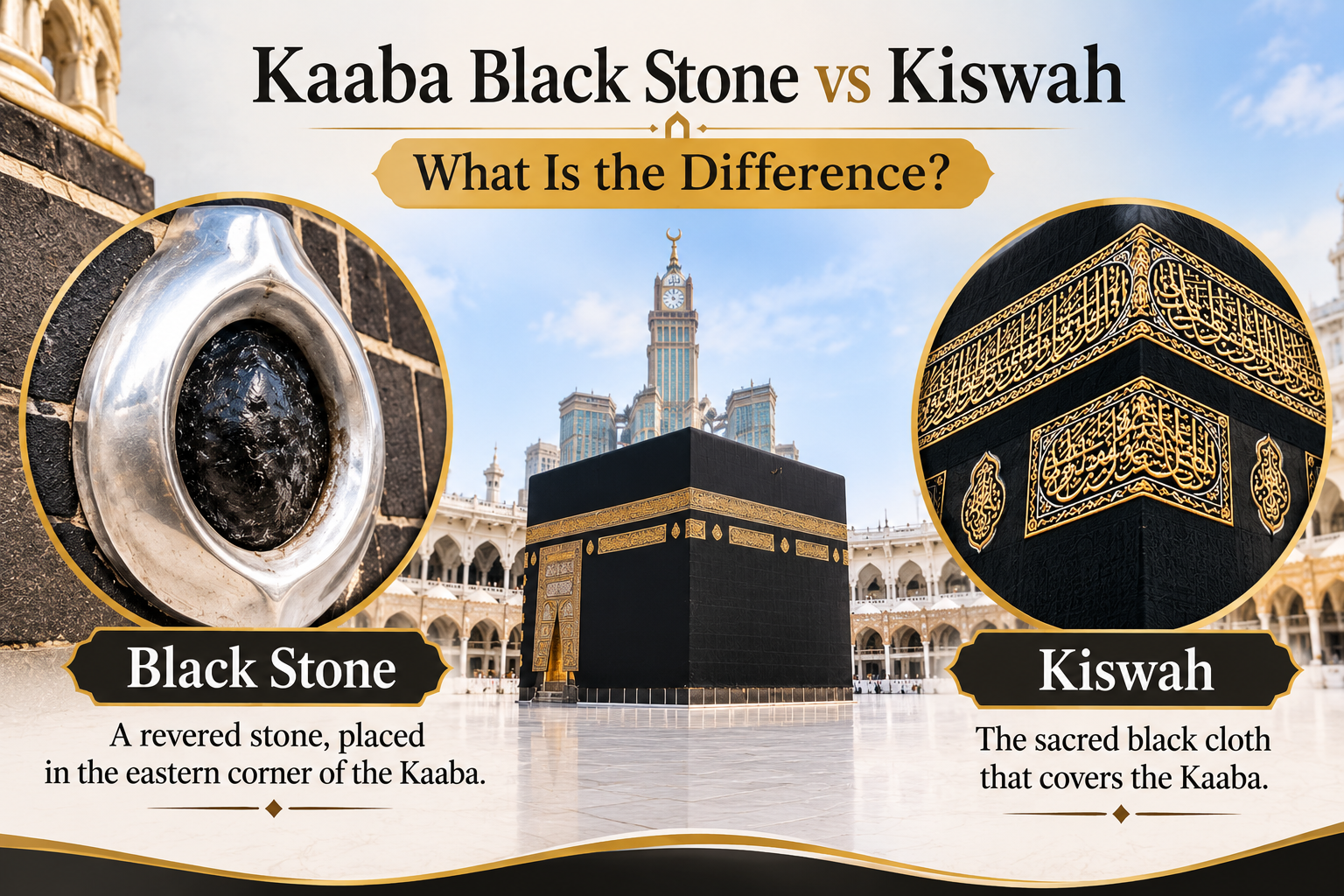
The Kaaba in Makkah is the most sacred structure in Islam, holding deep spiritual significance for Muslims around the world. Two of its most recognised features are the Black Stone (Hajr-e-Aswad) and the Kiswah, the beautiful black cloth covering the Kaaba. Although both are closely associated with the Holy Kaaba, they have completely different meanings, histories, appearances and religious significance.
Many visitors performing Hajj or Umrah wonder about the difference between the Kaaba Black Stone and Kiswah. Some also want to learn about Kiswah calligraphy, the materials used to create the covering and whether it is possible to buy an authentic piece of Kiswah.
In this guide, we explain everything you need to know about the Black Stone vs Kiswah, including their importance, location and connection with the Holy Kaaba.
What Is the Black Stone (Hajr-e-Aswad)?
The sacred stone at the eastern corner of the Kaaba.
The Black Stone, known in Arabic as Hajr-e-Aswad, is a sacred stone placed in the eastern corner of the Kaaba in Makkah. It holds an important position in Islamic tradition and is closely connected with the rituals of Hajj and Umrah.
Muslims begin and complete each round of Tawaf when they reach the Black Stone. Pilgrims may kiss it, touch it or point towards it while passing, depending on accessibility and crowd conditions.
According to Islamic tradition, the Black Stone was placed in the Kaaba during the time of Prophet Ibrahim (AS) and his son Prophet Ismail (AS). Islamic narrations also describe its heavenly origin.
The Black Stone is not worshipped. Muslims honour it because of its religious significance and the traditions associated with it.
What Is the Kiswah of the Kaaba?
The beautifully embroidered covering of the Holy Kaaba
The Kiswah is the special black cloth that covers the exterior walls of the Holy Kaaba. It is one of the most recognisable features of the Masjid al-Haram and represents an important tradition in Islamic history.
The traditional Kiswah is made using high-quality black silk fabric and decorated with Quranic verses and Islamic inscriptions embroidered with gold and silver-wrapped threads.
The detailed Kiswah Kaaba calligraphy makes the covering particularly distinctive. Its embroidery includes Quranic passages, Islamic phrases and decorative patterns created by skilled artisans.
The Kiswah is replaced annually, traditionally on the ninth day of Dhul Hijjah. Its preparation involves careful work, including weaving, embroidery, stitching and quality checks.
Today, the Kiswah represents centuries of craftsmanship, devotion and respect for the Holy Kaaba.
Kaaba Black Stone vs Kiswah: Key Differences
Although the Black Stone and Kiswah are both connected with the Kaaba, they differ in almost every aspect.
Feature | Black Stone | Kiswah |
Arabic name | Hajr-e-Aswad | Kiswah |
Material | Sacred stone | Black silk fabric |
Location | Eastern corner of Kaaba | Covers the exterior |
Appearance | Dark stone | Black embroidered cloth |
Religious connection | Tawaf rituals | Respect and covering of Kaaba |
Main purpose | Marks the starting point of Tawaf | Covers and decorates the Kaaba |
The Black Stone is a physical stone fixed into the Kaaba's eastern corner, whereas the Kiswah is a textile covering that surrounds its exterior walls.
Both have a special place in Islamic heritage, but their functions and religious significance are different.
Why Is the Kiswah of the Kaaba So Special?
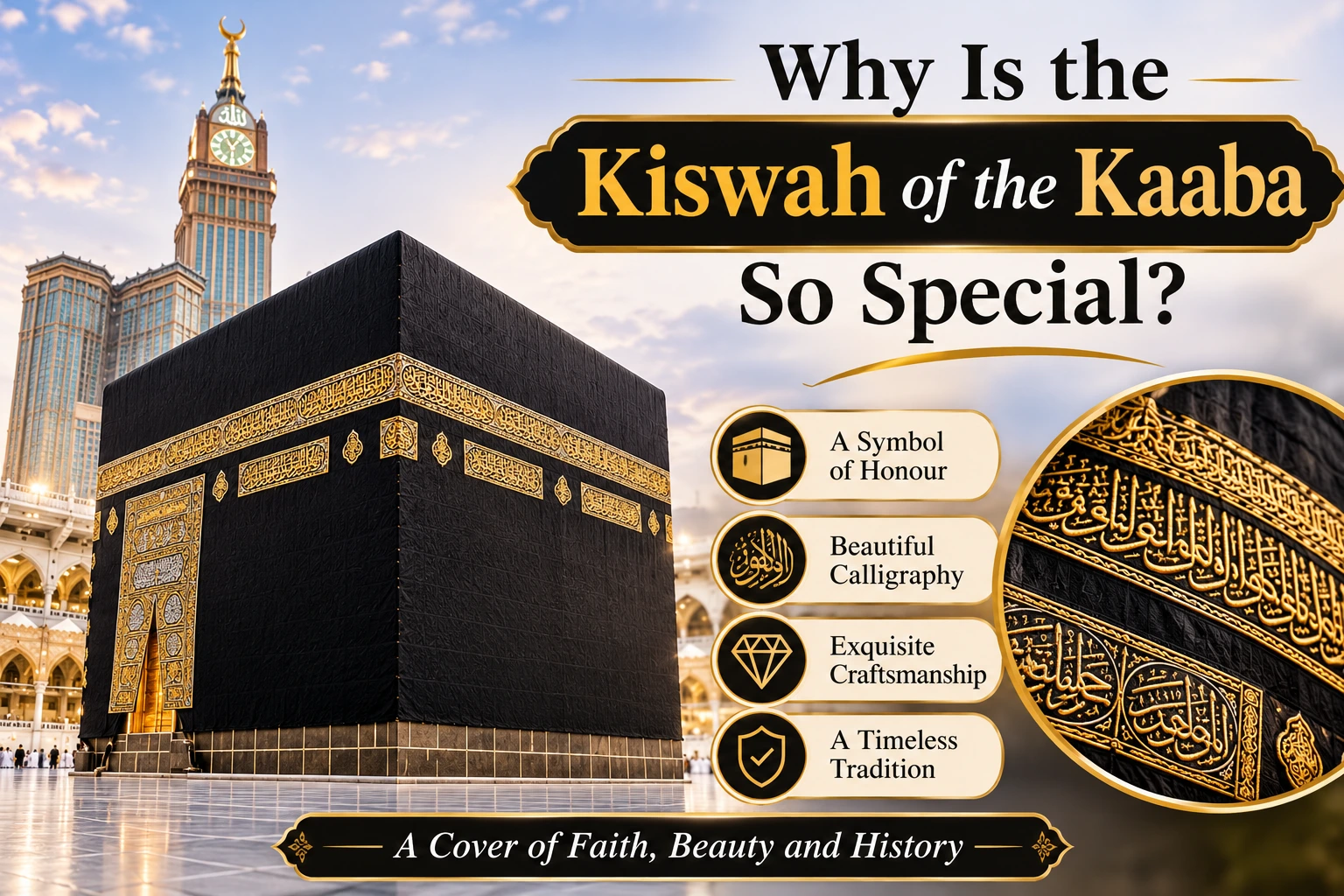
The Kiswah is more than a decorative covering. It represents Islamic heritage, traditional craftsmanship and the care given to the Holy Kaaba.
Its production requires specialised materials and skilled artisans. According to the Saudi Press Agency, the manufacturing process involves silk preparation, weaving, printing, embroidery, stitching and quality inspection.
Some important features of the Kiswah include:
Premium silk fabric: The exterior covering is made using carefully prepared black silk.
Gold and silver embroidery: Skilled artisans create intricate Quranic inscriptions using precious-metal threads.
Quranic calligraphy: Beautiful Arabic inscriptions make the Kiswah a remarkable example of Islamic art.
Traditional craftsmanship: Each stage requires precision, experience and careful attention to detail.
The Kiswah Kaaba calligraphy is particularly admired by visitors and collectors who appreciate Islamic art.
Can You Buy an Authentic Piece of Kaaba Kiswah?
Yes, authentic pieces of previously used Kiswah can be available through authorised distribution channels and legitimate sellers. However, buyers should understand that not every black embroidered fabric advertised online is genuine Kaaba Kiswah.
People searching for a Gilafe Kaaba piece, original Kiswah fabric or a meaningful Islamic collectible should pay attention to authenticity.
Before purchasing, consider:
Ask for clear information about the piece's origin.
Check whether an authenticity certificate is provided.
Examine the embroidery, fabric and condition.
Confirm the seller's reputation and return policy.
Avoid sellers making unrealistic claims about authenticity.
If you are wondering how do I buy authentic Kaaba Kiswah, start by researching the seller and requesting supporting documentation.
Where to Buy Kaaba Kiswah Online?
People living outside Saudi Arabia often search for ways to purchase authentic Islamic artefacts without travelling to Makkah.
When looking for where to buy Kaaba Kiswah, choose a specialist Islamic store that provides transparent product descriptions, authenticity information and secure purchasing options.
If you want to buy Kiswah Kaaba online, explore the available collection at You can also explore its collection if you are searching for a meaningful Islamic gift, a decorative Kiswah fragment or an item that reflects the artistic heritage of the Holy Kaaba.
Remember that availability, provenance and certification should always be checked before making a purchase.
Frequently Asked Questions
1. Is the Black Stone part of the Kiswah?
No. The Black Stone is a separate sacred stone fixed into the eastern corner of the Kaaba. The Kiswah is the black silk covering surrounding the Kaaba's exterior.
2. Why is the Kiswah black?
The traditional exterior Kiswah is black and decorated with gold and silver embroidery. Its appearance has become an internationally recognised symbol of the Holy Kaaba.
3. Why is the Kiswah Kaaba so expensive?
Its production involves premium silk, precious-metal threads, specialised machinery and skilled manual embroidery. These materials and extensive craftsmanship contribute to its production cost.
4. Is it possible to buy Kaaba Kiswah online?
Authentic Kiswah fragments may be available through legitimate sellers. Always verify their origin and supporting documentation before purchasing.
Final Thoughts: Understanding the Difference Between Black Stone and Kiswah
The Black Stone and Kiswah are two distinct features of the Holy Kaaba, each with its own place in Islamic tradition. Hajr-e-Aswad is a sacred stone associated with Tawaf, while the Kiswah is the beautifully embroidered covering that protects and adorns the Kaaba's exterior.
For Muslims who appreciate Islamic history, Kaaba Kiswa fragments offer an opportunity to own a meaningful piece of Islamic heritage. Whether you are researching its history or looking for an authentic Kiswah collectible, always prioritise genuine products and reliable sellers.
Explore Kiswah Al Kabah today: Visit Kiswah al kabah to discover Islamic artifacts and explore the beauty of the Holy Kaaba's heritage.