How to Start an Islamic Art Collection: A Complete Beginner's Guide to Choosing Valuable Pieces
Starting an Islamic art collection can be a meaningful way to bring beauty, heritage, craftsmanship, and spiritual significance into your home. For beginners, however, choosing the right pieces can feel overwhelming. Islamic art includes calligraphy, textiles, architectural elements, ceramics, manuscripts, and decorative works, with each category offering something different to collectors.
Among the most distinctive choices are authentic Islamic textiles connected with the Holy Kaaba. A carefully selected Kiswah piece can become the centerpiece of a collection because it combines remarkable craftsmanship with a connection to one of Islam’s most sacred places.
If you are considering your first purchase, this guide will help you understand what to look for, how to evaluate a piece, and how to build a collection with confidence.
Why Start an Islamic Art Collection?
Islamic art is valued for much more than its appearance. Traditional designs often carry cultural, historical, and spiritual meaning that can make individual pieces especially memorable.
For collectors, Islamic art can also provide an opportunity to preserve traditional craftsmanship. A thoughtfully selected textile or calligraphy artwork can become something that is appreciated by different generations rather than simply being another decorative item.
Your collection does not need to begin with several expensive pieces. One authentic and meaningful artwork can provide a strong foundation. Over time, you can add complementary pieces according to your interests, available space, and collecting goals.
Begin With Authenticity
Authenticity should be one of the first things a beginner considers. This is particularly important when purchasing textiles associated with the Kaaba.
The appearance of a textile does not automatically prove its origin. Black fabric with gold-colored Arabic embroidery may resemble the Kaaba covering without being an authentic Kiswah-related textile.
Before buying, investigate the material, dimensions, craftsmanship, provenance, condition, and available documentation. A reliable seller should provide clear information rather than making vague claims about authenticity.
When researching where to buy kaaba kiswah, focus on specialist sources that clearly explain what is being offered. Understanding the difference between an authentic textile piece and a decorative reproduction can protect you from making an expensive mistake.
Understand the Kaaba Kiswah
The Kiswah is the cloth covering of the Holy Kaaba in Makkah. It is internationally recognized for its black textile, Quranic inscriptions, and intricate embroidery.
Because of its sacred association and specialized craftsmanship, Kiswah-related textiles can hold a unique position within an Islamic art collection. Collectors may be particularly interested in sections or pieces that feature distinctive embroidery or calligraphic elements.
A beginner should learn about the textile before purchasing it. Understanding the significance of the design can make ownership more meaningful and help you recognize quality when comparing different pieces.
What Makes a Kiswah Piece Valuable?
Not every textile connected with Islamic art has the same value. Several factors can influence the desirability and collectability of a piece.
Material quality is important, but it is only one consideration. Craftsmanship, rarity, condition, provenance, dimensions, embroidery, historical significance, and presentation can all influence a collector’s decision.
A carefully preserved Gilafe kaaba piece with distinctive embroidery may attract attention because it combines visual appeal with cultural significance. However, buyers should always verify claims about origin before treating a textile as a valuable collectible.
The strongest purchases are usually those where the buyer understands exactly what the piece represents and why it is significant.
Exploring Kiswah Kaaba Calligraphy
Calligraphy is one of the most recognizable features of Islamic art, and it plays an especially important role in Kiswah design.
Kiswah kaaba calligraphy can feature Quranic verses and inscriptions created with exceptional attention to proportion, symmetry, and embroidery. The combination of Arabic calligraphy and traditional textile craftsmanship gives these pieces a distinctive appearance.
For beginners, learning about the inscriptions before purchasing a textile can add another layer of appreciation. Rather than choosing a piece simply because it looks luxurious, consider the meaning, craftsmanship, and visual character behind the design.
This approach can help you build a collection that feels intentional rather than randomly assembled.
How to Choose Your First Piece
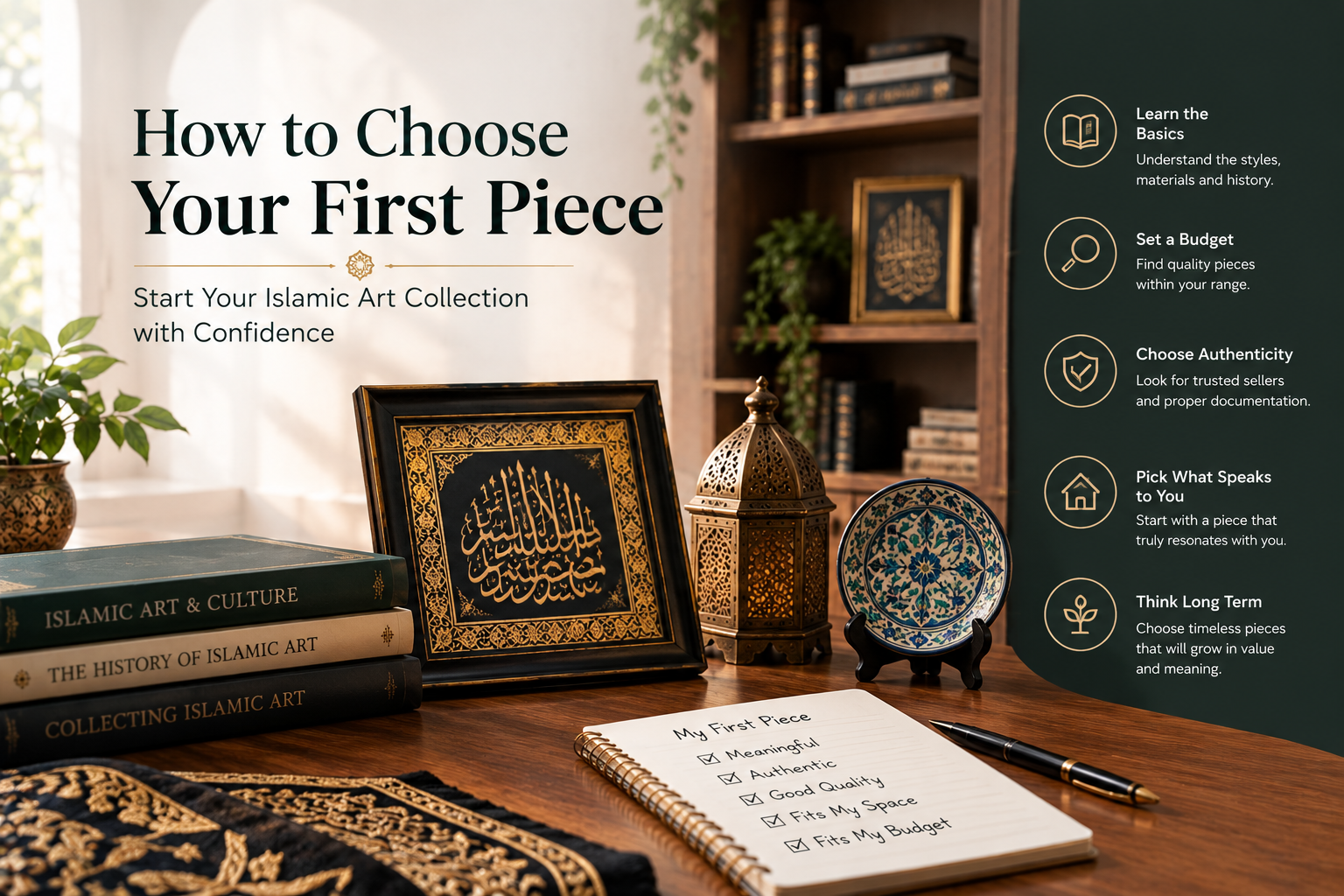
Your first artwork should match both your interest and your available space. Consider whether you want a framed textile, a smaller collectible, calligraphy, or a statement piece for a prominent wall.
Think about dimensions before purchasing. A large textile may work beautifully in a spacious living room, office, or dedicated display area, while a smaller piece can suit a study, bedroom, entrance, or prayer space.
Also consider how the artwork will interact with your existing interior. Islamic art does not have to be displayed in a traditional setting. Carefully framed textile art can complement contemporary, minimalist, classic, or luxury interiors.
Can You Buy Gilafe Kaaba Online?
The internet has made it easier for collectors around the world to research and purchase Islamic art. If you are searching for “Gilafe kaaba buy online,” take additional care before making a purchase.
Start by examining the seller’s product information. Look for accurate measurements, detailed photographs, material information, condition details, and an explanation of authenticity. Close-up images can be particularly helpful for examining embroidery and textile quality.
Do not make a decision based only on a product title. Terms such as “original” and “authentic” should be supported by meaningful information about the piece.
A transparent buying experience allows you to understand what you are purchasing before completing your order.
Where to Buy Kaaba Kiswah With Confidence
Knowing where to buy kaaba kiswah is an important part of beginning your collection. Specialist Islamic art sellers can be useful because they understand the characteristics and significance of these textiles.
At Kiswah Al Kabah, buyers can explore Islamic textile pieces and Kiswah-related products while learning more about the heritage behind them. When considering any piece, review the product details carefully and choose an artwork that genuinely fits your collecting goals.
If authenticity and heritage are your priorities, do not rush your decision. Research first, compare information, and ask questions whenever something about a product is unclear.
Preserve Your Islamic Art Collection
Once you purchase an Islamic textile, protecting it should become part of your collecting routine. Textiles can be sensitive to direct sunlight, excessive moisture, dust, and unsuitable storage conditions.
If your piece is framed, consider professional framing and conservation-friendly materials. Avoid placing valuable textiles where strong sunlight reaches them for long periods.
Do not wash, iron, or aggressively clean an embroidered textile without understanding the material and construction. For particularly valuable pieces, professional conservation advice can help prevent accidental damage.
Proper care can help preserve the appearance and condition of your collection for years.
Build Your Collection Slowly
There is no need to buy everything at once. A thoughtful collection develops over time.
Start with one piece that has genuine meaning to you. Once you understand its craftsmanship, history, and presentation requirements, you can begin searching for another artwork that complements it.
You might eventually create a collection focused on Kiswah textiles, Islamic calligraphy, Makkah-inspired art, Madinah-related pieces, or a combination of traditional Islamic artworks.
The objective is not to own the largest collection. It is to create a collection in which every piece has a reason for being there.
Start Your Islamic Art Collection With Kiswah Al Kabah
Starting an Islamic art collection is an opportunity to combine beauty with heritage and meaningful craftsmanship. For beginners, the most important principles are simple: research carefully, prioritize authenticity, understand the artwork, evaluate craftsmanship, and choose pieces that genuinely matter to you.
Whether you are looking for your first textile artwork, exploring Kiswah kaaba calligraphy, or researching a Gilafe kaaba piece, take the time to understand the product before buying.
Explore Kiswah Al Kabah today to discover meaningful Islamic textile art and Kiswah-related pieces, and take the first step toward building a collection that combines elegance, heritage, and lasting significance.