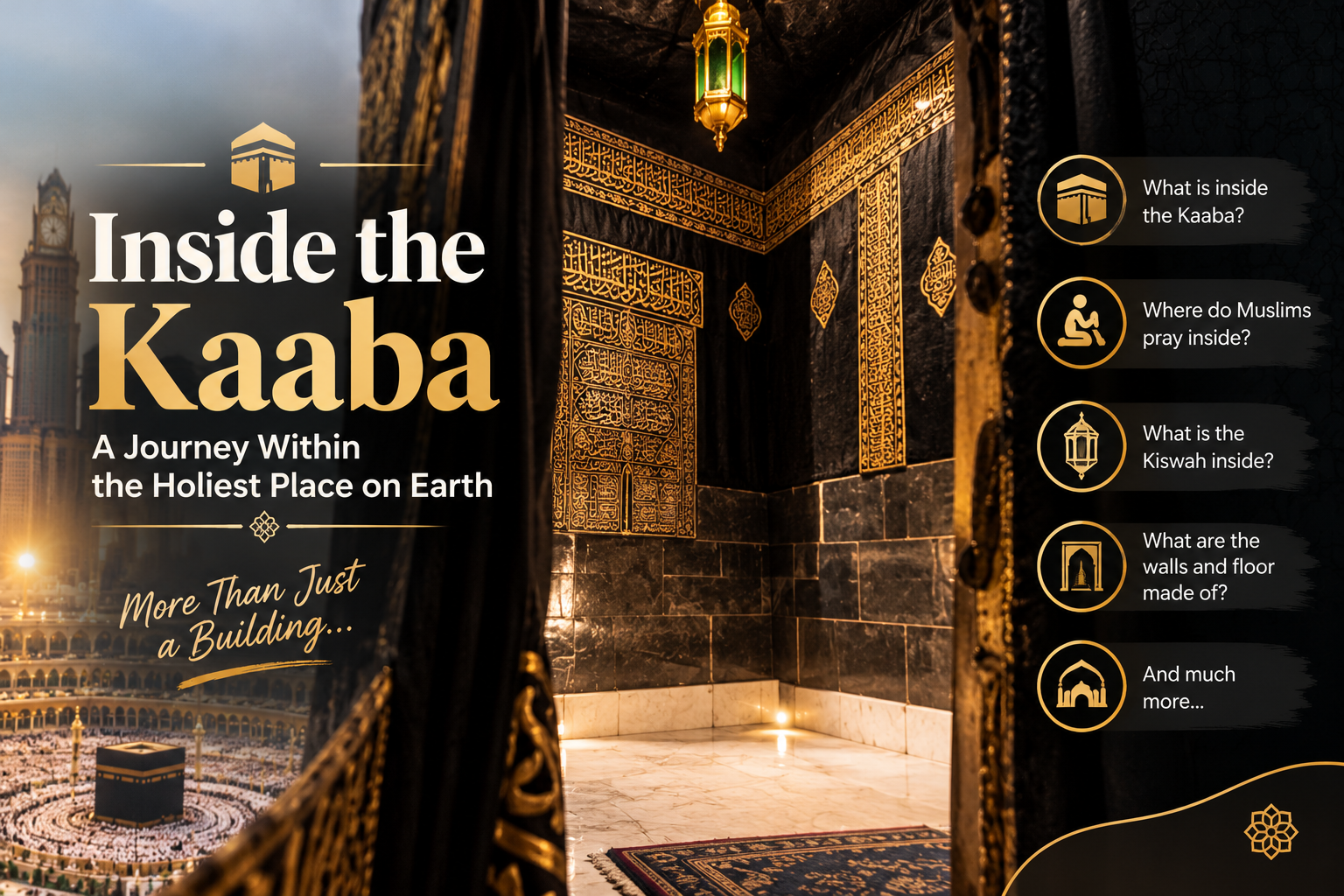
The Holy Kaaba in Makkah holds a central place in the hearts of Muslims worldwide. Muslims from across the globe travel to Makkah for pilgrimage, offering prayers and carrying out religious rituals in the sacred surroundings of the Kaaba. One question many visitors ask before travelling is, can you visit inside the Kaaba?
The answer depends on official access arrangements. Entry is not routinely available to ordinary pilgrims, but there is much to learn about the Kaaba’s interior, its history, and the traditions connected with it. This guide explains what visitors should know and explores the significance of the Kiswah, the textile covering that gives the Kaaba its distinctive appearance.
Can You Visit Inside the Kaaba?
For most visitors, entering the Kaaba is not possible during a regular pilgrimage. Access is restricted and granted only under specific arrangements determined by the relevant Saudi authorities. Performing Hajj or Umrah does not automatically provide permission to enter the building.
Authorised individuals may enter on selected occasions for official visits, ceremonies, or maintenance. These exceptional circumstances should not be mistaken for a public visiting service.
If you are planning a trip to Makkah, focus on the experiences available to pilgrims, including seeing the Kaaba and performing Tawaf according to the applicable religious guidance. Entering the building is not a requirement for completing Hajj or Umrah.
Why Is Access to the Kaaba Limited?
As a revered site for Muslims, the Kaaba receives large numbers of pilgrims, making carefully managed entry essential for its protection and visitors’ safety. Managing access helps protect the building, support security arrangements, and maintain the orderly movement of pilgrims around it.
Entry permissions are granted selectively rather than through a standard booking service for tourists or pilgrims. Visitors should be cautious about anyone claiming to sell guaranteed access or promising entry in exchange for money.
For reliable updates, consult official Saudi sources and the authorities responsible for the Two Holy Mosques. Do not rely on old social media posts or unofficial offers when planning your pilgrimage.
What Can You See Inside the Kaaba?
While the outside of the Kaaba is covered with richly detailed Kiswah fabric, the space within has a much simpler appearance. It contains architectural features such as supporting columns, lamps, and other fittings. The walls and floor have their own finishes, reflecting the building’s function and history rather than the layout of a public exhibition.
The interior may be maintained or updated over time, so photographs from different occasions can show variations in its appearance. Images shared online should be checked carefully before being treated as current or authoritative.
Although most pilgrims cannot enter, learning about the building’s interior can deepen their understanding of its architecture and historical importance.
Has the Kaaba Always Looked the Same?
The Kaaba has undergone rebuilding, repair, and maintenance at different points in history. Historical accounts describe changes to its structure, while the building’s importance as the direction of Muslim prayer remains central to Islamic practice.
Its exterior is covered by the Kiswah, a textile made with specialised craftsmanship and decorated with embroidered inscriptions. The covering is associated with a long tradition of textile production and care.
Learning about the Kaaba’s history also helps explain why the building itself and its Kiswah should be understood as distinct things: one is the sacred structure, while the other is its covering.
Can Women Enter the Kaaba?
Women visiting Makkah do not have automatic permission to enter the Kaaba. Access is restricted for visitors generally, and any exceptional entry depends on official arrangements.
Women can perform Hajj and Umrah without entering the building. Tawaf is performed around the Kaaba, and entry into its interior is not a required part of either pilgrimage.
Because official arrangements can change, visitors should check reliable guidance before travelling and avoid assuming that a particular entry opportunity will be available.
Can You Pray Inside the Kaaba?
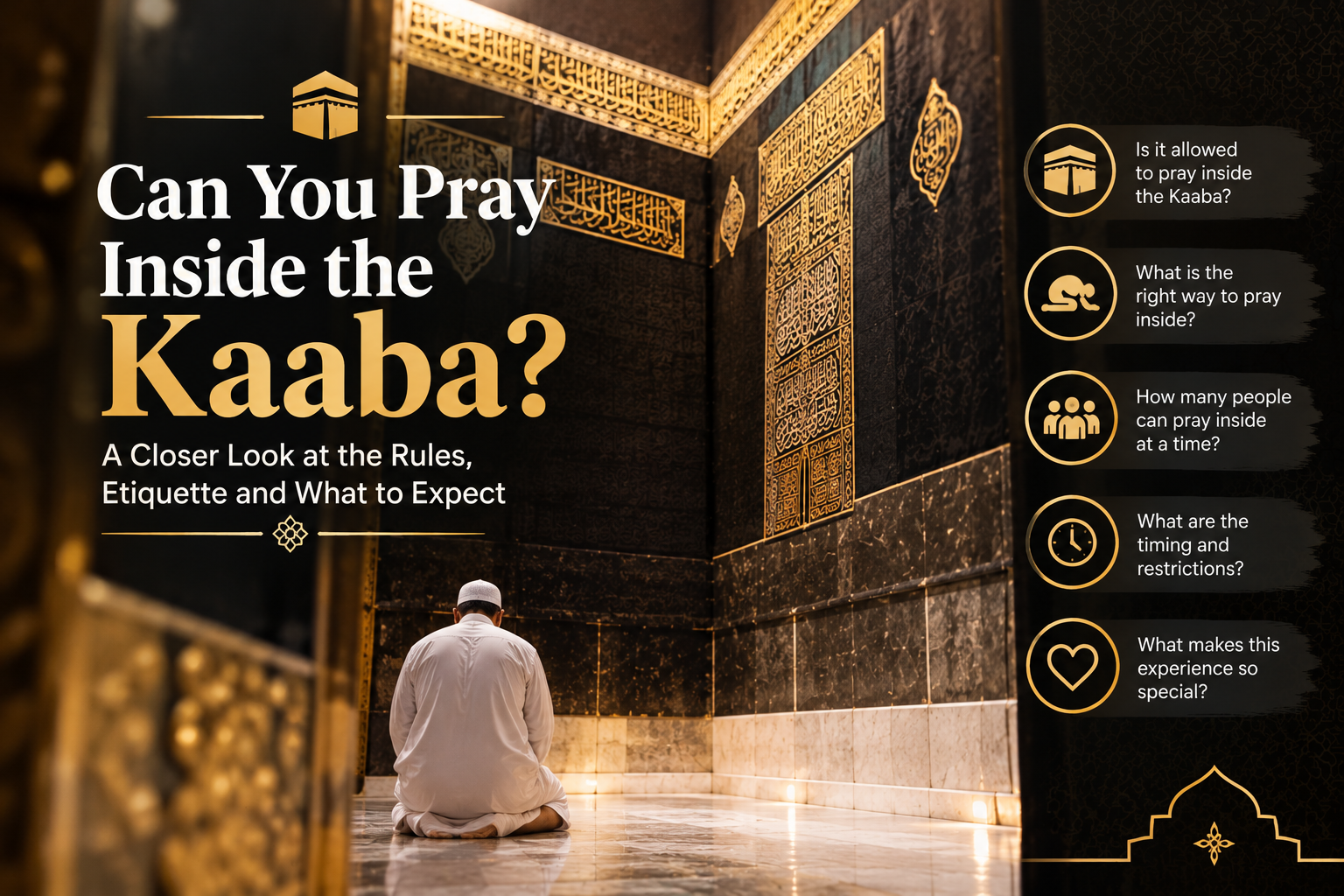
Islamic scholarship discusses prayer inside the Kaaba, and historical accounts describe people praying within it. However, ordinary pilgrims should not expect to enter the building solely to pray.
Masjid al-Haram provides extensive areas for worship, and pilgrims can pray there while following the guidance applicable to their circumstances. Anyone seeking a religious ruling about prayer inside or around the Kaaba should consult a qualified scholar.
A meaningful pilgrimage does not depend on receiving access to the interior. Sincerity, worship, and respectful conduct remain important throughout the journey.
What Is the Difference Between the Kaaba and the Kiswah?
Within Makkah’s Grand Mosque, the Kaaba stands as the focal point toward which Muslims direct their prayers. The Kiswah, also known as the Gilaf-e-Kaaba, is the textile covering placed over its exterior.
The Kiswah is widely recognised for its dark fabric, embroidered Quranic inscriptions, and intricate decorative work. Kiswah kaaba calligraphy is an important part of its appearance, with skilled artisans creating detailed lettering and patterns.
People interested in Islamic heritage may explore the craftsmanship, materials, and history associated with this covering. Understanding these features offers a useful way to appreciate the textile tradition connected with the Holy Kaaba.
Can You Buy an Authentic Kaaba Kiswah Piece?
Some readers who research the Kaaba also want to learn whether authentic Kiswah pieces are available for purchase. Availability depends on the particular item and its source, so buyers should examine the product details carefully.
If you are searching for where to buy Kaaba Kiswah, look for clear information about the item's origin, condition, and any available supporting documentation. The original Kaaba Kiswah price may vary depending on factors such as size, condition, provenance, and certification.
An original Gilafe Kaaba piece is a valuable addition to any Islamic heritage collection, preserving the authentic craftsmanship, history, and cultural significance of the Holy Kaaba's Kiswah. Buyers should review descriptions and available records before deciding whether a particular item meets their expectations.
Explore Kiswah Heritage at Kiswah Al Kabah
The question “Can you visit inside the Kaaba?” shows how eager people are to learn more about the Kaaba’s interior, history, and religious significance. While ordinary visitors generally cannot enter its interior, they can learn about its architecture, historical development, and the traditions that surround it.
For readers interested in the textile heritage of the Kaaba, Kiswah Al Kabah offers an opportunity to explore its available collection of Islamic textiles.
Visit Kiswah Al Kabah to browse available pieces and review their descriptions. Discover the artistry associated with Kiswah textiles while continuing to learn about the history and significance of the Holy Kaaba.
Frequently Asked Questions
1. Is it possible for ordinary pilgrims to enter the Kaaba?
Ordinary pilgrims generally cannot enter. Access is restricted and depends on official permission.
2. Do Muslims need to enter the Kaaba for Hajj or Umrah?
No. Entering the building is not a required ritual for either pilgrimage.
3. Can visitors see photographs of the Kaaba’s interior?
Photographs may be available through published and online sources, but their authenticity and date should be checked.
4. Where can I learn about authentic Kiswah pieces?
You can explore the available collection at Kiswah Al Kabah and review the details supplied for individual products.